
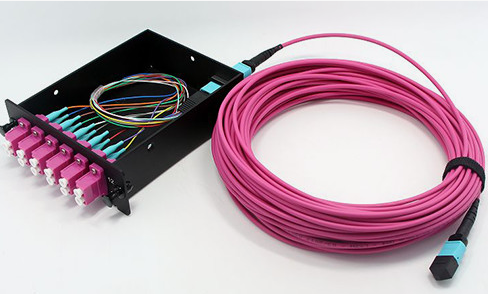
As digital transformation continues to reshape industries, businesses require networking infrastructure capable of supporting increasing amounts of data with exceptional speed, reliability, and efficiency. The rapid growth of cloud computing, artificial intelligence, virtualization, big data, and Internet of Things (IoT) technologies has significantly increased bandwidth demands across enterprise environments. Organizations must invest in advanced networking solutions that not only deliver superior performance today but also provide the scalability needed for future expansion without requiring costly infrastructure overhauls.
One of the most effective solutions for meeting these growing demands is high density cable technology. Designed to maximize connectivity while minimizing physical space requirements, these advanced cable systems enable organizations to build organized, scalable, and high-capacity network infrastructures. Whether deployed in data centers, telecommunications facilities, enterprise campuses, or industrial environments, high-density cabling provides the performance and flexibility necessary to support modern digital operations.
Understanding High Density Cable and Its Importance
High density cable refers to advanced cabling solutions engineered to accommodate a large number of communication channels within a compact physical design. Unlike conventional cabling systems that require significant installation space, high-density cables optimize rack utilization while simplifying cable routing and management. Their compact construction enables organizations to increase network capacity without expanding physical infrastructure, making them particularly valuable in environments where space is limited and bandwidth demands continue to grow. By supporting high-speed data transmission with excellent signal integrity, these cables help organizations maintain reliable communication while improving operational efficiency and preparing networks for future technological advancements.
Importance of Professional Cable Infrastructure
The effectiveness of any networking system depends not only on the quality of its components but also on proper planning and installation. Professional infrastructure specialists evaluate network requirements, facility layouts, bandwidth expectations, and future expansion goals before designing an optimized cabling solution. Careful cable routing, accurate labeling, and proper termination reduce installation errors while improving airflow within equipment racks and simplifying future maintenance. Comprehensive testing and certification ensure that the installed infrastructure meets performance standards and delivers reliable connectivity throughout its operational life. Organizations that invest in professionally installed cable systems benefit from improved network stability, lower maintenance costs, and reduced downtime.
Features and Applications of High-Density Cabling
Modern networking environments demand infrastructure capable of supporting continuous growth while maintaining efficient use of available resources. High-density cable systems offer exceptional space efficiency by allowing more connections within smaller equipment cabinets and patch panels. Their modular design simplifies upgrades, maintenance, and expansion projects while reducing cable congestion and improving system organization. These solutions are widely implemented in hyperscale data centers, enterprise networks, telecommunications infrastructure, healthcare facilities, educational institutions, financial organizations, and manufacturing environments where high-speed communication is essential. Businesses deploying high density cable benefit from enhanced scalability, streamlined cable management, improved cooling efficiency, and greater readiness for next-generation networking technologies.
Choosing the Right High Density Cable
Selecting the appropriate cable solution requires careful analysis of current operational needs and anticipated future growth. Organizations should evaluate bandwidth requirements, cable type, connector compatibility, transmission distances, environmental conditions, and available installation space before making purchasing decisions. High-quality materials, certified manufacturing processes, and compliance with industry standards contribute significantly to long-term performance and reliability. Scalability should remain a key consideration, allowing organizations to expand network capacity without extensive infrastructure modifications. Working with experienced networking professionals ensures that businesses implement customized solutions capable of supporting both present-day applications and future technological developments.
Quality Standards and Long-Term Reliability
Reliable network performance begins with high-quality components manufactured according to recognized international standards. Premium high-density cables undergo rigorous quality assurance testing to verify electrical or optical performance, mechanical durability, environmental resistance, and long-term reliability. Compliance with industry standards ensures compatibility with a broad range of networking equipment while reducing the risk of connectivity issues and signal degradation. Proper installation practices, organized cable management, and scheduled maintenance further extend infrastructure lifespan and simplify troubleshooting when upgrades become necessary. Organizations that prioritize certified networking products enjoy improved operational stability, enhanced business continuity, and greater confidence in their communication systems.
Benefits of Investing in Professional High-Density Cabling Solutions
Advanced networking infrastructure provides organizations with substantial operational and financial benefits. High-density cable systems reduce installation complexity, maximize equipment space, and improve network organization while supporting bandwidth-intensive applications such as cloud computing, virtualization, artificial intelligence, and real-time collaboration. Improved airflow resulting from organized cabling contributes to more efficient equipment cooling and lower energy consumption. Businesses implementing high density cable also benefit from simplified maintenance, faster deployment of new services, greater scalability, and reduced infrastructure costs over time. These advantages position organizations to respond more effectively to changing business requirements while maintaining reliable network performance across increasingly demanding digital environments.
Future Trends in High-Density Cable Technology
The future of network infrastructure will continue to focus on increasing capacity, improving efficiency, and supporting emerging technologies that require ultra-fast connectivity. Artificial intelligence, edge computing, 5G deployment, smart cities, autonomous systems, and advanced cloud services are driving demand for more compact, scalable, and high-performance cabling solutions. Manufacturers continue developing innovative cable designs that improve installation flexibility, enhance signal performance, and reduce operational costs while supporting higher bandwidth applications. Sustainability initiatives are also encouraging the adoption of efficient infrastructure solutions that reduce material usage and energy consumption. As organizations continue modernizing their digital environments, high-density cabling will remain a critical foundation for reliable and future-ready communication networks.
Conclusion
Today’s organizations require networking infrastructure capable of supporting rapid technological advancement, increasing bandwidth demands, and long-term business growth. Advanced cabling solutions provide the performance, scalability, and efficiency needed to maintain reliable communication across modern enterprise environments. Professionally designed infrastructure enhances operational reliability, simplifies network management, and prepares businesses for future expansion without unnecessary complexity. By investing in high density cable, organizations establish a resilient, scalable, and future-ready networking foundation that supports innovation, improves operational efficiency, and delivers long-term value in an increasingly connected world.