
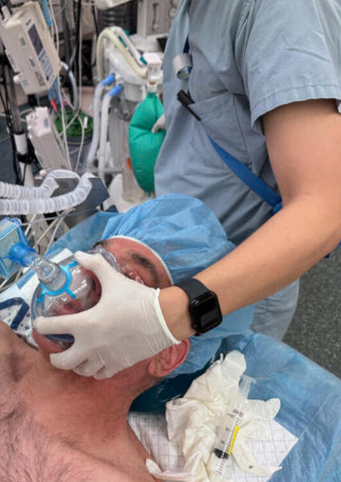
In hospital settings, most airway management follows predictable patterns. Patients are assessed, equipment is prepared, and anesthesiologists proceed with a clear plan. But rare airway emergencies are a completely different story. These are the moments where routine knowledge is not enough, and hesitation can cost lives. This is where an airway course for anesthesiologists becomes essential.
Rather than focusing only on textbook cases, these hospital-based training programs prepare anesthesiologists to act confidently when situations fall outside the norm.
Why Rare Airway Emergencies Are So Challenging
Rare emergencies are difficult because they combine uncertainty with urgency. Unlike standard cases, there is often no time for extended planning.
Some common challenges include:
- Unexpected anatomical variations
- Severe airway obstruction
- Failed intubation attempts
- Limited visibility due to blood or swelling
- Rapid oxygen desaturation
Even experienced anesthesiologists can find these scenarios overwhelming without prior exposure. Hospital-based airway training helps bridge this gap by simulating these high-pressure situations.
Simulation-Based Training in Hospitals
One of the strongest aspects of an airway course for anesthesiologists is simulation training conducted in hospital environments. These simulations are designed to mirror real emergencies as closely as possible.
Instead of passive learning, anesthesiologists actively participate in:
- Managing sudden airway collapse
- Practicing emergency cricothyrotomy techniques
- Handling “can’t intubate, can’t oxygenate” scenarios
- Coordinating with surgical and nursing teams
These sessions often use high-fidelity mannequins and real equipment found in operating rooms. The familiarity with tools and environment reduces panic when similar situations arise in real life.
Building Muscle Memory for Critical Procedures
In rare emergencies, thinking alone is not enough. Quick, precise action is required. Hospital airway courses focus heavily on repetition to build muscle memory.
Key procedures practiced repeatedly include:
- Video laryngoscopy
- Fiberoptic intubation
- Supraglottic airway placement
- Emergency surgical airway access
By performing these techniques multiple times in a controlled setting, anesthesiologists develop automatic responses. This reduces hesitation and improves execution during real emergencies.
Decision-Making Under Pressure
Rare airway crises demand rapid decision-making. Delays or wrong choices can escalate the situation quickly. Hospital training programs emphasize structured thinking even in chaotic conditions.
Participants are trained to:
- Follow airway algorithms systematically
- Recognize early signs of airway failure
- Decide when to switch techniques
- Avoid repeated unsuccessful attempts
This structured approach helps anesthesiologists stay calm and focused, even when the situation becomes unpredictable.
Team Coordination in Emergency Situations
Airway emergencies are rarely managed alone. They often require collaboration between anesthesiologists, surgeons, nurses, and emergency staff.
Hospital-based airway courses include team-based scenarios where communication is critical. These sessions focus on:
- Clear role assignment
- Effective communication under stress
- Calling for help at the right time
- Coordinating surgical airway interventions
Practicing these interactions ensures smoother teamwork during actual emergencies, where every second matters.
Exposure to Rare but High-Risk Scenarios
One major limitation of routine hospital work is that some emergencies occur very rarely. An anesthesiologist might encounter certain critical airway situations only a few times in their entire career.
Airway courses solve this problem by recreating such scenarios, including:
- Airway trauma cases
- Pediatric airway complications
- Airway obstruction due to tumors
- Burn-related airway swelling
This exposure builds familiarity, so when such cases occur in real hospital settings, anesthesiologists are not encountering them for the first time.
Feedback and Performance Improvement
Another advantage of hospital airway training is immediate, structured feedback. After each simulation or procedure, participants receive detailed insights into their performance.
Feedback typically covers:
- Technique accuracy
- Speed and efficiency
- Decision-making quality
- Communication effectiveness
This helps anesthesiologists identify gaps in their skills and improve systematically. Continuous feedback ensures long-term growth rather than one-time learning.
Keeping Up with Evolving Techniques
Airway management is constantly evolving with new tools and techniques being introduced in hospitals. An airway course for anesthesiologists ensures they stay updated with these advancements.
Training programs often include:
- Hands-on experience with new devices
- Updated clinical guidelines
- Evidence-based practices
This ensures that anesthesiologists are not relying on outdated methods during critical emergencies.
Confidence That Translates to Patient Safety
Ultimately, the goal of these hospital-based airway courses is to build confidence. When anesthesiologists feel prepared, they are more likely to act quickly and effectively.
Confidence in this context comes from:
- Repeated practice
- Realistic simulations
- Clear decision-making frameworks
- Team coordination experience
This confidence directly impacts patient safety, especially during rare and life-threatening airway emergencies.
Final Thoughts:
Rare airway emergencies are unpredictable, but preparation does not have to be. Hospital-based airway courses provide anesthesiologists with the tools, experience, and mindset needed to handle these critical situations.
By focusing on simulation, repetition, teamwork, and decision-making, these programs ensure that anesthesiologists are not just skilled in routine care but also ready for the unexpected.