
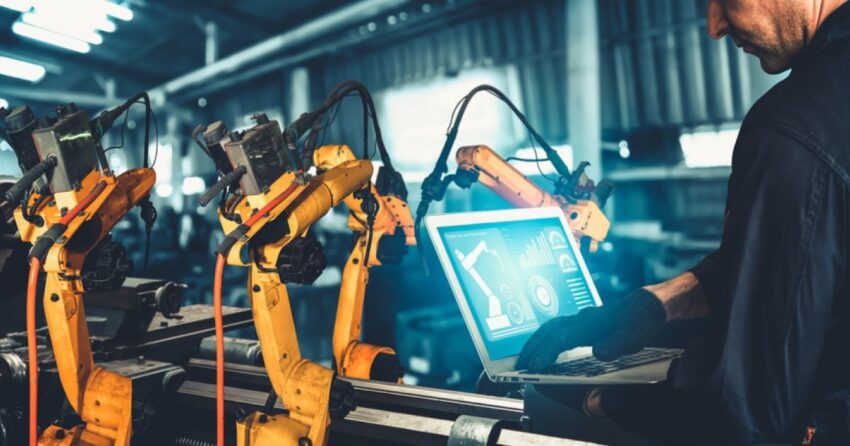
Factory productivity is no longer driven by manpower alone. In today’s highly competitive manufacturing landscape, speed, accuracy, flexibility, and data-driven decision-making define success. Across the Middle East, manufacturers are turning toward advanced automation to remain competitive, reduce costs, and meet global quality standards. In this transformation journey, an Industrial Automation Company in UAE plays a crucial role by integrating smart technologies that streamline operations, eliminate inefficiencies, and significantly enhance production output.
The UAE has rapidly positioned itself as a manufacturing and industrial hub, supported by government initiatives such as Industry 4.0, Make it in the Emirates, and smart factory programs. Industrial automation companies leverage these initiatives to modernize factories using intelligent systems that improve productivity while maintaining sustainability and operational excellence.
Understanding Factory Productivity in the Modern Era
Factory productivity goes beyond producing more units in less time. It includes optimizing machine utilization, minimizing downtime, ensuring consistent quality, reducing waste, and improving worker safety. Traditional factories often struggle with manual errors, unplanned machine failures, inconsistent workflows, and limited visibility into production data.
Automation transforms these challenges into opportunities by enabling real-time monitoring, predictive maintenance, and seamless coordination between machines, systems, and human operators. This is where a specialized industrial automation partner becomes invaluable.
Implementing Smart Manufacturing Technologies
One of the primary ways an industrial automation company boosts productivity is by deploying smart manufacturing technologies. These include programmable logic controllers (PLCs), supervisory control and data acquisition (SCADA) systems, human-machine interfaces (HMIs), and industrial IoT platforms.
Smart systems allow factories to monitor performance in real time, quickly identify bottlenecks, and make immediate adjustments. Automated control systems ensure that machines operate at optimal speeds and parameters, reducing delays and improving throughput without compromising quality.
Reducing Downtime Through Predictive Maintenance
Unplanned downtime is one of the biggest productivity killers in manufacturing. Automation companies in the UAE address this issue by implementing predictive maintenance solutions powered by sensors and data analytics.
Instead of reacting to breakdowns, factories can predict equipment failures before they occur. Sensors continuously track vibration, temperature, pressure, and performance metrics. Advanced software analyzes this data to detect early warning signs, allowing maintenance teams to act proactively. This approach not only increases uptime but also extends equipment lifespan and reduces maintenance costs.
Enhancing Production Accuracy and Quality
Manual processes often lead to inconsistencies, rework, and product recalls. Automation significantly improves accuracy by standardizing operations and reducing human error. Vision systems, automated inspection tools, and robotic handling ensure that every product meets predefined quality standards.
Industrial automation companies integrate machine vision and quality control systems that inspect products at high speeds, detect defects instantly, and remove faulty items from the production line. This results in higher first-pass yield, reduced waste, and improved customer satisfaction.
Optimizing Workflow and Process Efficiency
Automation enables seamless coordination between different stages of production. Conveyors, robots, sensors, and software systems work together to ensure a smooth and continuous workflow.
By analyzing production data, automation experts identify inefficiencies such as idle time, uneven workloads, or process redundancies. They then redesign workflows using automated material handling systems, robotic arms, and smart scheduling tools. This optimization reduces cycle times and ensures resources are used efficiently.
Leveraging Robotics for High-Speed Production
Robotics plays a major role in boosting productivity, especially in repetitive, high-volume, or hazardous tasks. Industrial robots can operate continuously with high precision, significantly increasing production capacity.
Automation companies in the UAE deploy robots for tasks such as assembly, packaging, palletizing, welding, and material handling. Collaborative robots (cobots) work safely alongside human operators, improving speed while allowing workers to focus on higher-value tasks like supervision and quality analysis.
Improving Energy Efficiency and Sustainability
Energy costs have a direct impact on factory productivity and profitability. Automation systems optimize energy consumption by ensuring machines operate only when needed and at optimal load levels.
Energy monitoring tools provide insights into consumption patterns, helping factories reduce wastage and comply with sustainability goals. An industrial automation company designs energy-efficient systems that not only lower operational costs but also align with the UAE’s vision for sustainable industrial growth.
Enabling Data-Driven Decision Making
Modern factories generate massive amounts of data. Without automation, this data remains underutilized. Automation companies implement advanced analytics and reporting dashboards that convert raw data into actionable insights.
Managers can track key performance indicators such as overall equipment effectiveness (OEE), production output, defect rates, and downtime in real time. Data-driven decisions lead to faster problem resolution, continuous improvement, and long-term productivity gains.
Enhancing Workforce Productivity and Safety
Automation does not replace human workers; it empowers them. By automating repetitive and dangerous tasks, factories reduce workplace injuries and fatigue. Operators can focus on monitoring systems, analyzing data, and improving processes.
Industrial automation companies also provide training programs that help employees adapt to new technologies. A skilled, tech-enabled workforce contributes directly to higher productivity and better operational control.
Supporting Scalability and Future Growth
As demand grows, factories need systems that can scale quickly without disrupting operations. Automation solutions are designed to be flexible and modular, allowing manufacturers to add new machines, lines, or functionalities with ease.
An experienced Industrial Automation Company in UAE ensures that automation systems are future-ready, compatible with emerging technologies, and aligned with long-term business goals. This scalability allows factories to increase production capacity while maintaining efficiency and quality.
Conclusion
Boosting factory productivity requires more than incremental improvements; it demands a strategic shift toward intelligent automation. By implementing smart technologies, reducing downtime, enhancing quality, optimizing workflows, and enabling data-driven decision-making, an industrial automation partner delivers measurable productivity gains. In the highly competitive manufacturing environment of the Middle East, collaborating with a trusted Industrial Automation Company in UAE enables factories to achieve operational excellence, reduce costs, and stay ahead of global competition while building a sustainable and future-ready production ecosystem.