
Introduction: When the Environment Fights Back
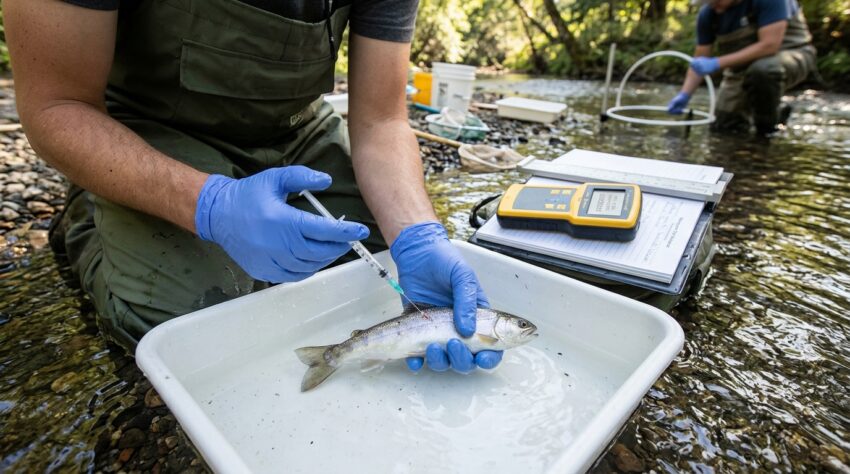
Aquatic monitoring is rarely conducted in comfortable, controlled settings. Researchers collecting fish movement data must contend with fast-moving glacial rivers, saltwater estuaries with corrosive chemistry, turbid flood channels, and sub-zero temperature extremes. In these conditions, monitoring equipment does not just underperform — it fails entirely.
The consequences are significant. A single equipment failure during a critical migration window can void months of fieldwork, corrupt longitudinal datasets, and undermine regulatory compliance reporting. This is precisely why the physical durability of pit tags has become as scientifically important as their data capabilities.
Modern pit tags designed for aquatic environmental monitoring are engineered specifically to endure these punishing conditions — not merely survive them, but perform reliably across years of continuous deployment. Understanding how this durability is achieved, and why it matters for data integrity, is essential knowledge for any fisheries researcher or resource manager investing in long-term monitoring programs.
What Makes Environmental Conditions So Destructive to Monitoring Equipment?
Before examining how pit tags address durability challenges, it is worth understanding exactly what field conditions threaten monitoring hardware.
Temperature Extremes
Aquatic environments span an enormous thermal range. Arctic char researchers work in near-freezing waters year-round. Tropical catfish studies take place in rivers exceeding 35°C. Tags implanted in migratory fish may pass through multiple thermal zones in a single season. Electronics that cannot maintain stable performance across this range produce unreliable read rates and corrupted identification codes.
Hydrostatic Pressure
Deep-water species present a particular challenge. Lake sturgeon, for example, routinely inhabit depths exceeding 30 meters. At these depths, hydrostatic pressure can compromise poorly sealed tag housings, allowing water ingress that destroys internal circuitry.
Biological and Chemical Exposure
Tags implanted inside fish are continuously exposed to body fluids, enzymatic activity, and immune responses. Externally applied tags face corrosive saltwater, sediment abrasion, and biofouling from algae and microorganisms. Any material that triggers tissue rejection or degrades under biochemical exposure produces both animal welfare problems and data loss.
Physical Impact and Abrasion
Migratory fish in river systems regularly navigate rocky substrates, turbulent rapids, and fish passage structures. Tags must withstand repeated physical impacts without cracking, delaminating, or losing antenna integrity.
Engineering Durability Into Modern PIT Tags
Biocompatible Glass and Polymer Encapsulation
The most widely deployed pit tags use hermetically sealed borosilicate glass capsules. Borosilicate glass offers exceptional chemical resistance, withstanding exposure to acids, bases, and biological fluids without degradation. The hermetic seal prevents any moisture ingress, protecting the internal microchip and copper coil antenna across the tag’s operational lifespan.
For applications where glass capsules present fracture risks — such as tagging highly active pelagic species — advanced polymer encapsulants formulated from medical-grade materials provide an alternative. These flex-resistant housings absorb impact energy without cracking, maintaining internal component integrity under repeated mechanical stress.
ISO 11784/11785 Compliance for Signal Stability
Durable pit tags must maintain reliable signal output across all environmental conditions. Tags manufactured to ISO 11784/11785 standards use a standardized 134.2 kHz frequency architecture that remains stable regardless of temperature fluctuation or pressure variation. This standardization also ensures cross-reader compatibility, a critical factor for multi-agency research programs using equipment from different manufacturers.
Extended Operating Temperature Ranges
Leading manufacturers engineer pit tags to operate reliably from -20°C to +70°C. This thermal tolerance encompasses virtually all aquatic monitoring environments globally — from Alaskan salmon streams in winter to tropical floodplain fisheries at peak summer temperatures.
Pressure-Rated Housings
For deep-water applications, pressure-rated tag designs undergo hydrostatic testing to depths of 100 meters or greater. Hermetically sealed glass capsules with no external seams or joints provide inherent pressure resistance, making them suitable for deep-lake and coastal marine monitoring without modification.
Tag Retention: Durability Inside the Animal
Physical robustness of the tag housing addresses external environmental challenges. But pit tags face an equally demanding internal environment — the fish itself.
Tissue Compatibility and Rejection Prevention
Biocompatible encapsulation materials prevent the immune-mediated rejection responses that can expel foreign objects from tissue. Studies published in the North American Journal of Fisheries Management report retention rates consistently exceeding 95% over multi-year periods when biocompatible glass-encapsulated pit tags are implanted using correct protocols. Tags that trigger chronic inflammation not only face expulsion risk but compromise fish health and welfare — undermining both data quality and ethical research standards.
Parylene Coating for Enhanced Bio-Integration
Some advanced pit tags incorporate a Parylene-C conformal coating — a ultra-thin polymer layer applied by vapor deposition that enhances biocompatibility and provides an additional moisture barrier. This coating has demonstrated effectiveness in reducing tissue inflammation responses in sensitive species, including juvenile salmonids and small-bodied cyprinids.
Implantation Site Selection and Tag Sizing
Durability inside the animal is also influenced by tag geometry relative to fish body size. Researchers must select tag lengths and diameters appropriate to the species and life stage being studied. Implanting oversized tags into juvenile fish creates pressure necrosis and elevated rejection rates, regardless of material quality. Standard guidance from the American Fisheries Society recommends that tag mass should not exceed 2% of fish body weight to minimize physiological burden.
Field Evidence: Durability Delivering Long-Term Data
Pacific Salmon Multi-Year Tracking
NOAA Fisheries long-term monitoring programs in the Columbia River Basin have documented pit tags remaining functional and detectable for periods exceeding 8 years post-implantation. Fish tagged as juveniles have been detected as returning adults at upstream spawning grounds, providing complete lifecycle data that would be impossible to collect with shorter-lived tag technologies.
European Sturgeon Conservation
Critically endangered European sturgeon (Acipenser sturio) recovery programs coordinated by research institutions across France and Germany rely on glass-encapsulated pit tags to track individual animals over decade-long monitoring timelines. Tag durability is not optional in these programs — it is the scientific foundation upon which species recovery assessments are built.
Tropical Floodplain Fisheries
Research programs studying large migratory catfish species in the Amazon Basin have successfully deployed pit tags in environments characterized by extreme seasonal temperature variation, high turbidity, and prolonged flood-phase submersion. Tag performance in these conditions has validated the thermal and chemical resistance claims of modern encapsulation technologies.
VodaIQ, VodaIQ, supplies durable, ISO-compliant pit tag systems engineered for exactly these demanding field realities, supporting researchers who cannot afford data gaps caused by equipment failure in remote or extreme environments.
Practical Considerations for Selecting Durable PIT Tags
When evaluating pit tags for challenging environments, procurement decisions should assess:
- Encapsulation material — glass versus polymer based on species activity level and implantation site
- ISO compliance — ensuring cross-reader compatibility across multi-agency deployments
- Operating temperature range — verified by manufacturer testing data, not estimated specifications
- Pressure rating — essential for deep-water species monitoring
- Retention study data — peer-reviewed evidence for the specific species category being studied
- Coating options — Parylene or equivalent biocompatibility enhancements for sensitive species
Conclusion: Durability Is Data Integrity
In harsh environmental monitoring, equipment durability is not a secondary consideration — it is the primary determinant of data quality. A pit tag that fails prematurely does not simply represent a hardware loss. It represents a permanent gap in a longitudinal dataset, a compromised survival estimate, and potentially a flawed conservation decision downstream.
The engineering advances built into modern pit tags — hermetic glass encapsulation, biocompatible materials, ISO-standardized signal architecture, and pressure-rated housings — directly translate into research outcomes that managers and policymakers can trust. As aquatic monitoring programs expand into increasingly extreme environments, the durability standards of pit tags will remain central to the science that keeps fisheries conservation on solid ground.