
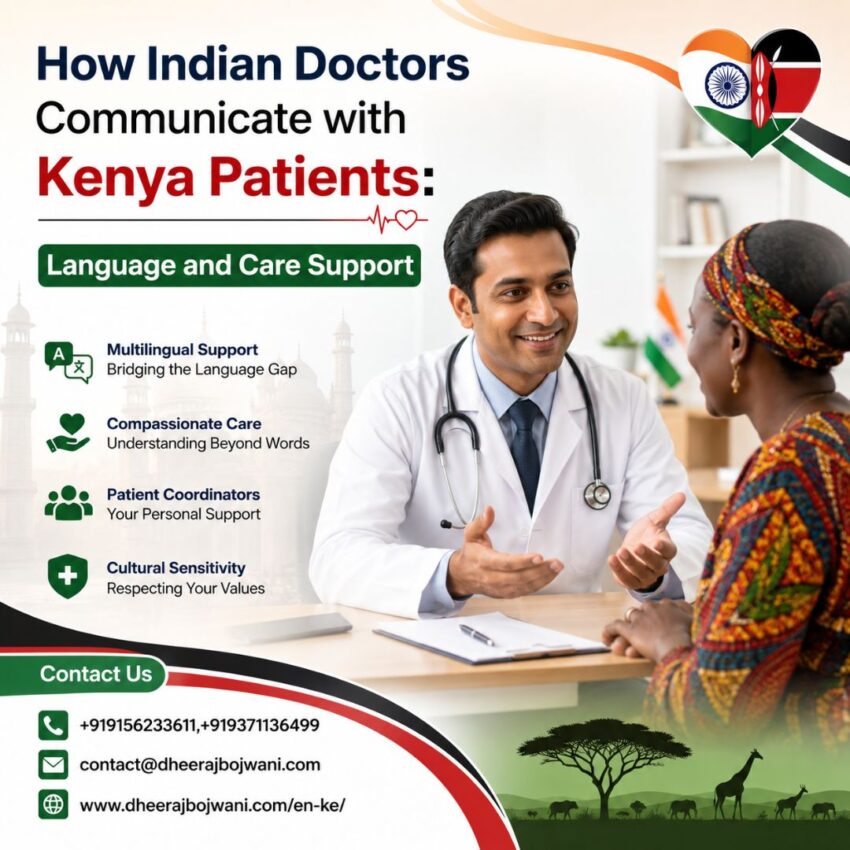
Travelling to another country for medical treatment can be overwhelming, especially when you are concerned about understanding your diagnosis, treatment options, and recovery plan. While India and Kenya both use English widely in healthcare, many Kenyan patients still worry about medical terminology, unfamiliar hospital systems, and communicating comfortably during treatment.
Fortunately, most leading Indian hospitals have extensive experience treating international patients and have dedicated support teams to ensure communication remains clear throughout the treatment journey. From the first online consultation to follow-up after returning home, Indian doctors and international patient coordinators work together to help Kenyan patients make informed healthcare decisions.
Read More: Indian Doctors Communication with Kenya Patients
Communication Starts Before You Travel
Communication often begins long before patients arrive in India. Most hospitals encourage international patients to send medical reports electronically so specialists can review their condition and provide an initial medical opinion.
Patients can usually share:
- Medical reports
- MRI, CT scan, and X-ray images
- Laboratory investigations
- Previous prescriptions
- Discharge summaries
- Questions about treatment
This early communication helps patients understand whether travel is necessary, possible treatment options, estimated hospital stay, and the investigations that may be required after arrival.
English Makes Communication Easier
English is widely spoken in both Kenya and India, making communication much easier for most Kenyan patients. Doctors, nurses, specialists, and international patient coordinators routinely communicate in English, allowing patients to discuss their symptoms, ask questions, and understand treatment recommendations without significant language barriers.
Medical teams also explain investigations, surgical procedures, expected benefits, possible risks, and recovery timelines in language that patients can understand rather than relying solely on technical medical terminology.
International Patient Coordinators
Most hospitals assign an international patient coordinator to assist overseas patients throughout their treatment.
These coordinators commonly help with:
- Appointment scheduling
- Medical record collection
- Airport pickup arrangements
- Accommodation guidance
- Admission procedures
- Daily communication with doctors
- Billing support
- Travel planning after discharge
Having one point of contact helps patients and their families navigate the healthcare system more comfortably.
How Doctors Explain Treatment
Indian doctors generally encourage patients to participate actively in treatment decisions. During consultations, they review medical history, examine investigation results, explain the diagnosis, discuss available treatment options, and answer questions before recommending a treatment plan.
Patients are encouraged to discuss:
- Why treatment is recommended
- Alternative treatment options
- Expected outcomes
- Possible complications
- Recovery timeline
- Lifestyle changes after treatment
- Follow-up requirements
This shared decision-making approach allows patients to understand both the benefits and limitations of treatment.
Communication Throughout the Patient Journey
|
Stage |
Communication Support |
|
Before Travel |
Online consultations, medical record review, preliminary treatment opinion |
|
Hospital Admission |
Registration assistance, appointment coordination, treatment planning |
|
Diagnostic Evaluation |
Doctors explain investigations, findings, and next steps |
|
Treatment |
Daily discussions with specialists regarding progress and recovery |
|
Discharge |
Medication instructions, discharge summary, travel advice, and follow-up plan |
|
After Returning to Kenya |
Online follow-up consultations and review of recovery when required |
Support for Family Members
Many Kenyan patients travel with a family member or caregiver. Hospitals recognise the important role families play during treatment and usually include them in discussions whenever the patient agrees.
Doctors often explain:
- Surgical procedures
- Intensive care updates
- Recovery expectations
- Medication schedules
- Rehabilitation plans
- Warning signs requiring medical attention
This helps caregivers feel confident when supporting the patient after discharge.
Digital Communication After Returning Home
Communication does not necessarily end after patients leave India. Many hospitals continue follow-up through teleconsultations, email, or secure online platforms.
Patients can usually:
- Share follow-up reports
- Discuss recovery progress
- Review laboratory investigations
- Ask questions about medications
- Seek guidance regarding rehabilitation
- Receive advice if new symptoms develop
This ongoing communication helps maintain continuity of care even after returning to Kenya.
Read More: Treatment Consultation with Indian Doctors for Kenyans
Why Kenyan Patients Value India’s Patient Support?
Leading Indian hospitals combine experienced specialists with well-organised international patient services. Clear communication, personalised treatment planning, dedicated coordinators, and regular follow-up allow patients to feel informed and supported throughout their medical journey.
Understanding every stage of treatment helps reduce anxiety, improves decision-making, and builds confidence in the care being received. For Kenyan patients seeking treatment in India, effective communication is not simply about speaking the same language—it is about ensuring every patient understands their condition, participates in treatment decisions, and receives compassionate support from the first consultation through long-term recovery.
Official Indian Government References
- Ministry of Health & Family Welfare (MoHFW) – Information on India’s healthcare system, tertiary care services, and national health programmes.
https://www.mohfw.gov.in
- National Medical Commission (NMC) – Verify the registration and credentials of doctors practising in India.
https://www.nmc.org.in
- Indian Council of Medical Research (ICMR) – India’s apex organisation for biomedical research and evidence-based healthcare guidance.
https://www.icmr.gov.in
- National Health Authority (NHA) – Information on healthcare quality initiatives and patient-centred health services in India.
https://nha.gov.in
Our Commitment to Patients
Our mission is to place patients at the centre of every healthcare decision by providing trustworthy, evidence-based, and unbiased medical information. We believe that informed patients make better decisions. Backed by personalised guidance from our experienced advisory team, we help patients understand their treatment options, compare them objectively, and confidently choose the path that best suits their medical needs and personal circumstances.
Disclaimer
This article is intended for educational and informational purposes only and should not be considered medical, legal, or visa advice. Medical recommendations, treatment plans, and procedures may vary from one patient to another based on individual health conditions and circumstances. Readers are strongly advised to consult qualified healthcare professionals before making any medical-related decisions.
Dr. Dheeraj Bojwani
Medical Travel Advisor for International Patients Seeking Treatment in India
📍 New Delhi, India
🏆 24+ Years of Experience | Assisted 5,000+ International Patients
🌐 Website: www.dheerajbojwani.com/en-ke/
📧 Email: contact@dheerajbojwani.com
📞 Phone: +91 9156233611
📞 Alternate Phone: +91 9371136499