
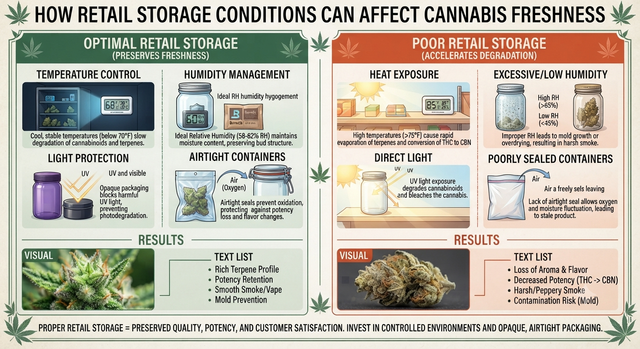
Cannabis quality does not end when flower leaves the cultivation facility. The period between production and purchase can have a major influence on how a product looks, smells, feels, and tastes. Retail storage conditions are particularly important because cannabis may spend days or weeks waiting to reach consumers.
Even carefully cultivated and cured flower can lose some of its desirable characteristics if it is exposed to excessive heat, light, oxygen, or unsuitable humidity. For this reason, responsible storage practices are an important part of maintaining cannabis freshness from the producer to the dispensary shelf.
Why Retail Storage Matters
Cannabis flower contains cannabinoids, terpenes, moisture, and other naturally occurring compounds. Terpenes contribute significantly to the aroma and flavor consumers associate with different cultivars.
These compounds can be sensitive to environmental conditions. If cannabis is stored improperly for extended periods, its original sensory characteristics may change.
Retailers therefore have an important role in maintaining product quality after receiving cannabis from licensed distributors or suppliers. Proper storage can help preserve the characteristics established during cultivation, drying, curing, and packaging.
Temperature Can Influence Freshness
Temperature is one of the most important environmental factors affecting stored cannabis.
Excessive heat can accelerate chemical and physical changes in cannabis. It can also contribute to the loss of volatile aromatic compounds. A product that was highly aromatic when packaged may therefore smell less pronounced after prolonged exposure to unfavorable temperatures.
Retailers should avoid storing cannabis in locations exposed to significant heat sources or direct sunlight. Maintaining stable environmental conditions can help reduce unnecessary stress on the product.
Consumers can apply the same principle after purchasing cannabis. Leaving a package in a hot vehicle or storing it near a heater can negatively affect its condition.
Light Exposure Is Another Concern
Light can also influence cannabis quality over time.
Direct sunlight and intense artificial light can contribute to degradation of cannabinoids and other components. This is one reason many cannabis products use opaque, dark-colored, or otherwise light-resistant packaging.
Retail displays need to balance visibility with product protection. A package may look attractive under bright lighting, but prolonged exposure can be undesirable if the packaging does not provide adequate protection.
Keeping cannabis products away from unnecessary direct light can help preserve their original characteristics for longer.
Humidity and Moisture Management
Moisture is another critical factor in cannabis storage.
Flower that becomes excessively dry can lose some of its texture and aroma. On the other hand, excessive moisture can create conditions that are unsuitable for maintaining a stable product and may increase the risk of microbial problems.
Quality-focused retailers should store products according to manufacturer recommendations and applicable regulations. Proper packaging can also help maintain an appropriate internal environment.
Consumers should avoid adding unapproved materials or liquids to cannabis packaging. If a product appears unusually damp, damaged, or otherwise compromised, contacting the licensed retailer is a better approach.
Oxygen Exposure and Packaging
Oxygen exposure can also contribute to changes in stored cannabis over time.
Every time packaging is opened, the contents can be exposed to surrounding air. Properly sealed commercial packaging helps limit unnecessary environmental exposure before the product reaches the consumer.
For retailers, maintaining the integrity of original packaging is therefore important. Damaged, leaking, or improperly sealed packages should be handled according to applicable procedures rather than simply placed on display.
Packaging isn’t merely about appearance—it is part of the product’s protection system.
Product Rotation Can Support Freshness
Retailers can also pay attention to inventory management.
Products that remain on shelves for extended periods may experience more environmental exposure than recently received inventory. Appropriate inventory rotation can help ensure products are sold within their recommended shelf-life period.
Batch information, packaging dates, and expiration or best-by information, where applicable, can help retailers manage inventory more effectively.
Consumers can also look at package information when comparing products. A newer product is not automatically better, but freshness information can provide useful context when evaluating flower.
Why Terpenes Matter
Terpenes are among the most important compounds when discussing cannabis aroma and flavor.
Different cannabis cultivars can contain different combinations and concentrations of terpenes. Compounds such as limonene, myrcene, pinene, and beta-caryophyllene can contribute different aromatic characteristics.
Because many terpenes are volatile, storage conditions can influence how strongly these aromas are perceived.
This is why consumers interested in flavor may want to look beyond THC percentage. A product’s terpene profile, cultivation practices, curing, packaging, and storage history can all contribute to the final experience.
Choosing Quality Cannabis From Reputable Brands
Consumers in legal cannabis markets have access to many established brands. Depending on location, shoppers may encounter names such as Weedroads, Cannabiotix (CBX), 710 Labs, Raw Garden, STIIIZY, RYTHM, and Green Dot Labs.
These brands offer different types of cannabis products, and availability varies by state and retailer. Brand reputation alone should not be treated as a guarantee of freshness. Individual batches can differ, and proper retail storage remains important regardless of the producer.
Consumers should purchase cannabis through licensed dispensaries and examine packaging for information such as the product name, batch number, testing information, packaging date, and other required details.
What Should Consumers Look for at a Dispensary?
When purchasing cannabis flower, consumers can consider several factors:
Packaging condition: Avoid products with visibly damaged or compromised packaging.
Product information: Look for clear labeling and batch information.
Testing: Where available, review laboratory testing or a Certificate of Analysis (COA) for additional information about the product.
Aroma: If permitted and appropriate, aroma can provide useful sensory information about flower.
Appearance: Flower should generally look consistent with its product description and should not show obvious signs of contamination or improper handling.
Storage practices: A clean, organized retail environment can be a positive indication that products are being handled responsibly.
The Role of Dispensaries in Product Quality
Licensed dispensaries are an important link between cannabis producers and consumers. Their responsibility doesn’t stop at receiving inventory.
Retail employees and managers need to understand appropriate product handling, storage requirements, inventory rotation, and applicable regulations.
Temperature monitoring, protection from excessive light, secure packaging, and appropriate inventory management can all contribute to maintaining product quality.
For customers, this means the retail environment can be almost as important as the product’s original production process.
How Consumers Can Protect Freshness at Home
Once cannabis has been purchased, storage responsibility shifts to the consumer.
Keep the product in its original packaging when appropriate and follow the manufacturer’s storage instructions. Store cannabis in a cool, stable, dark location away from excessive heat and direct sunlight.
Avoid repeatedly opening containers unnecessarily, and keep packaging properly closed after use.
Cannabis should also be stored securely and away from children and pets. Consumers should follow all applicable local laws and product-specific storage recommendations.
Freshness Is a Supply-Chain Issue
Cannabis freshness is not determined by a single factor.
Cultivation, harvesting, drying, curing, packaging, transportation, retail storage, and home storage can all influence the final condition of a product.
A cultivator may produce excellent flower, but poor transportation or retail storage can compromise some of its desirable characteristics. Conversely, good storage practices can help preserve the qualities established during production.
This makes freshness a supply-chain responsibility shared by producers, distributors, retailers, and consumers.
Final Thoughts
Retail storage conditions can have a meaningful influence on cannabis freshness. Heat, light, oxygen, humidity, packaging integrity, and inventory age are all factors that deserve attention.
For consumers, choosing products from licensed retailers, checking batch and testing information, and paying attention to packaging condition can help make purchasing decisions more informed.
Brands such as Weedroads, CBX, 710 Labs, Raw Garden, STIIIZY, RYTHM, and Green Dot Labs are examples of cannabis brands consumers may encounter in legal markets, but product availability and quality can vary by location and batch.
Ultimately, preserving cannabis freshness requires attention throughout the entire journey—from cultivation and curing to transportation, retail storage, and the consumer’s home. When each stage is handled carefully, consumers have a better opportunity to experience the aroma, flavor, texture, and overall characteristics that make different cannabis flowers unique.
Cannabis laws and product availability vary by jurisdiction. Purchase cannabis only from licensed retailers where legal, and follow applicable local regulations and product-label storage instructions.