
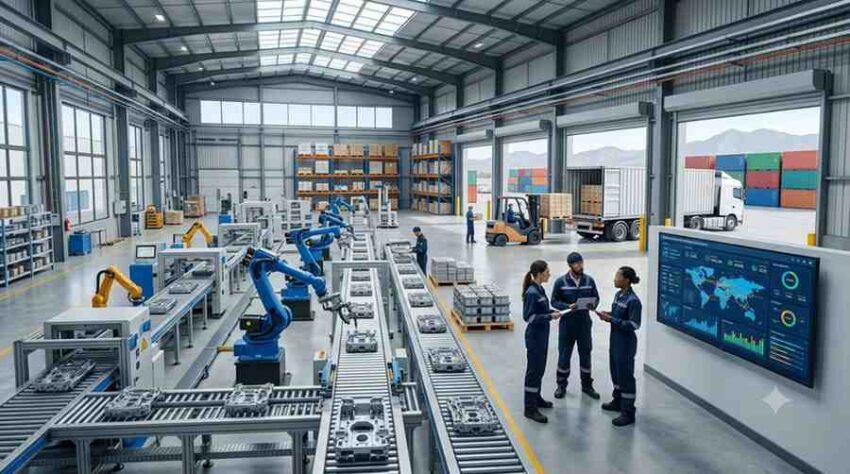
Manufacturing has evolved far beyond simply producing goods at the lowest possible cost. Today’s businesses operate in a highly competitive environment where efficiency, speed, innovation, and resilience determine long-term success. Companies that continue using outdated production models often struggle with rising operational costs, delayed deliveries, inconsistent product quality, and supply chain disruptions.
To stay competitive, manufacturers are adopting smarter manufacturing strategies that focus on improving every stage of production—from sourcing raw materials and optimizing factory operations to strengthening logistics and delivering products more efficiently. These modern approaches enable businesses to increase productivity while reducing costs and responding more effectively to changing market demands.
Mexico has become one of the world’s most attractive destinations for implementing these advanced manufacturing strategies. Its strategic location, skilled workforce, modern industrial infrastructure, and growing manufacturing ecosystem provide businesses with the resources needed to scale efficiently. A major contributor to this success is the Mexico supply chain, which helps manufacturers improve operational performance while supporting long-term business growth.
What Defines a Smarter Manufacturing Strategy?
A smarter manufacturing strategy is a comprehensive approach that combines technology, workforce expertise, efficient logistics, data-driven decision-making, and flexible production systems.
Instead of focusing solely on increasing production volume, businesses optimize processes to improve quality, reduce waste, shorten lead times, and increase operational efficiency.
Modern manufacturers also prioritize resilience by diversifying suppliers, investing in automation, and locating production closer to key markets.
This strategic mindset allows companies to adapt quickly to changing customer expectations while maintaining consistent performance.
Improving Production Efficiency
Efficiency remains one of the most important drivers of manufacturing success.
Smarter production systems reduce unnecessary downtime, improve equipment utilization, and eliminate repetitive manual tasks through automation and advanced planning.
Manufacturers can monitor production in real time, identify bottlenecks quickly, and make informed decisions that improve productivity.
These improvements allow businesses to produce more goods without significantly increasing operating expenses.
Higher efficiency also creates greater flexibility when responding to fluctuations in customer demand.
Reducing Operational Costs
Managing expenses is essential for maintaining profitability.
Smart manufacturing strategies focus on minimizing waste, improving inventory management, optimizing energy consumption, and streamlining transportation.
Businesses operating in Mexico benefit from competitive production costs while maintaining internationally recognized quality standards.
Lower labor costs, efficient industrial infrastructure, and reduced transportation expenses contribute to stronger financial performance.
The Mexico supply chain further supports cost optimization by connecting manufacturers with reliable regional suppliers and efficient logistics networks.
Enhancing Product Quality
Consistent quality is one of the strongest competitive advantages any manufacturer can achieve.
Advanced quality management systems, automated inspections, predictive maintenance, and real-time production monitoring help reduce defects and improve product consistency.
Manufacturers also collect production data that allows continuous improvement across every stage of the manufacturing process.
Higher product quality leads to fewer returns, stronger customer satisfaction, and improved brand reputation.
Companies that consistently deliver reliable products often build long-term customer loyalty and stronger market positions.
Faster Response to Customer Demand
Customer expectations continue evolving rapidly.
Manufacturers must respond quickly to changing demand while maintaining efficient production schedules.
Smarter manufacturing strategies provide greater flexibility by improving forecasting, reducing production lead times, and increasing supply chain visibility.
Businesses producing closer to major customer markets can adjust production volumes more easily while delivering products faster.
Shorter delivery times improve customer satisfaction and strengthen long-term business relationships.
Technology Drives Manufacturing Innovation
Technology has become the foundation of modern manufacturing.
Automation, robotics, artificial intelligence, cloud computing, machine learning, predictive analytics, and Industrial Internet of Things (IIoT) solutions help manufacturers optimize production while reducing operational risks.
These technologies provide valuable insights into equipment performance, production efficiency, inventory levels, and maintenance requirements.
Real-time information allows managers to make faster decisions that improve productivity while reducing waste.
Manufacturers investing in digital transformation are better prepared to compete in global markets.
Building More Resilient Operations
Recent global disruptions demonstrated the importance of manufacturing resilience.
Businesses that depended on long international supply routes often experienced production delays, shipping disruptions, and inventory shortages.
Modern manufacturing strategies focus on reducing these risks through regional sourcing, diversified supplier networks, and flexible production modlse.
The Mexico supply chain has become a valuable asset for businesses seeking greater resilience because it supports reliable sourcing, efficient logistics, and faster access to North American markets.
This flexibility allows companies to continue serving customers even during periods of economic uncertainty.
Investing in Skilled Talent
Technology alone cannot drive manufacturing success.
Skilled engineers, technicians, quality specialists, and production managers remain essential for operating advanced manufacturing facilities.
Mexico continues developing a highly qualified workforce through universities, technical institutes, and industry partnerships.
Experienced professionals contribute innovative ideas, improve operational performance, and support continuous process improvement.
Businesses expanding manufacturing operations in Mexico gain access to talent capable of supporting long-term growth.
Sustainability Creates Long-Term Value
Sustainability has become a key element of smarter manufacturing strategies.
Companies are increasingly adopting energy-efficient equipment, renewable energy, waste reduction initiatives, and environmentally responsible production methods.
Manufacturing closer to customer markets also reduces transportation distances, lowering fuel consumption and carbon emissions.
These sustainable practices not only reduce environmental impact but also improve operational efficiency and strengthen relationships with environmentally conscious customers and investors.
Sustainability is no longer simply a corporate responsibility—it has become a competitive advantage.
Modern Infrastructure Supports Growth
Infrastructure directly affects manufacturing performance.
Mexico continues investing in highways, rail systems, ports, airports, industrial parks, and logistics centers that simplify product movement across domestic and international markets.
Reliable transportation networks reduce shipping delays while improving inventory management and production planning.
Modern industrial facilities also provide manufacturers with access to advanced utilities, telecommunications, and business services needed to support expansion.
These infrastructure investments help businesses scale operations with greater confidence.
Why Smarter Manufacturing Leads to Better Business Performance
Companies implementing smarter manufacturing strategies consistently experience measurable improvements, including:
- Increased operational efficiency
- Lower production costs
- Improved product quality
- Faster customer deliveries
- Greater supply chain visibility
- Reduced operational risk
- Stronger supplier collaboration
- Enhanced sustainability
- Better decision-making through data
- Increased long-term profitability
The continued development of the Mexico supply chain enables businesses to achieve these outcomes while supporting scalable manufacturing operations and long-term competitiveness.
Final Thoughts
Manufacturing success today depends on much more than producing goods efficiently. Businesses must create flexible, technology-driven operations that improve quality, reduce costs, strengthen resilience, and respond quickly to changing customer expectations.
Mexico has become one of the most attractive locations for implementing smarter manufacturing strategies because it combines strategic geography, competitive production costs, skilled talent, modern infrastructure, and reliable supplier networks. These advantages help manufacturers improve operational performance while creating opportunities for sustainable growth.
As industries continue evolving, companies that invest in innovation, efficiency, and resilience will remain best positioned for long-term success. Supported by the strength of the Mexico supply chain, smarter manufacturing strategies provide organizations with the tools needed to compete confidently in today’s global marketplace while preparing for tomorrow’s opportunities.