
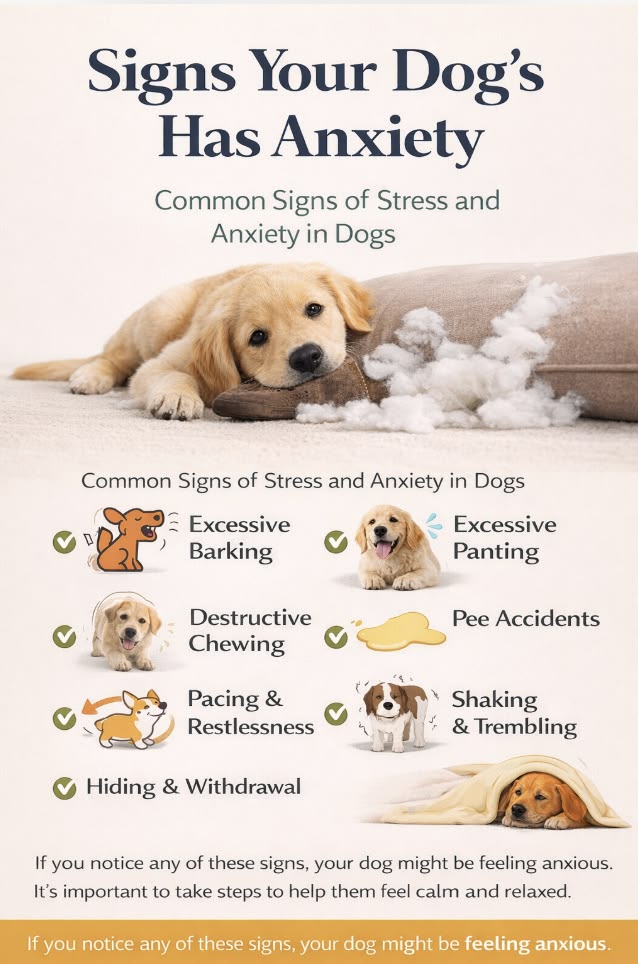
Dogs are incredibly loyal companions, but they cannot tell us when something is wrong using words. Instead, they communicate through their behavior, body language, and daily habits. Learning how to tell if a dog is anxious is one of the most valuable skills every pet owner can develop. Anxiety can affect dogs of every breed, age, and size, and if it goes unnoticed, it may lead to health problems or unwanted behaviors. By understanding the warning signs early, you can help your dog feel safer, healthier, and more comfortable every day.
Knowing how to tell if a dog is anxious starts with paying close attention to small behavioral changes. Many owners mistake anxiety for stubbornness, excitement, or poor training when their dog is actually feeling overwhelmed. Understanding Dog stress symptoms, recognizing signs of anxiety in dogs, interpreting canine body language, identifying stressed dog behavior, and learning how to calm a stressed dog are all essential parts of responsible pet ownership. At petsoulcare, we believe informed owners are better prepared to support their dogs through stressful situations while building stronger lifelong relationships.
Why Learning How to Tell if a Dog Is Anxious Is Important
Understanding how to tell if a dog is anxious helps prevent emotional stress from turning into long-term behavioral or physical health problems. Dogs thrive on routine and predictability, so even small disruptions to their environment can affect their emotional well-being.
Common anxiety triggers include moving to a new home, loud thunderstorms, fireworks, traveling, introducing another pet, changes in work schedules, veterinary visits, or spending too much time alone. Every dog reacts differently, but recognizing anxiety early allows owners to provide reassurance before stress becomes overwhelming.
Learning how to tell if a dog is anxious also strengthens the trust between owner and pet because your dog learns that you respond with patience rather than frustration.
Canine Body Language Reveals Emotional Stress
One of the best ways to understand how to tell if a dog is anxious is by observing physical communication. Dogs constantly express their emotions through posture, facial expressions, tail movement, and ear position.
Understanding canine body language helps owners recognize discomfort before behavioral issues develop. An anxious dog may tuck its tail, flatten its ears, avoid eye contact, lower its body, tremble, or appear unusually stiff. Some dogs yawn repeatedly, lick their lips excessively, pant without exercise, or show the whites of their eyes.
These subtle changes often appear long before more obvious problems, making body language one of the earliest indicators of anxiety.
Dog Stress Symptoms Can Affect Daily Behavior
Recognizing how to tell if a dog is anxious becomes easier when you notice changes in everyday routines. Many Dog stress symptoms involve unusual behaviors that differ from your dog’s normal personality.
Some anxious dogs become quiet and withdrawn, while others become restless, pace around the house, bark excessively, or constantly follow their owners. Dogs experiencing stress may lose interest in favorite toys or avoid activities they usually enjoy.
Because every dog responds differently, owners should monitor sudden changes rather than focusing on a single symptom alone.
Signs of Anxiety in Dogs During Common Situations
Understanding how to tell if a dog is anxious also means recognizing situations that commonly trigger stress. The signs of anxiety in dogs often appear during unfamiliar or overwhelming experiences.
Veterinary appointments, grooming visits, road trips, family gatherings, loud construction, fireworks, and separation from loved ones are among the most common causes of anxiety. Some dogs also become nervous around strangers or other animals.
Watching how your dog reacts during these situations helps you identify personal anxiety triggers and prepare for future events more effectively.
Stressed Dog Behavior May Become Destructive
Another way to understand how to tell if a dog is anxious is by recognizing destructive behaviors that result from emotional stress.
Common stressed dog behavior includes chewing furniture, scratching doors, digging indoors, tearing household items, or attempting to escape confined areas. These behaviors usually occur because dogs lack healthy ways to manage stress or become overwhelmed by boredom and loneliness.
Instead of viewing destructive habits as bad behavior, owners should consider whether anxiety may be contributing to the problem and focus on addressing the underlying cause.
Appetite and Sleep Changes Are Important Warning Signs
Learning how to tell if a dog is anxious includes paying attention to eating and sleeping habits. Anxiety often affects appetite, causing some dogs to eat less while others begin eating unusually fast.
Sleep patterns may also change. Anxious dogs frequently struggle to settle down, wake repeatedly during the night, or constantly change sleeping locations.
Because physical illness can produce similar symptoms, persistent appetite or sleep changes should always be discussed with a veterinarian to rule out medical concerns.
How to Calm a Stressed Dog Safely
Once you understand how to tell if a dog is anxious, the next step is learning how to calm a stressed dog. Remaining calm yourself is one of the most effective ways to reassure your pet.
Whenever possible, remove your dog from the stressful environment and provide a quiet, familiar space where they can relax. Speak gently, avoid punishment, and allow your dog to regain confidence at its own pace.
Comfort items such as favorite blankets, toys, and familiar scents often help reduce anxiety. Regular exercise, mental enrichment, and positive reinforcement training also encourage emotional stability while reducing future stress.
These simple strategies make how to calm a stressed dog easier while strengthening trust between owner and pet.
Preventing Anxiety Through Daily Care
Preventing anxiety is another important part of understanding how to tell if a dog is anxious before serious problems develop.
Consistent feeding schedules, daily walks, regular playtime, and predictable routines help dogs feel secure. Early socialization exposes puppies to different environments, people, and experiences, allowing them to build confidence throughout life.
Routine veterinary care also helps identify health problems that may contribute to stress or anxiety. Combined with careful observation of Dog stress symptoms and canine body language, preventive care keeps dogs emotionally healthy.
How petsoulcare Helps Dog Owners Build Confidence
Learning how to tell if a dog is anxious becomes much easier when you have access to trusted educational resources. At petsoulcare, we are committed to helping American dog owners understand their pets through practical, reliable guidance based on responsible pet care.
Whether you’re researching Dog stress symptoms, identifying signs of anxiety in dogs, improving your understanding of canine body language, recognizing stressed dog behavior, or discovering how to calm a stressed dog, petsoulcare provides trustworthy information that supports better decision-making.
Our goal is to help every family build a stronger relationship with their dog while promoting lifelong wellness through education and preventive care.
Final Thoughts
Knowing how to tell if a dog is anxious allows you to recognize emotional distress before it develops into more serious health or behavioral problems. Dogs communicate constantly through their actions, body language, and routines, making careful observation one of the best tools any owner can have.
By learning to identify Dog stress symptoms, understanding signs of anxiety in dogs, interpreting canine body language, recognizing stressed dog behavior, and practicing how to calm a stressed dog, you can create a safe, supportive environment where your companion feels secure.
With trusted advice from petsoulcare, you’ll have the confidence to recognize how to tell if a dog is anxious and provide the compassionate care your dog deserves for a healthier, happier life.