
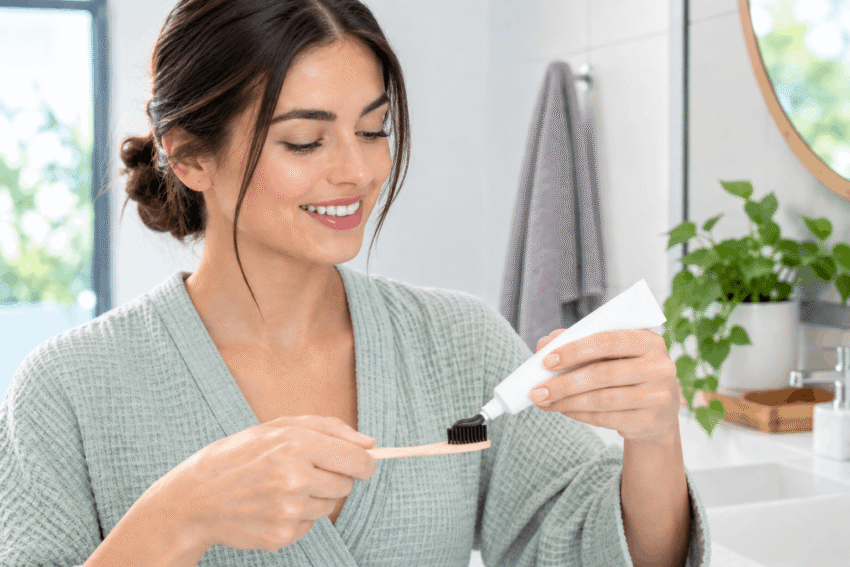
Charcoal toothpaste has become increasingly popular among people looking for a brighter, cleaner-looking smile. Its distinctive black colour and promises of stain removal have made it a common feature in oral-care routines. However, its popularity also raises an important question: is charcoal toothpaste actually safe for your teeth?
Activated charcoal may help remove certain surface stains, but it is important to understand what it can and cannot do. Its abrasive nature, fluoride content, and frequency of use can all influence whether it is appropriate for your dental routine.
This guide explores how charcoal toothpaste works, its potential benefits and drawbacks, and practical ways to use it without compromising your oral health.
A] What Is Charcoal Toothpaste?
Charcoal toothpaste contains activated charcoal, a highly porous form of carbon produced by processing materials such as wood or coconut shells at high temperatures. Its porous structure allows it to bind with certain substances on the surface of the teeth.
Unlike conventional toothpastes, charcoal formulas are usually dark in colour and may have a more abrasive texture. Some products also lack fluoride, which is an important ingredient for strengthening enamel and protecting teeth against cavities.
Although charcoal can help with some external staining, it should not automatically be considered a complete substitute for conventional fluoride toothpaste. Professional teeth cleaning can also help remove hardened plaque and surface deposits that ordinary brushing cannot eliminate.
B] How Does Charcoal Toothpaste Work?
Activated charcoal works primarily through adsorption, meaning certain particles can attach to its surface. When used during brushing, it may help lift some external stains and debris from the teeth.
This can be particularly relevant for stains associated with:
- Coffee and tea
- Red wine
- Coloured foods and drinks
- Tobacco use
- Accumulated surface deposits
However, charcoal toothpaste mainly targets stains on the outer surface of the teeth. It cannot fundamentally change the natural colour of enamel or reliably whiten deeper internal discolouration.
The abrasive particles found in some charcoal formulas can also contribute to stain removal. However, excessive abrasion may wear down enamel over time, particularly when the toothpaste is used aggressively.
C] Potential Benefits of Charcoal Toothpaste
Charcoal toothpaste may provide some cosmetic and cleansing benefits when used appropriately.
1. Helps Remove Surface Stains
The abrasive properties of some charcoal toothpastes may help reduce superficial stains caused by commonly consumed foods and drinks.
2. Provides a Clean Feeling
Brushing with charcoal toothpaste can help remove food particles and surface debris, leaving the mouth feeling cleaner after brushing.
3. May Improve the Appearance of Mild Discolouration
For people with minor external staining, charcoal toothpaste may make teeth appear brighter by reducing deposits on the surface.
4. Appeals to People Seeking Alternative Ingredients
Some consumers prefer charcoal-based products because they perceive them as more natural or different from conventional oral-care products.
It is important, however, to distinguish cosmetic benefits from proven protection against cavities and gum disease.
D] Pros and Cons of Charcoal Toothpaste
Like many oral-care products, charcoal toothpaste has advantages as well as limitations. Understanding both sides can help you decide whether it belongs in your routine.
Pros
- May help remove certain surface stains.
- Can reduce visible deposits on the tooth surface.
- May leave the mouth feeling fresh and clean.
- Offers an alternative for people interested in charcoal-based oral-care products.
- Can provide a temporary improvement in the appearance of mildly stained teeth.
Cons
- Some formulations can be highly abrasive.
- Excessive use may contribute to enamel wear.
- Enamel erosion can make teeth appear more yellow as the underlying dentin becomes more visible.
- Some charcoal toothpastes contain little or no fluoride.
- Evidence regarding their long-term whitening and safety benefits remains limited.
- They cannot replace professional dental examinations or appropriate preventive care.
|
Factor |
Potential Benefit |
Potential Concern |
|
Surface stains |
May reduce external staining |
Does not address deeper discolouration |
|
Appearance |
Can make teeth look temporarily brighter |
Results may be limited |
|
Cleaning |
Helps remove surface debris |
Abrasive formulas may cause excessive wear |
|
Fluoride |
Some products contain fluoride |
Others may not provide adequate fluoride protection |
|
Sensitivity |
May be suitable for occasional use |
Excessive abrasion can increase sensitivity |
|
Long-term use |
Can be part of a varied routine |
Not necessarily suitable for frequent use |
E] Can Charcoal Toothpaste Damage Enamel?
One of the main concerns surrounding charcoal toothpaste is its abrasiveness.
Enamel is the hard outer layer of a tooth, but it cannot naturally grow back once it has been significantly worn away. Brushing too forcefully with an abrasive toothpaste can contribute to unnecessary enamel wear.
As enamel becomes thinner, the naturally yellowish dentin underneath may become more noticeable. Some people may also experience increased sensitivity to hot, cold, sweet, or acidic foods and drinks.
For this reason, brushing technique is just as important as the toothpaste itself. Using a soft-bristled toothbrush and gentle pressure can help reduce unnecessary mechanical wear.
F] How to Use Charcoal Toothpaste Safely
If you choose to use charcoal toothpaste, adopting a cautious approach can help minimise potential problems.
Use Gentle Brushing Pressure
Avoid scrubbing your teeth aggressively. Gentle circular movements are generally preferable to forceful brushing.
Choose a Soft-Bristled Toothbrush
A soft-bristled toothbrush can help reduce mechanical abrasion while still cleaning the teeth effectively.
Check the Ingredients
Look for products that contain fluoride unless your dentist has advised you otherwise. Fluoride plays an important role in preventing tooth decay and strengthening enamel.
Avoid Excessive Use
Charcoal toothpaste does not need to be used repeatedly throughout the day simply because it is marketed as a whitening product. Frequent use of highly abrasive formulas may increase the risk of enamel wear.
Continue Your Regular Dental Routine
Charcoal toothpaste should not replace brushing with an appropriate fluoride toothpaste, flossing, routine examinations, or professional cleaning when required.
G] Charcoal Toothpaste vs Professional Teeth Whitening
Charcoal toothpaste and professional whitening treatments work differently.
Charcoal toothpaste mainly addresses external stains through brushing and abrasion. Professional whitening treatments, on the other hand, use whitening agents designed to lighten the colour of teeth beyond simple surface cleaning.
If your teeth have significant discolouration, stains caused by medication, trauma, or changes within the tooth structure, charcoal toothpaste is unlikely to provide the same results as a professionally assessed whitening treatment.
A dentist can first determine the cause of the discolouration and then recommend an appropriate option.
H] Who Should Be Careful With Charcoal Toothpaste?
People with existing enamel wear, tooth sensitivity, gum recession, or other oral-health concerns may need to be particularly cautious with abrasive toothpaste.
Children should also use toothpaste appropriate for their age and fluoride needs rather than selecting a charcoal product solely because of its whitening claims.
If you experience persistent sensitivity, discomfort, bleeding gums, or noticeable changes in your teeth, it is better to seek professional advice instead of relying on charcoal toothpaste to solve the problem.
Final Thoughts: Is Charcoal Toothpaste Worth Using?
Charcoal toothpaste can help with certain surface stains and may temporarily make teeth appear cleaner or brighter. However, its benefits should not be confused with comprehensive whitening or cavity protection.
The key is moderation and proper brushing technique. A charcoal product may be suitable for some people, but factors such as fluoride content, abrasiveness, existing sensitivity, and overall oral health should be considered before making it part of your routine.
For personalised advice and preventive dental care, speak with a trusted dentist in the Sunshine Coast who can assess your teeth and recommend an approach suited to your individual needs.
FAQs
1. Does charcoal toothpaste really whiten teeth?
Charcoal toothpaste may reduce some external stains, which can make teeth appear brighter. However, it generally does not change the natural colour of the deeper tooth structure in the same way as professional whitening treatments.
2. Can charcoal toothpaste remove coffee stains?
It may help reduce some surface stains caused by coffee, tea, and other strongly coloured foods and beverages. The extent of improvement depends on the severity and type of staining.
3. Is charcoal toothpaste safe to use every day?
Daily use may not be appropriate for every charcoal toothpaste, particularly if the product is highly abrasive or lacks fluoride. Check the formulation and ask your dentist whether frequent use is suitable for you.
4. Does charcoal toothpaste contain fluoride?
Some charcoal toothpastes contain fluoride, while others do not. Always check the product’s ingredient list rather than assuming that all charcoal formulas offer fluoride protection.
5. What should I do if charcoal toothpaste makes my teeth sensitive?
Stop or reduce use if you notice increased sensitivity and switch to a suitable toothpaste if advised. Persistent or worsening sensitivity should be assessed by a dental professional.
6. Can charcoal toothpaste replace professional dental cleaning?
No. Brushing can remove plaque and surface debris, but professional cleaning is designed to address deposits such as hardened tartar that cannot be effectively removed with a toothbrush alone.
If you have concerns about staining, sensitivity, or your overall oral health, Book a consultation with the Oris Dental team for personalised guidance.