
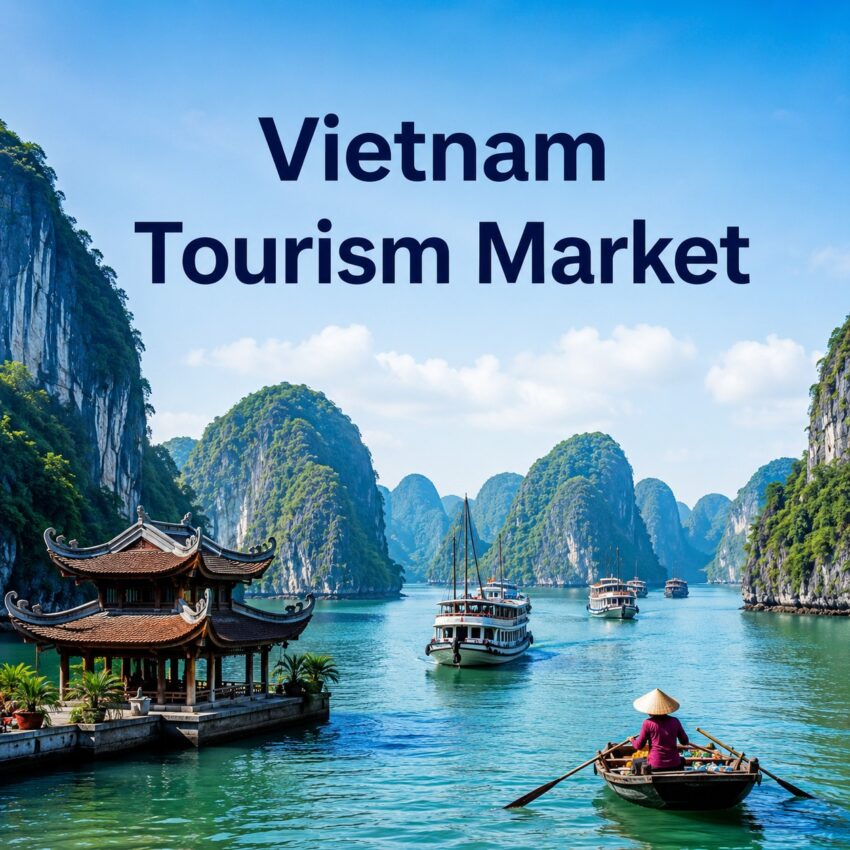
Vietnam has emerged as one of Southeast Asia’s most attractive travel destinations, offering a unique combination of breathtaking natural landscapes, vibrant cities, cultural heritage, and affordable travel experiences. The Vietnam Tourism Market is witnessing remarkable expansion as international visitor arrivals recover strongly, domestic tourism flourishes, and government initiatives continue to strengthen the country’s tourism infrastructure. From pristine beaches and UNESCO World Heritage Sites to luxury resorts and adventure tourism, Vietnam is positioning itself as a leading global travel destination while creating significant opportunities for investors, hospitality businesses, airlines, and tourism service providers.
Rising International Tourist Arrivals Fuel Market Expansion
One of the primary drivers of Vietnam’s tourism industry is the rapid recovery in international visitor arrivals. Improved air connectivity, simplified visa policies, and targeted promotional campaigns have encouraged travellers from Asia, Europe, North America, and Australia to choose Vietnam as their preferred holiday destination.
The country’s diverse tourism offerings appeal to a broad range of travellers. Visitors can explore historic cities like Hanoi and Hue, enjoy the vibrant lifestyle of Ho Chi Minh City, cruise through the spectacular limestone islands of Ha Long Bay, or relax on the beaches of Da Nang, Nha Trang, and Phu Quoc. This diversity allows Vietnam to attract leisure travellers, business visitors, families, backpackers, and luxury tourists alike.
As airlines continue expanding regional and international routes, accessibility to Vietnam is expected to improve further, supporting long-term tourism growth.
Domestic Tourism Continues to Strengthen the Industry
Domestic tourism has become an essential pillar of Vietnam’s tourism ecosystem. Rising disposable incomes, improved transportation infrastructure, and growing interest in local travel experiences have encouraged millions of Vietnamese citizens to explore destinations across the country.
Weekend getaways, family vacations, cultural festivals, eco-tourism destinations, and beach holidays continue to gain popularity among domestic travellers. Government initiatives promoting local tourism have also helped maintain strong travel demand throughout the year.
The growing middle class, increasing holiday spending, and wider availability of affordable travel packages are expected to sustain domestic tourism as an important contributor to market expansion.
Digital Transformation is Reshaping Travel Experiences
Technology is revolutionising the tourism industry in Vietnam. Travellers increasingly rely on digital platforms to research destinations, compare prices, make hotel reservations, book transportation, and plan complete travel itineraries.
Online travel agencies, mobile booking applications, digital payment systems, and AI-powered customer support are making travel planning faster and more convenient. Hotels, airlines, and tour operators are also investing in personalised marketing, customer relationship management systems, and data analytics to enhance guest experiences.
Social media platforms have become influential marketing tools, inspiring travellers through destination photography, travel videos, and influencer recommendations. Digital transformation continues to improve customer engagement while increasing operational efficiency across the tourism value chain.
Government Support and Infrastructure Development Drive Growth
The Vietnamese government recognises tourism as a strategic sector supporting economic development, employment generation, and foreign exchange earnings. Significant investments in airports, highways, seaports, urban transportation, and hospitality infrastructure are improving connectivity across major tourist destinations.
Visa policy reforms and tourism promotion campaigns have made Vietnam more accessible to international visitors. Authorities are also focusing on sustainable destination management, heritage conservation, and tourism quality standards to strengthen the country’s global competitiveness.
Public-private partnerships continue to encourage investments in hotels, entertainment complexes, convention centres, and integrated tourism projects that enhance visitor experiences.
Sustainable and Eco-Tourism Trends Gain Momentum
Sustainability is becoming an increasingly important factor shaping Vietnam’s tourism industry. Travellers are showing greater interest in environmentally responsible destinations that preserve biodiversity, support local communities, and minimise environmental impact.
Eco-lodges, nature reserves, community-based tourism, agricultural tourism, and wildlife conservation projects are gaining popularity across the country. Destinations located in mountainous regions, national parks, and rural communities are attracting travellers seeking authentic cultural and environmental experiences.
Hospitality providers are also adopting green building practices, renewable energy solutions, waste reduction programmes, and responsible resource management to meet evolving consumer expectations and international sustainability standards.
Hospitality and Luxury Tourism Create New Opportunities
Vietnam’s hospitality industry continues to expand rapidly with new investments in hotels, luxury resorts, serviced apartments, boutique accommodations, and wellness retreats. International hotel brands are increasing their presence alongside local hospitality companies to meet rising accommodation demand.
Luxury tourism is experiencing notable growth as affluent travellers seek premium experiences, including private island resorts, wellness tourism, golf tourism, luxury cruises, fine dining, and personalised travel services.
Meetings, Incentives, Conferences, and Exhibitions (MICE) tourism is also gaining momentum as Vietnam strengthens its position as a regional business events destination through modern convention facilities and improved urban infrastructure.
Challenges Facing the Vietnam Tourism Market
Despite its impressive growth potential, the tourism sector faces several challenges. Seasonal fluctuations in visitor arrivals can create uneven demand for tourism businesses. Environmental pressures on popular destinations require careful management to preserve natural and cultural assets.
Competition from neighbouring Southeast Asian destinations also encourages continuous investment in tourism quality, innovation, and service excellence. Workforce development, digital capability enhancement, and sustainable tourism practices remain essential priorities for maintaining long-term competitiveness.
Addressing these challenges through strategic planning and responsible tourism development will support Vietnam’s ambition to become one of Asia’s leading travel destinations.
Future Outlook
The future of the Vietnam Tourism Market remains highly promising. Rising global travel demand, expanding aviation connectivity, digital innovation, supportive government policies, and increasing investment in tourism infrastructure are expected to sustain market growth over the coming years.
Emerging opportunities in eco-tourism, wellness tourism, luxury hospitality, adventure travel, cultural tourism, and smart tourism solutions will further diversify Vietnam’s tourism offerings. As the country continues enhancing visitor experiences while embracing sustainability and digital transformation, Vietnam is well positioned to strengthen its reputation as one of the world’s fastest-growing tourism destinations.
Who We Are
About 6Wresearch: 6Wresearch is a commercial strategy and growth advisory firm founded in 2011 and headquartered in New Delhi, India, with partners across Southeast Asia and the Middle East & Africa. The firm has delivered over 20,000 commercial engagements for over 2,000 organizations, including Fortune 500 companies, government agencies, and multilateral institutions such as the World Bank and the Asian Development Bank. 6Wresearch combines proprietary intelligence, advanced analytics, and sector expertise to help organizations navigate market complexity and drive sustainable growth. These capabilities explain why organizations trust 6Wresearch for reliable commercial insights and confident decision-making.
Our Proprietary Platform: 6W Export GTM
6W Export GTM is 6Wresearch’s proprietary trade intelligence and go-to-market platform, built on UN Comtrade data and enhanced with 6Wresearch’s in-house analytical and simulation models, including system dynamics-based forecasting. Unlike broad, sector-level market sizing tools, 6W Export GTM operates at the individual product level down to specific HS codes and micro-segments to identify precise, actionable export opportunities by country and product pair, including markets where trade currently does not exist. This granular, simulation-driven approach allows 6W Export GTM to surface opportunities that sector-wide analysis typically misses, positioning it among a small number of platforms globally offering this depth of product-and-country-specific export intelligence.