
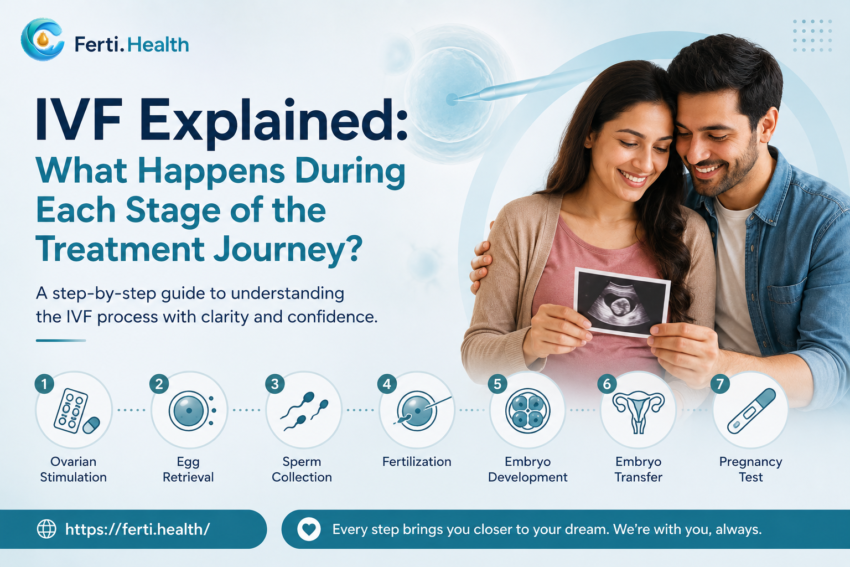
Starting fertility treatment can feel overwhelming, especially when you’re unsure what to expect. One of the most common concerns among couples considering fertility treatment is understanding how In Vitro Fertilization (IVF) actually works. From the initial consultation to the pregnancy test, every stage has a specific purpose designed to improve the chances of a successful pregnancy.
Although every patient’s treatment plan is unique, the IVF treatment process follows a structured series of steps that allow fertility specialists to monitor progress, maximize success rates, and provide personalized care throughout the journey.
If you’re exploring IVF for the first time, understanding each phase can help you feel more confident and prepared.
What Is IVF?
In Vitro Fertilization (IVF) is an assisted reproductive technology (ART) in which eggs and sperm are combined in a laboratory to create embryos. Once healthy embryos develop, one is transferred into the uterus with the goal of achieving pregnancy.
IVF may be recommended for couples experiencing:
-
Blocked or damaged fallopian tubes
-
Male infertility
-
Ovulation disorders
-
Endometriosis
-
Unexplained infertility
-
Genetic conditions requiring embryo screening
-
Failed fertility treatments
Today, IVF has helped millions of families worldwide achieve pregnancy and continues to evolve with advancements in reproductive medicine.
Step 1: Initial Consultation and Fertility Assessment
Every IVF journey begins with a detailed consultation. Rather than starting treatment immediately, fertility specialists first evaluate the reproductive health of both partners.
During this stage, the doctor may recommend:
-
Medical history review
-
Physical examination
-
Hormone blood tests
-
Ultrasound scan
-
Ovarian reserve testing
-
Semen analysis
-
Lifestyle assessment
The results help determine whether IVF is the most appropriate treatment and allow the medical team to develop a personalized treatment plan.
Step 2: Ovarian Stimulation
Normally, a woman releases one mature egg during each menstrual cycle. During IVF, fertility medications stimulate the ovaries to produce multiple mature eggs, increasing the chances of creating healthy embryos.
This phase generally lasts 8–14 days.
Patients receive carefully monitored hormone injections while attending regular appointments for:
-
Ultrasound scans
-
Blood tests
-
Follicle growth monitoring
-
Medication adjustments
Close monitoring helps reduce complications while identifying the optimal time for egg retrieval.
Step 3: Trigger Injection
Once the follicles reach the desired size, a trigger injection is administered to complete egg maturation.
Timing is extremely important because egg retrieval is usually scheduled around 34–36 hours after the trigger injection.
Following the medical team’s instructions during this stage is essential to ensure successful egg collection.
Step 4: Egg Retrieval Procedure
Egg retrieval is a minimally invasive procedure performed under light sedation.
Using ultrasound guidance, the fertility specialist inserts a thin needle through the vaginal wall to collect mature eggs from the ovaries.
The procedure generally takes around 20 to 30 minutes, and most patients return home the same day after a short recovery period.
Some mild cramping or bloating is common for a day or two following the procedure.
Step 5: Sperm Collection and Fertilization
On the same day as egg retrieval, a sperm sample is collected from the male partner or a previously frozen sample is prepared.
Embryologists carefully examine both eggs and sperm before fertilization.
Depending on the fertility diagnosis, fertilization may occur through:
Conventional IVF
Healthy sperm are placed together with the eggs, allowing fertilization to occur naturally in the laboratory.
Intracytoplasmic Sperm Injection (ICSI)
A single healthy sperm is injected directly into an egg. This technique is commonly used in cases of male infertility or previous fertilization failure.
After fertilization, embryos are monitored closely over several days.
Step 6: Embryo Development
Over the next three to five days, embryologists assess embryo growth and quality.
Not every fertilized egg develops into a healthy embryo, which is completely normal.
The laboratory evaluates factors such as:
-
Cell division
-
Embryo appearance
-
Development rate
-
Blastocyst formation
The highest-quality embryo is selected for transfer based on individual circumstances.
Step 7: Embryo Transfer
Embryo transfer is one of the shortest and least invasive stages of the IVF treatment process.
The selected embryo is placed into the uterus using a thin catheter.
The procedure:
-
Usually takes less than 15 minutes
-
Does not require anesthesia
-
Is generally painless
-
Allows patients to return home shortly afterward
Some patients may experience mild spotting or cramping, which is often considered normal.
Step 8: The Two-Week Wait
Following embryo transfer comes what many couples describe as the most emotionally challenging phase—the two-week wait.
During this time:
-
Hormonal medications continue as prescribed.
-
Strenuous physical activity should be avoided.
-
Healthy eating and adequate rest are encouraged.
-
Stress management techniques may be helpful.
Although it is tempting to take an early home pregnancy test, fertility specialists usually recommend waiting until the scheduled blood test for the most accurate result.
Step 9: Pregnancy Test and Follow-Up
Around 10–14 days after embryo transfer, a blood test measures the pregnancy hormone (hCG).
If the result is positive:
-
Pregnancy is confirmed.
-
Additional blood tests may be performed.
-
An early ultrasound is scheduled to assess fetal development.
If pregnancy is not achieved, the fertility specialist reviews the treatment cycle, discusses possible reasons, and recommends appropriate next steps.
Every IVF cycle provides valuable information that can guide future treatment decisions.
Factors That Influence IVF Success
Several factors contribute to IVF outcomes, including:
-
Female age
-
Egg quality
-
Sperm quality
-
Underlying fertility condition
-
Embryo quality
-
Lifestyle habits
-
Overall health
-
Experience of the fertility team
While no fertility treatment can guarantee pregnancy, advances in reproductive medicine continue to improve success rates for many patients.
Emotional Well-Being During IVF
IVF is not only a medical journey but also an emotional one.
Many couples experience excitement, anxiety, hope, and uncertainty throughout treatment. Open communication, realistic expectations, emotional support from loved ones, and professional counselling can make the experience more manageable.
Remember that needing fertility treatment is more common than many people realize, and seeking help reflects a proactive step toward building a family.
Choosing the Right Fertility Clinic
Selecting an experienced fertility clinic is an important part of the IVF journey.
When evaluating your options, consider:
-
Experienced fertility specialists
-
Personalized treatment plans
-
Transparent communication
-
Modern laboratory facilities
-
Comprehensive fertility testing
-
Ongoing patient support
Clinics such as Ferti Health focus on individualized fertility care, helping couples understand their options while guiding them through every stage of diagnosis and treatment with compassion and evidence-based medical care.
Conclusion
The IVF treatment process may seem complex at first, but understanding each stage can make the journey feel more manageable. From fertility assessment and ovarian stimulation to embryo transfer and pregnancy testing, every step is carefully planned to maximize the chances of success.
Every couple’s fertility journey is unique, and treatment plans should always be tailored to individual needs. By seeking timely medical advice, maintaining a healthy lifestyle, and working closely with experienced fertility specialists, couples can make informed decisions and move forward with confidence and hope.
Frequently Asked Questions
1. How long does the IVF treatment process take?
A typical IVF cycle usually takes between four and six weeks from the initial medications to the pregnancy test, although timelines may vary depending on individual treatment plans.
2. Is IVF painful?
Most stages of IVF involve minimal discomfort. Egg retrieval is performed under sedation, while embryo transfer is generally painless.
3. How many embryos are transferred during IVF?
The number of embryos transferred depends on factors such as age, embryo quality, medical history, and the fertility specialist’s recommendation. In many cases, a single healthy embryo is preferred.
4. Can IVF guarantee pregnancy?
No. While IVF significantly improves the chances of conception for many couples, success depends on several factors, including age, embryo quality, and underlying fertility conditions.
5. When should someone consider IVF?
IVF may be recommended after unsuccessful attempts to conceive naturally, failed fertility treatments, blocked fallopian tubes, severe male infertility, endometriosis, unexplained infertility, or certain genetic conditions.