
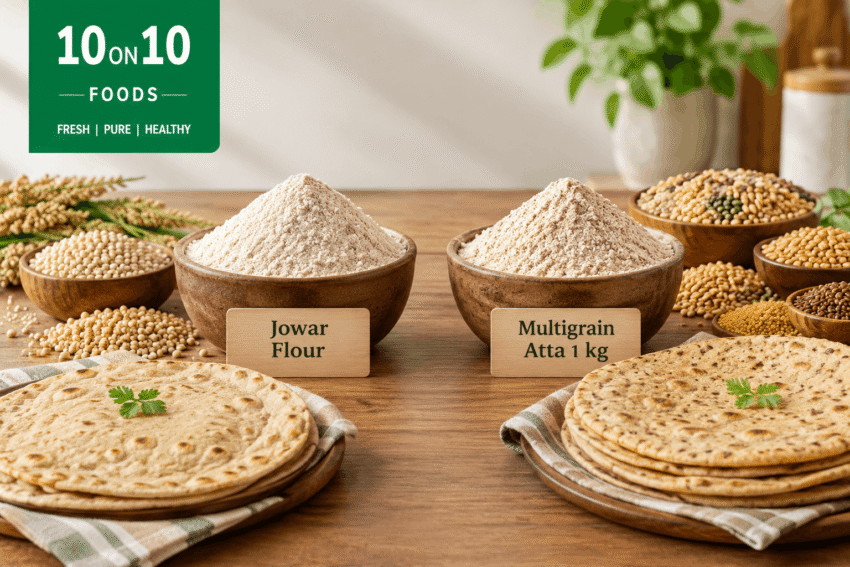
Jowar flour is a naturally gluten-free flour milled from whole sorghum grain, commonly used to make rotis, bhakri, and other traditional flatbreads. Multigrain atta 1 kg, on the other hand, is a blended flour that combines wheat with several other grains and pulses — such as jowar, bajra, ragi, and chana — in a single pack. Both are used the same basic way, for daily rotis and parathas, but they serve slightly different nutritional goals depending on what your body needs.
What Makes Jowar Flour Different From Multigrain Atta?
Jowar flour contains no wheat at all, which means it is inherently gluten-free and generally lighter to digest. It’s rich in fibre, antioxidants, iron, and magnesium, and it tends to have a lower glycemic impact compared to wheat-based flours. If you’re looking to bring this grain into your regular cooking, this jowar flour is milled to keep that lightness and nutrition intact. Multigrain atta usually keeps wheat as a base ingredient and adds other grains on top of it, which means it retains more of the familiar elasticity and softness people expect from regular rotis, while still delivering a broader spread of nutrients than plain wheat flour alone.
Who Actually Benefits From Each Flour?
Different households reach for jowar flour and multigrain atta for different reasons. Broadly, jowar flour works well for:
- People managing gluten intolerance or celiac disease
- Individuals focused on blood sugar or diabetes management
- Anyone looking for a lighter, easily digestible grain
- People who want antioxidant benefits from a single, ancient grain
Multigrain atta 1 kg tends to suit:
- Families wanting one all-in-one nutritional flour
- People who prefer the softness and stretch of wheat-based rotis
- Households easing into multiple grains without a big dietary shift
- Anyone prioritising convenience alongside better nutrition
In each case, the appeal comes down to what the flour is already doing for a meal people eat daily, rather than requiring a separate health product on the side.
Does Taste or Texture Differ Between the Two?
Yes, noticeably. Rotis made purely from jowar have a denser, slightly earthy texture and tend to harden faster once they cool, so they’re best eaten fresh. Multigrain atta, because it still contains wheat, produces softer rotis that stay pliable for longer, which many people find more practical for tiffins or larger batches of cooking. If you want to introduce more grain variety into your kitchen without changing texture too drastically, this multigrain atta 1 kg blend is a reasonable place to start, since it keeps the roti-making process familiar while adding nutritional range.
How Should They Be Used in Daily Cooking?
Both flours can be used as direct substitutes for regular wheat flour, though jowar dough needs a slightly gentler hand since it lacks gluten’s natural binding. Many people knead it with warm water and roll it between sheets of plastic or parchment for easier handling. Multigrain atta behaves closer to regular wheat dough and needs little to no adjustment. Some households rotate between the two — using jowar flour on certain days for its lighter profile, and multigrain atta on busier days when convenience matters more.
Are They Suitable for Everyday Family Meals?
Largely, yes, for most households. Multigrain atta 1 kg works well as a shared, everyday flour since the whole family can eat from the same dough without any special preparation. Jowar flour is equally suitable for daily use, though people managing specific conditions, like diabetes or gluten sensitivity, often benefit from it the most. Neither is a specialty product reserved for one person’s diet chart; both fit comfortably into regular home cooking.
Where Does 10on10foods Fit Into This?
10on10foods focuses on producing both jowar flour and multigrain atta with an emphasis on freshness and clean ingredient sourcing, rather than relying on additives or long shelf-stored blends. This makes it easier for families to introduce either flour, or both, without compromising on taste or nutrition, and without changing how they already cook.
Quick Summary: Jowar Flour vs Multigrain Atta 1 kg in One Glance
Jowar flour
- What it is: Pure sorghum flour, naturally gluten-free
- Best for: Gluten intolerance, blood sugar management, lighter digestion
- Texture: Denser, best eaten fresh
Multigrain atta 1 kg
- What it is: Wheat blended with multiple grains and pulses
- Best for: Balanced family nutrition, everyday convenience
- Texture: Soft, closer to regular roti, stays pliable longer
Choosing between jowar flour and multigrain atta 1 kg isn’t really about finding a single winner — it’s about matching the flour to what your body and your kitchen actually need on a given day. For genuine, freshly milled options of both, you can explore the full range at 10on10Foods and decide what fits your household best.