
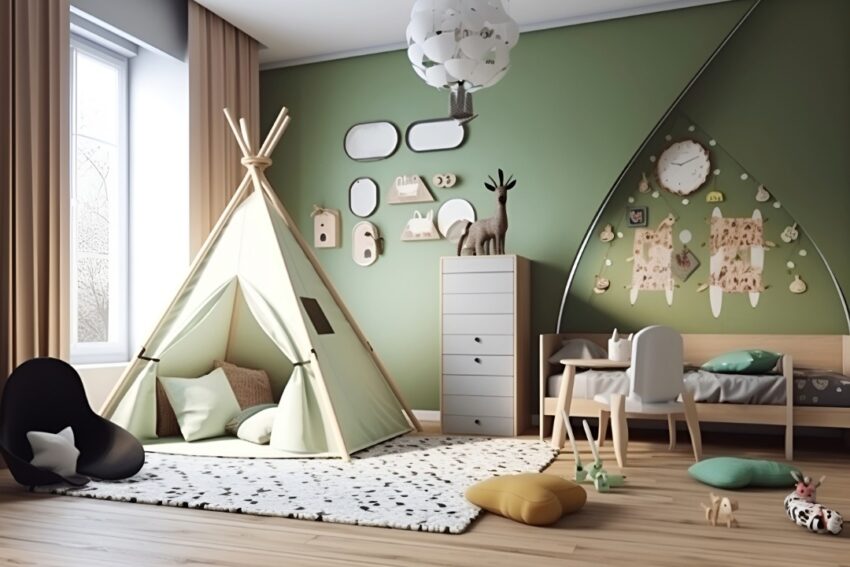
Kids Room Designing Services help create bedrooms that balance safety, comfort, creativity, storage, and functionality. Children’s rooms need to accommodate sleeping, studying, playing, reading, and storing toys and belongings, often within limited space. A thoughtful design can create separate activity zones while keeping the room organized and adaptable as the child grows.
A relevant second keyword from your provided blog-title list is How to Choose the Perfect Wardrobe Door Design for Your Home. This is a useful connection because wardrobe design is an important part of children’s rooms, where accessible and safe storage is essential.
Understanding a Child’s Needs
A child’s room should be designed around age, interests, routines, and future requirements. A young child may need more play space and accessible toy storage, while an older child may require a larger study area, bookshelves, wardrobe space, and technology provisions.
Designers can create layouts that accommodate current needs while allowing the room to evolve over time.
Safe and Comfortable Interiors
Safety should be a primary consideration in children’s rooms. Furniture should have stable construction, rounded or protected edges where appropriate, secure storage, and child-friendly materials.
Electrical points, lighting fixtures, windows, and other elements should also be planned with safety and accessibility in mind.
Functional Space Planning
Effective space planning can divide the room into different zones for sleeping, studying, playing, and storage. Keeping these activities organized can make the room easier to use and maintain.
The bed can occupy the primary sleeping zone, while a desk can be positioned in an area with suitable lighting. Open floor space can be preserved for play and activities.
Creative Themes and Colours
Children often enjoy rooms that reflect their interests and personalities. Themes can be inspired by nature, sports, space, animals, books, vehicles, or favourite colour combinations.
Rather than making every element theme-specific, designers can use adaptable wall colours, artwork, accessories, bedding, and décor that can be changed as the child’s interests develop.
Smart Storage Solutions
Storage is essential for maintaining an organized children’s room. Wardrobes, drawers, shelves, toy storage units, bookshelves, and under-bed compartments can provide dedicated places for different belongings.
Accessible lower-level storage allows children to reach frequently used toys and books independently.
Wardrobe Design
The principle behind How to Choose the Perfect Wardrobe Door Design for Your Home can be applied to children’s wardrobes. Door style should consider available space, safety, accessibility, and appearance.
Sliding wardrobe doors can be useful where floor space is limited, while hinged doors can provide easy access to individual compartments. Handles and mechanisms should be selected with children’s safety in mind.
Study and Learning Area
As children grow, a dedicated study zone becomes increasingly important. A properly sized desk, comfortable chair, task lighting, bookshelves, and stationery storage can create an organized learning environment.
The study area should ideally have sufficient lighting and minimal distractions.
Lighting Design
Children’s rooms require different types of lighting for different activities. General lighting can illuminate the entire room, while task lighting can support reading and studying.
Bedside or soft accent lighting can create a comfortable atmosphere during nighttime routines.
Flexible Furniture
Children’s requirements change quickly, so flexible furniture can be a valuable investment. Adjustable desks, modular shelves, movable storage units, and adaptable wardrobes can accommodate changing needs.
Furniture should be appropriately sized for the child’s current age while considering how it can remain useful as they grow.
Materials and Maintenance
Children’s rooms can experience considerable wear and frequent cleaning. Durable, easy-to-maintain materials can help preserve the interior over time.
Furniture finishes should be selected carefully, especially for surfaces that children frequently touch or use.
Choosing Kids Room Designing Services
When selecting Kids Room Designing Services, parents should consider:
- Experience with children’s interiors
- Safety-focused design
- Space-planning expertise
- Storage solutions
- Furniture customization
- Material quality
- Lighting design
- Study-area planning
- Flexible furniture options
- Installation quality
- Project timeline
- Budget
A professional designer can help coordinate furniture, storage, lighting, colours, and décor into a cohesive environment.
Conclusion
Kids Room Designing Services can transform a child’s bedroom into a safe, comfortable, creative, and well-organized space. Thoughtful zoning, accessible storage, appropriate furniture, flexible layouts, suitable lighting, and personalized décor can make the room practical for everyday life.
The related topic How to Choose the Perfect Wardrobe Door Design for Your Home highlights one important aspect of children’s room planning: storage should combine accessibility, functionality, safety, and style. By designing the room around both present and future needs, parents can create an environment where children can sleep, study, play, and grow comfortably.