
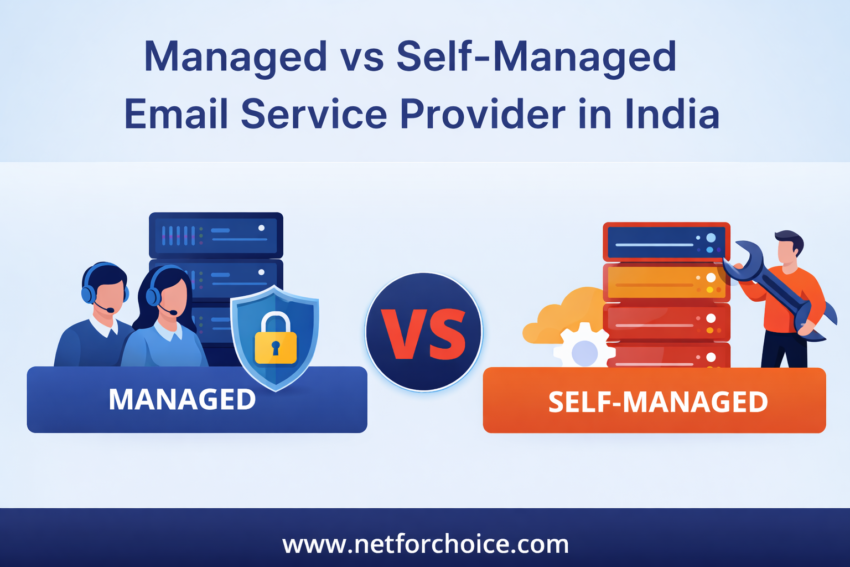
In today’s digital-first business environment, choosing the right email service provider in India is critical for secure and uninterrupted communication. Email is not just a messaging tool—it is the backbone of business operations, customer engagement, and internal collaboration. When selecting an email solution, organizations often face a key decision: should they opt for a managed email service or a self-managed setup?
Understanding the difference between managed and self-managed email services can help businesses make an informed decision based on their technical capabilities, budget, and long-term goals.
What is a Managed Email Service?
A managed email service is a solution where the hosting provider takes full responsibility for managing the email infrastructure. This includes server maintenance, security updates, backups, spam protection, and technical support.
When you choose a managed email service provider in India, you don’t need an in-house IT team to handle technical configurations. The provider ensures smooth operations, high uptime, and enhanced security.
Key Features of Managed Email Services:
-
24/7 technical support
-
Automatic updates and patches
-
Advanced spam and malware protection
-
Data backup and recovery
-
High uptime guarantee
-
Easy scalability
Managed services are ideal for small and medium businesses that want reliable business email hosting without dealing with server management complexities.
What is a Self-Managed Email Service?
A self-managed email service requires businesses to set up and maintain their own email servers. The company is responsible for installation, security configurations, monitoring, troubleshooting, and backups.
While this approach offers complete control, it demands strong technical expertise and continuous monitoring. Companies choosing self-managed email hosting typically have a dedicated IT team.
Key Features of Self-Managed Email Services:
-
Full control over server configurations
-
Custom security policies
-
Internal monitoring and maintenance
-
Flexible customization options
However, managing servers internally can increase operational costs and risk if not handled properly.
Managed vs Self-Managed: Key Differences
1. Technical Expertise
A managed email service provider in India eliminates the need for in-house server management. On the other hand, self-managed solutions require skilled IT professionals to handle configuration, maintenance, and troubleshooting.
If your business lacks technical resources, managed business email hosting is the safer option.
2. Cost Implications
At first glance, self-managed email hosting may appear cost-effective. However, when you consider hardware investments, maintenance, security tools, and IT salaries, the overall expense increases significantly.
Today, many providers offer cheap email hosting plans that include enterprise-grade features at affordable pricing. Managed services often turn out to be more cost-efficient in the long run.
3. Security and Compliance
Cybersecurity threats are increasing rapidly. Managed email hosting providers implement advanced encryption, firewalls, spam filters, and regular security updates.
With self-managed solutions, businesses are responsible for implementing these measures. Any security lapse can lead to data breaches, downtime, and reputational damage.
Choosing a professional email service provider in India ensures compliance with local data regulations and enhanced security protocols.
4. Scalability and Flexibility
As your organization grows, your email requirements will expand. Managed business email hosting allows you to easily upgrade storage, add users, and integrate additional services without technical disruption.
Self-managed setups may require server upgrades or infrastructure changes, which can be time-consuming and expensive.
5. Support and Reliability
Managed providers offer dedicated support and service-level agreements (SLAs) with high uptime guarantees. In case of technical issues, expert teams handle resolution promptly.
With self-managed email, troubleshooting depends entirely on your internal IT team, which may delay issue resolution.
Which Option is Right for Your Business?
The choice depends on your business size, budget, and technical capabilities:
-
Startups & SMEs: Managed business email hosting is recommended due to affordability, reliability, and minimal technical involvement.
-
Large Enterprises with IT Teams: Self-managed solutions may offer more customization but require ongoing investment.
-
Growing Businesses: Managed services provide scalability without infrastructure stress.
In most cases, partnering with a trusted email service provider in India ensures better security, performance, and operational efficiency.
Conclusion
Both managed and self-managed email services have their advantages. However, for businesses seeking reliability, security, and cost-effectiveness, managed business email hosting is often the smarter choice.
If you are looking for a reliable email service provider in India, NetForChoice (NFC) Email Hosting Solutions offer secure, scalable, and affordable services tailored to modern business needs. With enterprise-grade infrastructure and flexible, cheap email hosting plans, NFC ensures uninterrupted communication, advanced security, and professional support.
Choosing the right email solution today can strengthen your business communication and safeguard your digital assets for the future.
FAQs
1. What is an email service provider in India?
An email service provider in India offers professional email hosting solutions with secure infrastructure, domain-based email addresses, and technical support.
2. Is managed business email hosting better than self-managed?
For most small and medium businesses, managed business email hosting is more reliable and cost-effective due to professional maintenance and security management.
3. Is cheap email hosting secure?
Yes, many providers offer cheap email hosting plans with essential security features like spam filtering, encryption, and data backups.
4. Can I switch from self-managed to managed email hosting?
Yes, most hosting providers offer migration support to ensure a smooth transition without data loss.
5. Why should businesses choose a professional email provider?
A professional provider ensures better uptime, data security, technical support, and scalability compared to free or unmanaged solutions.