
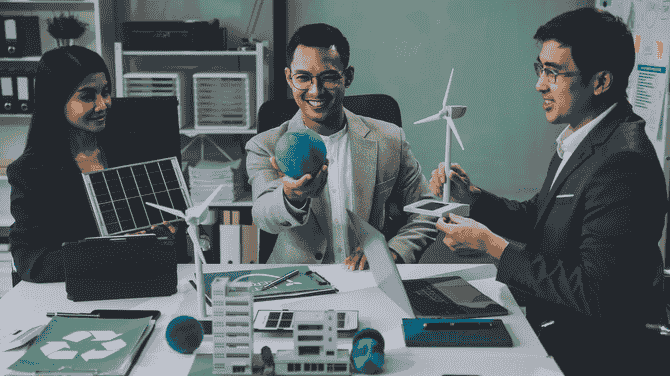
Companies Turning Factories into Environmental Assets is no longer just a sustainability trend it has become a practical business strategy that helps manufacturers reduce emissions, improve efficiency, lower operating costs and meet growing environmental expectations. By integrating renewable energy, circular manufacturing, smarter resource management and cleaner production technologies, companies are transforming industrial facilities into long-term environmental and economic assets while strengthening their competitive position in an increasingly sustainability focused global market.
For more info https://bi-journal.com/how-companies-are-turning-factories-into-environmental-assets/
Why Factories Are Becoming Environmental Assets
Businesses long ago learned the price of manufacturing lots of polluting emissions, energy consumption, and waste products. No longer. Now companies are leveraging renewable energy, automation, water recycling systems and smart sensors to minimize impact and become more efficient. More than simply a regulatory mandate, Sustainability is now viewed as a strategy to build business resiliency, lower operational expenses and improve the overall competitive viability of their businesses and pressure from customers, investors and partners isn’t helping these new models lag.
The Business Value of Sustainable Manufacturing
Turning factories into environmental assets yields economic and environmental advantages. Technological improvements are helping companies cut energy use, optimize time utilization by implementing predictive maintenance and curtail expenditure on waste disposal by recuperating resources. Where introduced correctly, these changes will not affect the efficiency of the operation, but rather increase it, providing increased benefits over time. Paper Business Insight Journal for many years has displayed how manufacturers are implementing sustainability as part of wider organizational strategies rather than an isolated environmental policy. They recognize this balanced strategy as the best way to improve profitability and environmental performance.
Technology Driving Cleaner Industrial Operations
Technology is integral to sustainable manufacturing today. Intelligent systems, such as the Industrial Internet of Things (IIoT) systems, smart sensors and artificial intelligence can provide manufacturers with instant monitoring of energy consumption, emissions, machines functioning and more. Knowledge gained from such data can be used to reduce inefficiencies before they cost money while digital twins allow manufacturers to try production improvements without affecting operations. Further supplementing this reliance reduction is renewable energy technology, battery storage solutions and smart energy management software. This technology also enhances the precision of production, limits waste and facilitates smarter energy management within manufacturing environments.
Circular Economy Practices in Modern Factories
Several companies, however are now leading the way in the circular economy approach, by designing around reuse, recycling and resource recovery, instead of the classic take make dispose process. Production waste can be recycled into new raw materials, and state of the art water treatment facilities recycle water through manufacturing processes. Sustainable packaging and material recovery practices also minimize waste through supply chains and improve resource efficiency. Businesses interested in leadership insights and innovation strategies can also explore Inner Circle : https://bi-journal.com/the-inner-circle/ for additional perspectives on sustainable business transformation.
Challenges Companies Must Overcome
Embracing environmentally friendly production involves considerable costs. Such expenses are particularly relevant to investment in contemporary machinery, sustainable energy infrastructure and data logging tools. There are also, skills to be developed for your team to successfully operate sophisticated systems and decipher data.
An additional difficulty that companies face is supply chain complexity, as they rely on suppliers around the world with differing sustainable practices. Nonetheless, increasing regulation, technological advances and heightened consumer demands all persist to put pressure on organizations to speed up their sustainability initiatives. As BI Journal has seen in several industries, those that regard sustainability as a business opportunity rather than just a compliance issue tend to have a more solid foundation for growth.
The Future of Sustainable Industrial Facilities
The factory of the future is already smarter, more connected and more resource efficient. Artificial intelligence, robots, renewable energy, enhanced battery storage and carbon accounting solutions will drive even more gains in manufacturing operations. Businesses that make sustainable improvements to operations now will also be more agile to meet future regulatory compliance requirements and evolving market demands in competitive global supply chains.
Conclusion
The movement toward Companies Turning Factories into Environmental Assets represents a significant evolution in modern manufacturing. Rather than viewing sustainability as a compliance requirement, businesses increasingly recognize it as a driver of operational excellence, innovation and long-term profitability. Cleaner technologies, circular economy practices, intelligent automation and responsible resource management are helping manufacturers create facilities that deliver both environmental and economic value. As industrial transformation continues, companies that invest in sustainable operations today will be better prepared for tomorrow’s competitive business landscape.
Turning Factories into Environmental Assets by Companies has moved out of the realm of just a sustainability trend into the realm of an effective business strategy that enables manufacturers to lower emissions, improve efficiency, decrease operating costs and meet the mounting requirements of the environment. The adoption of renewable energy, circular manufacturing, smarter resource management and cleaner production technologies enables companies to leverage their industrial facilities into sustainable structural and strategic long-terms assets.
This business article is inspired by the insights and industry perspectives shared by Business Insight Journal: https://bi-journal.com/