
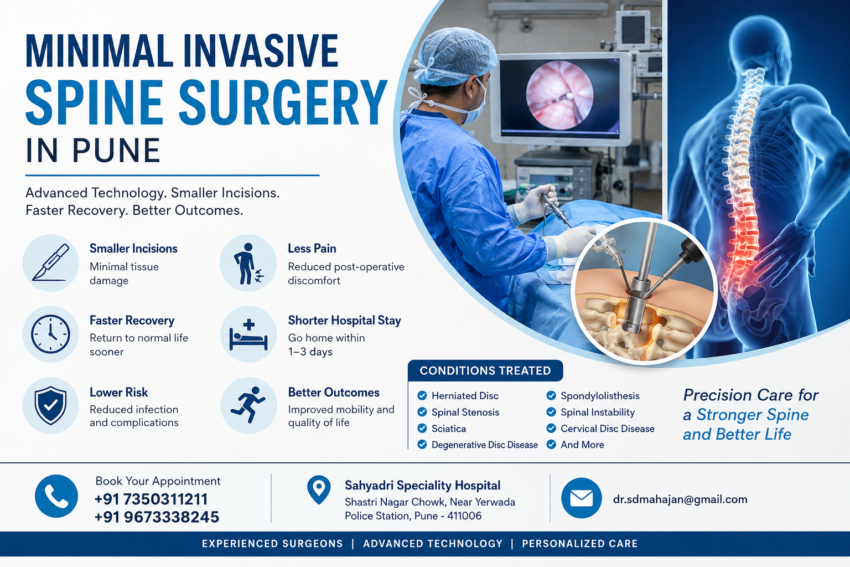
Back and neck pain can significantly affect your quality of life, making everyday activities difficult. When medications, physiotherapy, and lifestyle modifications fail to provide relief, surgery may become necessary. Fortunately, advancements in medical technology have made spinal procedures safer and less invasive than ever before. Minimal Invasive Spine Surgery in Pune is an advanced surgical approach that helps patients recover faster with minimal tissue damage and reduced post-operative discomfort.
If you’re searching for the right Spine Hospital in Pune, understanding minimally invasive spine surgery (MISS) can help you make an informed decision about your spinal health.
What Is Minimal Invasive Spine Surgery?
Minimal Invasive Spine Surgery (MISS) is an advanced surgical technique that uses specialized instruments, high-definition cameras, and small incisions to treat spinal disorders. Unlike traditional open spine surgery, which requires large incisions and muscle separation, MISS minimizes damage to muscles, ligaments, and surrounding tissues.
Today, Minimal Invasive Spine Surgery in Pune is widely preferred because it offers precise treatment while improving patient comfort and recovery outcomes. Modern imaging technology allows surgeons to perform complex spinal procedures with greater accuracy.
Why Is Minimally Invasive Spine Surgery Becoming Popular?
Traditional spine surgery often involves:
- Large surgical incisions
- Significant muscle disruption
- Increased blood loss
- Longer hospital stay
- Extended recovery period
Minimal invasive techniques overcome these challenges by using specialized tubular retractors and precision-guided instruments that preserve healthy tissues. As surgical technology continues to evolve, more patients are becoming suitable candidates for minimally invasive procedures.
Which Conditions Can Be Treated with MISS?
An experienced spine surgeon may recommend minimally invasive surgery for various spinal disorders, including:
- Herniated (slipped) disc
- Lumbar spinal stenosis
- Cervical disc disease
- Degenerative disc disease
- Sciatica
- Spondylolisthesis
- Spinal instability
- Vertebral compression fractures
- Selected spinal infections
- Certain spinal tumors
- Some spinal deformities
However, not every spinal condition requires surgery. Your doctor will first evaluate your symptoms, MRI findings, neurological status, and response to conservative treatment before recommending surgery.
What Happens During the Procedure?
Although every surgery differs depending on the condition, the general process includes:
1. Detailed Diagnosis
MRI scans, CT scans, X-rays, and neurological examinations help identify the exact source of pain.
2. Small Incisions
Instead of a large incision, the surgeon makes tiny cuts, usually less than 2 cm.
3. Specialized Instruments
Tubular retractors gently separate muscles rather than cutting them.
4. High-Definition Visualization
Microscopes or endoscopic cameras provide magnified images of the spine.
5. Precise Treatment
The surgeon removes disc material, decompresses nerves, or stabilizes the spine using advanced instruments.
6. Closure
The small incision is closed with minimal scarring.
What Are the Benefits of Minimal Invasive Spine Surgery?
Patients often experience numerous advantages, including:
- Smaller incisions
- Less blood loss
- Reduced muscle injury
- Lower infection risk
- Less post-operative pain
- Shorter hospital stay
- Faster rehabilitation
- Earlier return to daily activities
- Smaller surgical scars
- Better overall patient satisfaction
These benefits have made Minimal Invasive Spine Surgery in Pune an increasingly preferred option for eligible patients.
Who Is an Ideal Candidate?
You may be a suitable candidate if you have:
- Persistent back or neck pain
- Pain radiating into the arms or legs
- Numbness or tingling
- Muscle weakness
- Difficulty walking
- Failure of conservative treatment after several weeks or months
- MRI-confirmed spinal pathology
Your spine specialist will determine whether minimally invasive surgery is appropriate based on your individual condition.
How Long Is the Recovery?
Recovery is generally much quicker compared to traditional open surgery.
Many patients can:
- Walk within a few hours after surgery
- Return home within 1–3 days (depending on the procedure)
- Resume office work within a few weeks
- Return to normal activities sooner under medical guidance
Physiotherapy and regular follow-up appointments are important for achieving the best long-term outcome.
Why Choosing the Right Spine Hospital Matters?
Selecting the right Spine Hospital in Pune is just as important as choosing the surgical procedure itself.
Look for a hospital that offers:
- Experienced spine surgeons
- Advanced diagnostic imaging
- Modern operating rooms
- High-definition surgical equipment
- Comprehensive rehabilitation services
- Personalized treatment plans
- Patient-focused care
A multidisciplinary approach ensures accurate diagnosis, safe surgery, and effective recovery.
Can Spine Problems Be Managed Without Surgery?
Yes. Surgery is usually considered only after conservative treatments have failed.
Many patients improve with:
- Physiotherapy
- Pain management
- Lifestyle modifications
- Exercise programs
- Weight management
- Medications
- Image-guided injections
A spine specialist will recommend surgery only when it offers the greatest benefit.
Related Treatment
If you’re experiencing chronic back pain but are unsure whether surgery is necessary, learn more about Back Pain Treatment in Pune to explore non-surgical and advanced treatment options.
Frequently Asked Questions (FAQs)
Is minimally invasive spine surgery painful?
Most patients experience significantly less pain than traditional open surgery because the muscles and soft tissues are preserved.
How long does the surgery take?
Depending on the condition being treated, the procedure usually lasts between one and three hours.
Will I need physiotherapy after surgery?
Yes. Rehabilitation helps restore strength, flexibility, and mobility while reducing the risk of future spinal problems.
Is every patient eligible for minimally invasive spine surgery?
No. The suitability depends on the type of spinal condition, overall health, and imaging findings.
How soon can I return to work?
Many patients with desk jobs return within two to six weeks, while physically demanding jobs may require a longer recovery period.
Final Thoughts
Spinal disorders no longer automatically require large incisions and lengthy recoveries. Modern surgical advancements have transformed the way spinal conditions are treated. Minimal Invasive Spine Surgery in Pune offers smaller incisions, reduced pain, faster healing, and excellent clinical outcomes for appropriately selected patients.
If you’re experiencing persistent back pain, leg pain, neck pain, or nerve-related symptoms, consulting an experienced spine specialist can help determine the most effective treatment plan. Early diagnosis and timely intervention often lead to better long-term results and improved quality of life.
Connect With Us
Sahyadri Speciality Hospital
Shastri Nagar Chowk, Near Yerwada Police Station, Pune – 411006
Phone: +91 7350311211
Phone: +91 9673338245
Email: dr.sdmahajan@gmail.com