
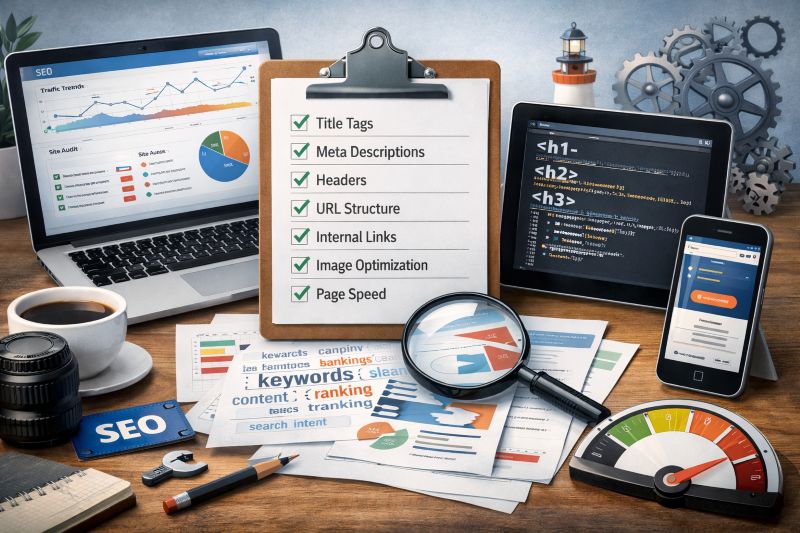
Some websites attract steady leads month after month, while others stay invisible despite offering great services. The difference often comes down to how well the site is structured and optimized internally. On-page SEO is not about shortcuts or trends. It is about building a website that communicates clearly, loads efficiently, and guides visitors toward action.
For service-based companies like Leads by Vinny, on-page SEO forms the foundation of long-term growth. When done correctly, it supports affordable search engine optimization services that actually deliver measurable results instead of vanity metrics.
This guide breaks down every on-page SEO essential a business website must have, explained in plain language and backed by real-world experience.
What On-Page SEO Really Means for Business Websites
On-page SEO covers everything you control directly on your website. This includes content, page structure, internal links, page speed, and how clearly each page communicates its purpose.
Unlike off-site strategies, on-page improvements create immediate clarity for both users and algorithms. A well-optimized page answers questions quickly, builds trust naturally, and removes friction from the buyer journey.
For businesses investing in affordable search engine optimization services, on-page SEO is where most performance gains happen first.
Keyword Strategy Without Overcomplication
Keywords still matter, but the approach has matured. The goal is relevance and clarity, not repetition.
Primary Keyword Placement
Every core service page should focus on one main keyword theme. That theme must appear naturally in:
-
The page title
-
The main headline
-
The opening paragraph
-
One or two subheadings
-
The conclusion
Avoid forcing keywords into every sentence. A trusted, results-driven page reads like it was written for people first.
Supporting and LSI Keywords
Related phrases help reinforce context. For example, pages offering affordable search engine optimization services may naturally reference:
-
cost-effective optimization
-
scalable digital growth
-
proven ranking improvements
-
industry-leading optimization methods
These variations strengthen relevance without sounding repetitive or artificial.
Title Tags That Earn Clicks, Not Just Rankings
Title tags remain one of the strongest on-page signals. More importantly, they influence whether someone clicks your page or skips it.
Best Practices for Business Websites
-
Keep titles under 60 characters
-
Place the main keyword toward the beginning
-
Add a value-driven phrase such as results, growth, or expertise
-
Make each title unique
A high-performance title does not feel generic. It clearly states what problem the page solves.
Meta Descriptions That Drive Qualified Traffic
Meta descriptions may not directly impact rankings, but they strongly affect engagement.
A strong meta description should:
-
Explain the page benefit clearly
-
Match user intent
-
Use a natural tone
-
Stay under 160 characters
For service pages, clarity beats clever wording every time.
Content That Builds Authority and Trust
Thin content does not perform well. Business websites need depth, structure, and real insight.
Write for Decision-Makers
Your content should help visitors decide, not just inform. That means explaining:
-
What makes your approach different
-
Who your services are best suited for
-
What results clients can expect
For Leads by Vinny, this means showcasing well-experienced strategies, reliable processes, and results-driven execution.
Content Length and Structure
Longer content performs better when it is organized correctly.
Use:
-
Clear H2 and H3 headings
-
Short paragraphs
-
Bullet points where helpful
-
Practical examples
This makes content user-friendly and easy to scan.
Header Structure That Guides Readers Naturally
Headers are not just formatting tools. They define hierarchy and flow.
Proper Header Usage
-
One H1 per page
-
Logical H2 sections
-
H3 subpoints when expanding ideas
A clean header structure improves readability and helps algorithms understand content relationships.
URL Structure That Supports Clarity
URLs should be short, descriptive, and readable.
Avoid:
-
Random numbers
-
Unnecessary words
-
Multiple parameters
A clean URL builds trust before the page even loads.
Internal Linking That Strengthens Authority
Internal links guide users and distribute authority across your site.
Strategic Internal Linking Tips
-
Link related service pages together
-
Use descriptive anchor text
-
Avoid over-linking
-
Prioritize high-value pages
For example, blog content can naturally support core service pages offering affordable search engine optimization services.
Page Speed and Technical Cleanliness
Performance matters. Slow-loading pages lose visitors and conversions.
Key Areas to Optimize
-
Image compression
-
Clean code
-
Mobile responsiveness
-
Secure connections
Fast-loading pages improve user experience and conversion rates, especially for high-intent service visitors.
Mobile Optimization Is Non-Negotiable
Most visitors now arrive on mobile devices. Pages must adapt seamlessly.
A mobile-optimized page should:
-
Load quickly
-
Display content clearly
-
Have easy-to-tap buttons
-
Avoid intrusive elements
Mobile usability directly impacts engagement and lead quality.
Image Optimization That Supports Visibility
Images should enhance content, not slow it down.
Best practices include:
-
Descriptive file names
-
Optimized file sizes
-
Relevant alt text
-
Contextual placement
Images that support content clarity improve both usability and accessibility.
Conversion Optimization Within On-Page SEO
Traffic alone does not grow a business. Pages must convert.
Strong Calls to Action
Every page should guide visitors toward a next step, such as:
-
Requesting a consultation
-
Viewing service details
-
Contacting your team
Calls to action should feel helpful, not aggressive.
Real-World Example: Turning Optimization into Leads
A service-based business partnered with Leads by Vinny after struggling with inconsistent lead flow. The site had traffic, but visitors rarely converted.
The on-page improvements focused on:
-
Rewriting service pages for clarity
-
Improving internal linking
-
Optimizing page structure and headers
-
Enhancing page speed
Within three months, the site experienced:
-
Higher engagement rates
-
Longer page visits
-
A steady increase in qualified inquiries
This example highlights how proven, on-page strategies outperform surface-level tactics.
Why On-Page SEO Supports Affordable Growth
Businesses often assume effective optimization must be expensive. In reality, strong on-page SEO creates scalable results without constant spending.
When pages are structured correctly, they continue performing long after updates are made. This makes affordable search engine optimization services a sustainable investment rather than a recurring cost burden.
Common On-Page SEO Mistakes to Avoid
-
Keyword stuffing
-
Duplicate content
-
Ignoring mobile users
-
Weak internal linking
-
Generic service pages
Avoiding these mistakes protects long-term performance.
Conclusion
On-page SEO is not about chasing algorithms. It is about building clear, helpful, and high-performance pages that serve real users. Businesses that focus on structure, clarity, and trust consistently outperform competitors relying on shortcuts.
For companies like Leads by Vinny, on-page SEO remains the backbone of reliable, scalable growth. When executed with care and experience, it supports affordable search engine optimization services that deliver lasting value.