
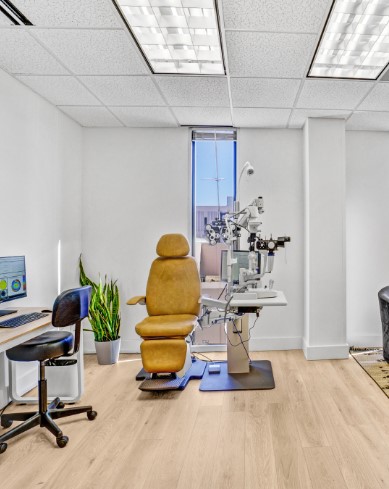
LASIK surgery has helped millions of people reduce their dependence on glasses and contact lenses. While many patients achieve excellent visual outcomes, some individuals experience ongoing vision challenges after surgery. Issues such as dry eyes, glare, halos, irregular corneas, and fluctuating vision can affect daily life and overall visual comfort. Fortunately, advanced post-LASIK contact lenses Charlotte specialists offer customized solutions designed to restore sharp, comfortable vision.
For patients struggling with visual symptoms after LASIK, specialized contact lenses can provide a highly effective option. Modern scleral lenses and custom-designed contact lens technologies are transforming the way eye care professionals manage post-surgical vision complications.
Understanding Vision Problems After LASIK
LASIK reshapes the cornea to correct refractive errors such as nearsightedness, farsightedness, and astigmatism. While the procedure is generally safe and successful, every eye heals differently. In some cases, the corneal surface may become slightly irregular, leading to visual disturbances.
Common post-LASIK symptoms include:
- Blurred or fluctuating vision
- Increased sensitivity to light
- Glare and halos around lights
- Dry eye discomfort
- Reduced contrast sensitivity
- Difficulty with night driving
- Visual distortions caused by higher-order aberrations (HOAs)
These symptoms can persist even when standard eye exams indicate that vision is technically within an acceptable range. This is where advanced contact lens technology can make a significant difference.
Why Specialized Contact Lenses Are Important
Traditional soft contact lenses may not adequately address complex corneal irregularities created by LASIK or other refractive surgeries. Specialized lenses are designed to create a smooth optical surface over the cornea, helping light focus more accurately on the retina.
Custom contact lenses provide several benefits:
- Improved visual clarity
- Reduced glare and halos
- Enhanced comfort
- Better correction of irregular astigmatism
- Improved quality of life
- More stable vision throughout the day
For many patients, these lenses restore vision quality that glasses or conventional contacts cannot achieve.
Scleral Lenses: A Leading Solution for Post-LASIK Patients
Scleral lenses have become one of the most effective treatments for individuals experiencing vision issues after LASIK. These large-diameter gas-permeable lenses rest on the white part of the eye, known as the sclera, instead of directly on the cornea.
The unique design creates a fluid-filled chamber between the lens and the cornea. This liquid reservoir helps mask corneal irregularities while providing continuous hydration to the eye.
Benefits of scleral lenses include:
Superior Visual Performance
Scleral lenses create a perfectly smooth optical surface, improving visual quality and reducing distortions caused by irregular corneal shapes.
Enhanced Comfort
Because the lens rests on the sclera rather than the sensitive cornea, many patients find scleral lenses surprisingly comfortable.
Relief from Dry Eye Symptoms
Post-LASIK dry eye syndrome is a common complaint. The fluid reservoir beneath the lens helps keep the eye hydrated throughout the day.
Long-Term Eye Health Support
Scleral lenses can protect the ocular surface while improving visual function, making them an excellent option for patients with chronic dry eye and corneal irregularities.
The Role of OVITZ Technology in Advanced Vision Correction
One of the most exciting developments in specialty eye care is OVITZ technology. This advanced diagnostic system measures visual distortions that standard eye exams often fail to detect.
OVITZ technology evaluates higher-order aberrations (HOAs), which are subtle imperfections in the eye’s optical system. These aberrations can significantly impact vision quality, particularly in low-light conditions.
By identifying these visual distortions with exceptional precision, eye care specialists can design highly customized contact lenses tailored to each patient’s unique visual profile.
Benefits of OVITZ-guided lens fitting include:
- Sharper and clearer vision
- More accurate lens customization
- Improved visual performance in challenging lighting conditions
- Better management of complex corneal irregularities
- Enhanced patient satisfaction
For many post-LASIK patients, this technology provides a breakthrough solution when conventional vision correction methods have been unsuccessful.
Post-LASIK Contact Lenses for Complex Eye Conditions
Patients seeking post-LASIK contact lenses Charlotte often have additional eye conditions that require specialized care. Advanced lens designs can address a variety of complex vision challenges.
Keratoconus
Keratoconus causes the cornea to thin and bulge into a cone shape. Scleral lenses help create a smooth optical surface that improves vision and comfort.
Irregular Astigmatism
Corneal irregularities following surgery or injury can create distorted vision. Custom lenses provide more precise correction than traditional options.
Higher-Order Aberrations
HOAs often cause symptoms such as halos, glare, and ghosting. Advanced diagnostic technologies allow specialists to develop targeted lens solutions.
Severe Dry Eye Disease
Patients suffering from chronic dry eyes frequently benefit from the protective and hydrating properties of scleral lenses.
What to Expect During a Specialty Contact Lens Fitting
A specialty lens fitting process is more detailed than a standard contact lens exam. The goal is to gather comprehensive information about the eye’s structure and visual performance.
The process typically includes:
Comprehensive Eye Evaluation
Specialists assess overall eye health, corneal shape, tear quality, and visual function.
Advanced Corneal Mapping
Detailed imaging technologies create a precise map of the corneal surface.
HOA Analysis
Diagnostic tools such as OVITZ technology identify higher-order aberrations affecting vision quality.
Custom Lens Design
Based on the collected data, lenses are designed specifically for the patient’s eyes and visual needs.
Follow-Up Care
Several follow-up appointments may be necessary to fine-tune lens fit and optimize visual performance.
Choosing a Specialist in Charlotte
When searching for post-LASIK contact lenses Charlotte, choosing an experienced specialty lens provider is essential. Not all eye care professionals have advanced training in fitting scleral lenses or managing complex post-surgical vision issues.
Look for a provider who offers:
- Expertise in scleral lens fitting
- Advanced diagnostic technology
- Experience with post-LASIK patients
- Customized treatment plans
- Ongoing follow-up care
- Solutions for keratoconus and HOA management
A highly specialized approach can significantly improve treatment outcomes and patient satisfaction.
The Future of Post-LASIK Vision Correction
Advances in specialty contact lenses and diagnostic technologies continue to improve outcomes for post-LASIK patients. Innovations such as wavefront-guided lens designs, HOA measurement systems, and next-generation scleral lenses are helping individuals achieve clearer, more comfortable vision than ever before.
As technology evolves, patients who once believed they had exhausted their treatment options are discovering new possibilities for visual rehabilitation.
Conclusion
Experiencing vision problems after LASIK can be frustrating, but effective solutions are available. Advanced post-LASIK contact lenses Charlotte specialists utilize cutting-edge technologies such as scleral lenses and OVITZ-guided diagnostics to address complex visual challenges with remarkable precision.