
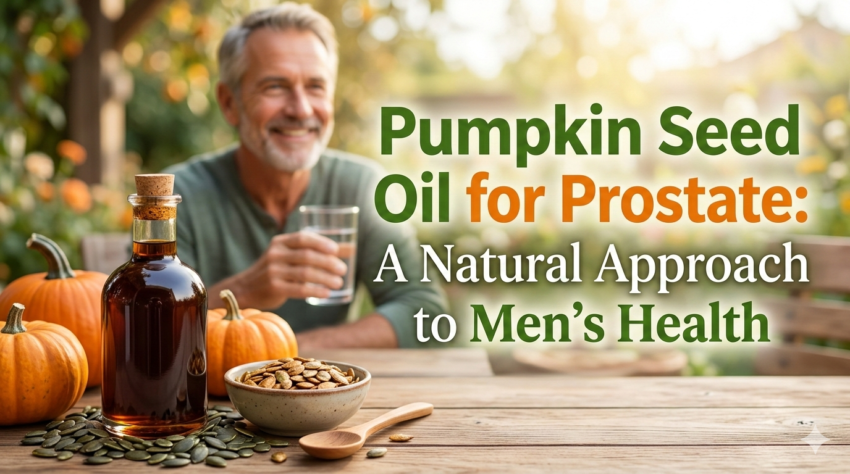
Men don’t always talk about prostate health openly. It’s one of those topics that quietly shows up with age… maybe during a routine checkup, maybe after a few restless nights of waking up too often. At first it’s easy to ignore. “Probably nothing,” someone might think.
Then curiosity kicks in. People start reading about diet changes, supplements, small habits that might help. Somewhere along that path, pumpkin seed oil for prostate health starts popping up in conversations, articles, and even casual health forums online.
It sounds almost too simple, honestly. Pumpkin seeds? The same snack people eat during autumn or toss into salads?
Yet there’s a surprising amount of interest around this oil and its possible connection to men’s health. Not magic. Just something many people have started paying attention to.
Why Pumpkin Seeds Keep Appearing in Health Conversations
Pumpkin seeds have been part of traditional diets in many cultures for years. Some people roast them. Others add them to breakfast bowls or smoothies. Press those seeds, and you get a thick, dark oil with a slightly nutty smell.
What makes it interesting for men is the nutrient content.
Pumpkin seed oil contains things like zinc, fatty acids, and plant compounds often discussed in relation to prostate health supplements. Zinc especially tends to get attention because the prostate naturally holds higher amounts of this mineral than other parts of the body.
That connection probably explains why pumpkin seeds—and their oil—ended up on the radar of people researching natural ways to support prostate health.
Small seed. Lots of curiosity around it.
The Link Between Pumpkin Seed Oil and Prostate Support
Some early research and traditional use suggest that pumpkin seed oil for prostate support might help with certain urinary symptoms connected to prostate enlargement.
Nothing dramatic or overnight, according to what people usually report. More like gradual improvements over time.
Men dealing with benign prostatic hyperplasia, often shortened to BPH, sometimes experience symptoms like frequent nighttime bathroom trips or a weak urine stream. That condition becomes more common with age.
Studies have looked at how pumpkin seed oil for enlarged prostate may interact with hormones or inflammation connected to these symptoms. The oil contains phytosterols—plant compounds that might influence how the body processes certain hormones.
Still, researchers tend to describe the effects carefully. Results vary from person to person.
Which honestly makes sense. Human bodies rarely respond exactly the same way.
Why Some Men Prefer Natural Options
Many men exploring prostate health start with simple lifestyle changes. Better sleep. More water. Healthier food choices.
Supplements sometimes follow after that.
The idea behind using natural pumpkin seed oil for prostate health appeals to people who prefer food-based approaches rather than jumping straight into stronger treatments. It feels less intimidating.
A friend of mine once described supplements like this: “It’s like trying to help the body gently instead of forcing it.”
Not everyone sees it that way, of course. Some prefer medical treatments immediately.
Still, pumpkin seed oil has gained attention among men looking for mild nutritional support before exploring more serious options.
Nutrients Found in Pumpkin Seed Oil
The nutritional profile of pumpkin seed oil explains much of the curiosity surrounding it.
Inside that dark green oil are compounds often mentioned in men’s health discussions:
-
Zinc – supports immune function and cellular health
-
Omega fatty acids – important for many body processes
-
Phytosterols – plant compounds sometimes linked to hormone balance
-
Antioxidants – substances that help the body handle oxidative stress
These nutrients appear in many prostate health supplements, though pumpkin seed oil delivers them in a natural form extracted directly from seeds.
The taste is actually pretty pleasant too. Slightly earthy, slightly nutty.
Some people even drizzle it over roasted vegetables or salads.
How People Usually Take Pumpkin Seed Oil
There are a couple ways people add pumpkin seed oil to their routine.
The most common option is capsules labeled as pumpkin seed oil supplement for prostate health. Capsules make dosing simple and avoid the flavor entirely.
Others prefer the liquid oil itself.
A teaspoon mixed into food, maybe yogurt or a smoothie, works for some people. The flavor blends surprisingly well with savory dishes.
Cold-pressed oils usually get the most attention since they keep more natural nutrients intact.
Still… anyone thinking about adding new supplements should probably check with a healthcare professional first. Especially if medications are already involved.
Bodies are complicated like that.
Possible Benefits Beyond Prostate Health
Interestingly, pumpkin seed oil often appears in discussions beyond prostate support.
Some research explores its potential role in urinary tract health for men. Others mention possible benefits related to hair growth, heart health, or skin.
The oil’s fatty acids and antioxidants attract attention in those areas.
Hard to say how strong those effects really are though. Nutrition research tends to move slowly, and results sometimes shift as more studies appear.
Still, it’s fascinating how one small seed connects to so many health conversations.
Small Lifestyle Habits Still Matter
Supplements often get the spotlight, though daily habits probably matter just as much.
Men looking after their prostate health often start adjusting small things:
Drinking enough water during the day.
Limiting caffeine before bedtime.
Adding more vegetables and fiber to meals.
Staying active.
Those habits might not sound exciting, though they quietly influence overall health.
And sometimes the simplest habits are the hardest to maintain.
Funny how that works.
A Gentle Addition to Men’s Health Routines
Pumpkin seed oil won’t replace medical care or solve every prostate issue. That would be unrealistic.
Still, the growing interest in pumpkin seed oil for prostate support shows how many people are exploring nutrition alongside traditional healthcare.
Something about the idea feels appealing—taking a natural oil from a familiar food and seeing if it quietly supports the body over time.
Maybe it helps a little. Maybe it simply becomes part of a healthier routine.
Either way, it’s one of those small discoveries that tends to pop up while people are searching for ways to take better care of themselves.
And sometimes those little discoveries stick around longer than expected.