

When people picture Russian architecture, they often imagine the grand stone palaces of St. Petersburg or the colorful onion domes of Saint Basil’s Cathedral in Moscow. However, deep in Russia’s vast forests and open countrysides lies another architectural marvel: traditional wooden architecture.
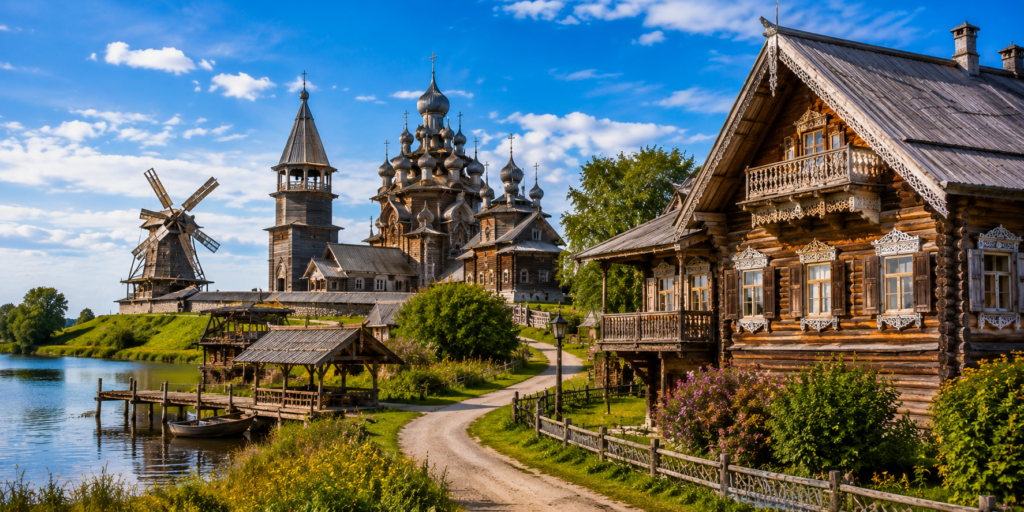
For centuries, wood was the primary building material across Russia. Skilled carpenters built everything from modest peasant huts (izbas) and towering windmills to intricate churches crafted entirely without a single nail. Today, many of these masterpieces are preserved in breathtaking open-air museums (skansens).
If you are planning a journey into Russia’s cultural heritage, here is your ultimate guide to the most captivating wooden architecture and open-air museums in Russia.
Why Russian Wooden Architecture is Unique
Russian wooden architecture is an art form rooted in nature, climate, and deep spiritual traditions. Russian craftsmen (plotniki) mastered wood joinery, using axes rather than saws to preserve the timber’s natural fiber and protect it from rot.
Key Highlights of Russian Wooden Style:
- Nail-less Construction: Many historic churches were constructed using interlocking log joints without metal nails.
- Intricate Carvings: Known as “wooden lace” (rezba), decorative carvings frame windows, gables, and eaves to ward off evil spirits and showcase craftsmanship.
- Onion Domes in Timber: Craftsmen created shingled wooden domes using aspen scales (lemech), which shimmer like silver under sunlight.
Top Open-Air Museums and Wooden Architectural Gems in Russia
1. Kizhi Island (Karelia) – The Jewel of Lake Onega
Located on a small island in Lake Onega, Kizhi Pogost is a UNESCO World Heritage site and arguably the most famous open-air museum in Russia.
- Main Highlight: The Church of the Transfiguration (1714) features 22 cascading wooden domes. Legend says master carpenter Nestor built the entire structure with a single axe, which he threw into Lake Onega upon completion, declaring there would never be another church like it.
- What to See: The adjacent Church of the Intercession, an ancient octagonal wooden windmill, and traditional Northern Russian farmhouses.
- How to Get There: Board a hydrofoil (Raketa) from Petrozavodsk during summer, or travel by hovercraft during winter when the lake freezes over.
2. Malye Korely (Arkhangelsk) – The Northern Forest Reserve
Spanning over 140 hectares near Arkhangelsk in Northern Russia, Malye Korely is one of the largest open-air wooden museums in the world.
- Main Highlight: Over 100 authentic structures gathered from across the Russian North, categorized into geographic sectors (Pomor, Dvina, Kargopol, and Pinega).
- What to See: Multi-story wooden izbas designed to withstand harsh Arctic winters, wooden bells towers, granaries, and wind-powered mills.
- Why Visit: It offers an immersive glimpse into the tough, self-sufficient life of Northern Russian peasants and merchants.
3. Museum of Wooden Architecture in Suzdal – Golden Ring Elegance
Suzdal is one of Russia’s oldest cities and a key stop along the famous Golden Ring tour route. On the banks of the Kamenka River, the town’s outdoor museum showcases rural architecture from the Vladimir region.
- Main Highlight: The 18th-century Church of the Transfiguration from the village of Kozlyatyevo, featuring gracefully stacked wooden roofs.
- What to See: Restored peasant homes belonging to both poor and wealthy families, showing authentic 19th-century interiors, weaving looms, and ceramic ovens.
- Travel Tip: Combine your visit with a walk through Suzdal’s historic Kremlin and local monastery grounds.
4. Vitoslavlitsy Museum (Veliky Novgorod) – Medieval Craftsmanship
Set near the historic St. George Monastery near Veliky Novgorod, Vitoslavlitsy sits on land once owned by Russian nobility.
- Main Highlight: The Church of the Nativity of the Virgin (1531), one of the oldest surviving wooden churches in Russia.
- What to See: Traditional wooden chapels, blacksmith shops, threshing barns, and interactive workshops where craftspeople demonstrate timber carving and birch-bark weaving.
5. Tomsk – The Capital of “Wooden Lace”
Unlike open-air museums where buildings were relocated, the Siberian city of Tomsk features living, historic streets lined with 19th-century wooden mansions (terems).
- Main Highlight: The House with Dragons and the House with Shatters, decorated with ornate wooden lace window frames and dragon-headed roof ridges.
- Why Visit: It shows how wooden architecture evolved into urban residential art blending Art Nouveau with traditional Russian folk motifs.
6. Taltsy Museum (Irkutsk) – Siberian Wilderness History
Located en route from Irkutsk to Lake Baikal, Taltsy Museum preserves the heritage of Russian pioneers, Cossacks, and indigenous Siberian tribes (Buryats and Evenks).
- Main Highlight: The Ilimsk Ostrog Watchtower (1667), an authentic timber fortification defensive tower built during the Russian expansion into Siberia.
- What to See: Traditional Buryat felt yurts, Evenk chum tents, and Cossack wooden manor houses nestled in a birch forest.
Best Time to Visit Russia’s Open-Air Museums
| Season | Highlights | What to Expect |
|---|---|---|
| Summer (June – August) | Lush green landscapes, long daylight hours, smooth boat transfers (Kizhi) | Comfortable walking weather, active outdoor festivals |
| Autumn (September – October) | Golden foliage contrasting with dark timber logs | Fewer tourists, ideal photography lighting |
| Winter (December – February) | Snow-covered roofs, magical fairy-tale scenery | Cold temperatures, ice hovercraft rides, cozy traditional tea breaks |
Practical Tips for Travelers Planning a Visit
- Wear Comfortable Walking Shoes: Open-air museums cover vast natural areas with unpaved paths and wooden walkways.
- Dress for the Weather: Northern Russia and Siberia can be chilly even during spring and autumn; layered clothing is essential.
- Respect Heritage Sites: Wooden structures are extremely fragile and flammable. Smoking and touching delicate carvings are strictly prohibited.
- Plan Travel Visas Early: Ensure your travel documents and entry visas are secured well ahead of your departure date.
Planning Your Journey: Essential Russian Travel Visa Guide
Visiting Russia’s historical open-air museums and fairytale towns requires proper travel documentation. Depending on your nationality, applying for an electronic visa (e-Visa) or standard tourist visa is the first step toward your adventure.
You can quickly verify your eligibility and requirements by checking the list of all eligible countries for Russia visa.
Why Choose Us for Your Russian Visa Application?
Navigating visa requirements can feel overwhelming, but our dedicated visa platform makes your entry preparation smooth and stress-free.
- Reliable Travel Visa Services: Our global approach has assisted numerous travelers in successfully obtaining their visas.
- Round-the-Clock Assistance: Reach out to us 24/7, and our experts will assist you promptly.
- Experienced Visa Consultants: Receive expert guidance to ensure the accuracy and acceptance of your application.
- Efficient Visa Application Process: Apply for your Russian visa in minutes with our simplified online form.
Frequently Asked Questions (FAQs)
Are Russian wooden churches built entirely without nails?
Yes, many historic wooden churches, including the famous Church of the Transfiguration on Kizhi Island, were built using precise interlocking timber joints without metal nails.
How do I get to Kizhi Island?
During the summer navigation season, daily hydrofoils operate from Petrozavodsk. In winter, travelers can access the island via hovercraft across the ice.
Do I need a visa to visit open-air museums in Russia?
Yes, international travelers require a valid visa to enter Russia. Many nationalities are eligible for an online e-Visa, which simplifies entry for short cultural trips.
Final Thoughts
Russia’s wooden architecture and open-air museums offer a window into a bygone era of craftsmanship, art, and natural harmony. From the towering wooden domes of Karelia to the carved wooden lace mansions of Tomsk, these historic sites are unforgettable stops on any cultural itinerary.