

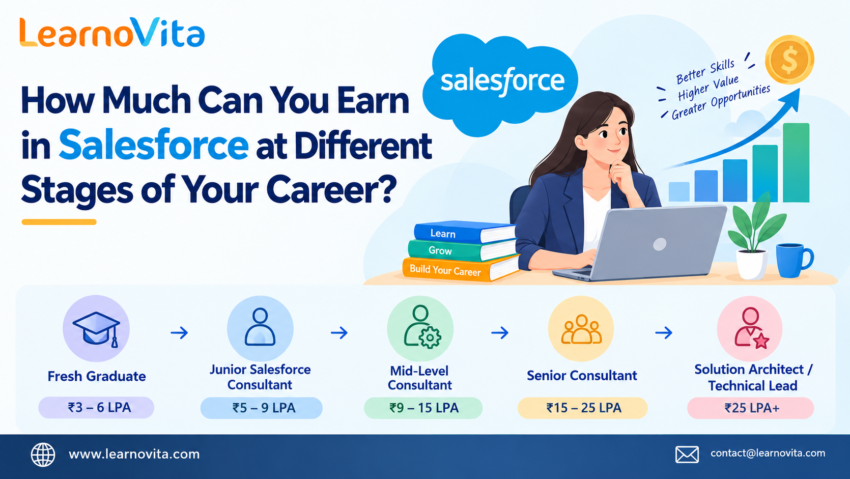
Salesforce has created diverse career opportunities for professionals interested in CRM, cloud technology, business processes, development, and consulting. The salary of a Salesforce professional can vary according to experience, technical capabilities, certifications, job role, location, and organization. A fresher may begin with an entry-level position, while an experienced professional can move into specialized roles with broader responsibilities. Starting with a structured Salesforce Course can help learners build the platform knowledge needed to explore these career opportunities.
What Can Freshers Earn After Learning Salesforce?
Freshers can enter the Salesforce ecosystem through roles such as Salesforce Administrator, CRM Support Executive, Junior Developer, or Associate Consultant. Starting salaries depend on factors such as educational background, practical skills, certifications, company, and location. Candidates who understand Salesforce fundamentals, data management, user administration, reports, dashboards, security, and basic automation can demonstrate useful skills when applying for entry-level positions.
How Much Can Salesforce Administrators Earn?
Salesforce Administrators are responsible for configuring and maintaining Salesforce environments based on business requirements. Their work can include managing users and permissions, maintaining data, creating reports and dashboards, configuring workflows, and supporting automation. As administrators gain experience, they may manage increasingly complex Salesforce environments and business processes. Additional certifications and hands-on experience can also help them qualify for more advanced responsibilities.
What Is the Salary Growth for Salesforce Developers?
Salesforce Developers build and customize applications on the Salesforce platform. Their work can involve Apex, SOQL, Lightning Web Components, APIs, integrations, and customized business solutions. Beginners may initially handle smaller development tasks, while experienced developers can work on complex applications and enterprise integrations. Professionals interested in strengthening their development and implementation skills can explore Salesforce Training in Hyderabad and gain practical exposure to Salesforce technologies.
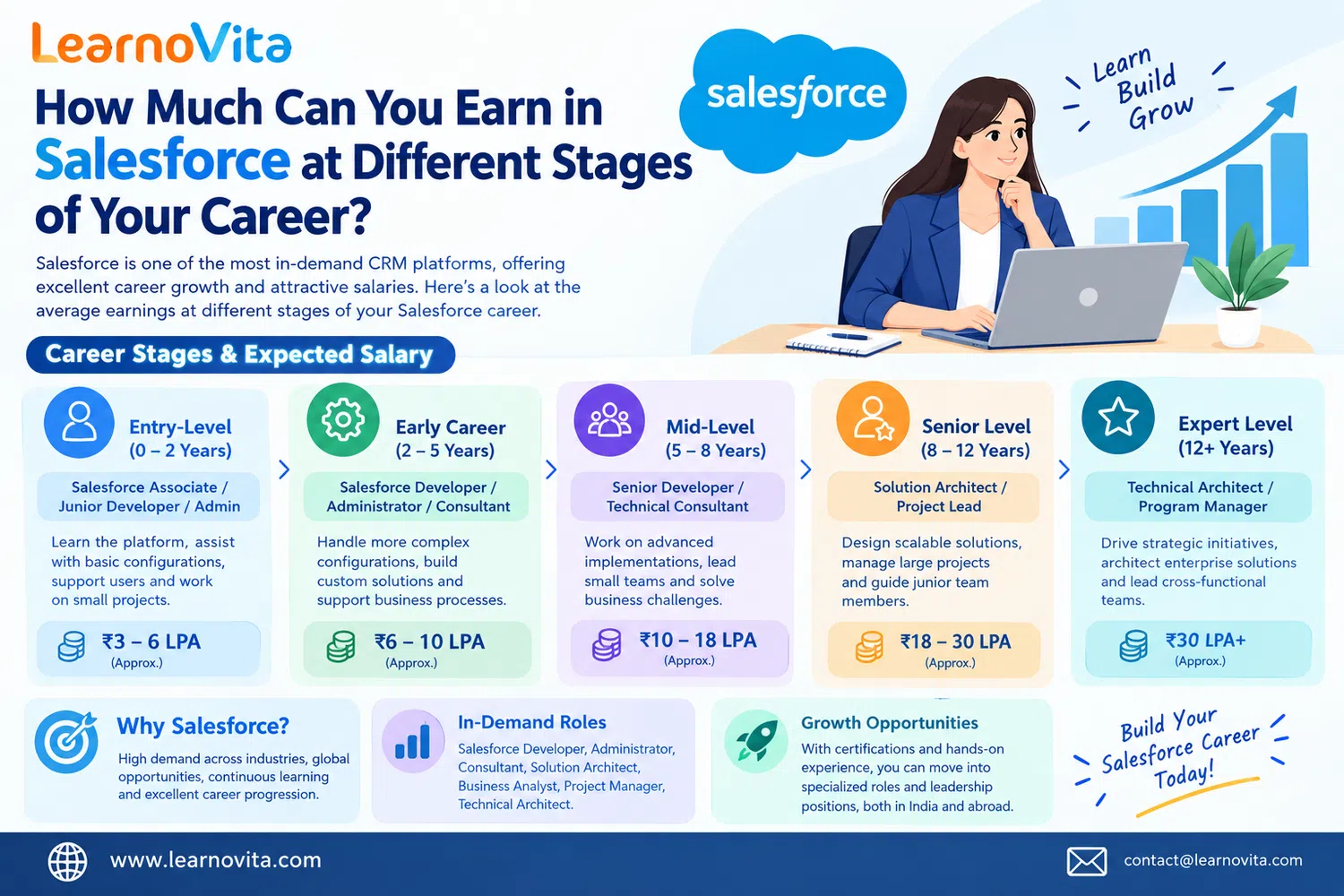
How Does a Salesforce Career Progress After a Few Years?
After gaining practical experience, Salesforce professionals can move into senior positions such as Senior Administrator, Senior Developer, Salesforce Consultant, or Technical Consultant. These roles may involve requirement gathering, solution design, implementation, troubleshooting, stakeholder communication, and project coordination. Professionals can strengthen their understanding of these areas through hands-on learning and Salesforce Training in Chennai, particularly when preparing for more advanced Salesforce responsibilities.
What Can Salesforce Consultants Earn?
Salesforce Consultants help businesses implement Salesforce according to their operational and customer management requirements. They may specialize in areas such as Sales Cloud, Service Cloud, Marketing Cloud, automation, integrations, or data management. As consultants gain project experience, they may become involved in larger implementations and more complex business requirements. Their compensation can depend on experience, certifications, specialization, client-facing responsibilities, and the complexity of the projects they manage.
How Much Can Experienced Salesforce Architects Earn?
Salesforce Architects focus on designing scalable solutions for complex business and technology requirements. Their responsibilities may include solution architecture, integration design, security, data architecture, scalability, and platform strategy. Professionals typically develop broad Salesforce experience before moving into architecture-focused positions. Experience across administration, development, consulting, integrations, and enterprise implementations can help professionals prepare for these responsibilities.
What Factors Determine Salesforce Salary Growth?
Several factors can influence Salesforce career earnings, including experience, certifications, technical skills, job responsibilities, location, organization, industry, and specialization. Expertise in areas such as development, automation, integrations, data, cloud solutions, and emerging Salesforce technologies can provide access to different career opportunities. Professionals looking to gain practical exposure can consider Salesforce Training in Bangalore to develop platform knowledge through hands-on learning and projects.
Conclusion:
Salesforce provides multiple career paths, allowing professionals to progress from entry-level positions into senior technical, consulting, and architecture roles. Earnings can change as professionals gain experience, develop specialized skills, earn certifications, and take responsibility for more complex projects. Consistent learning, practical experience, and familiarity with evolving Salesforce technologies can help professionals build a strong and sustainable career in the Salesforce ecosystem.