
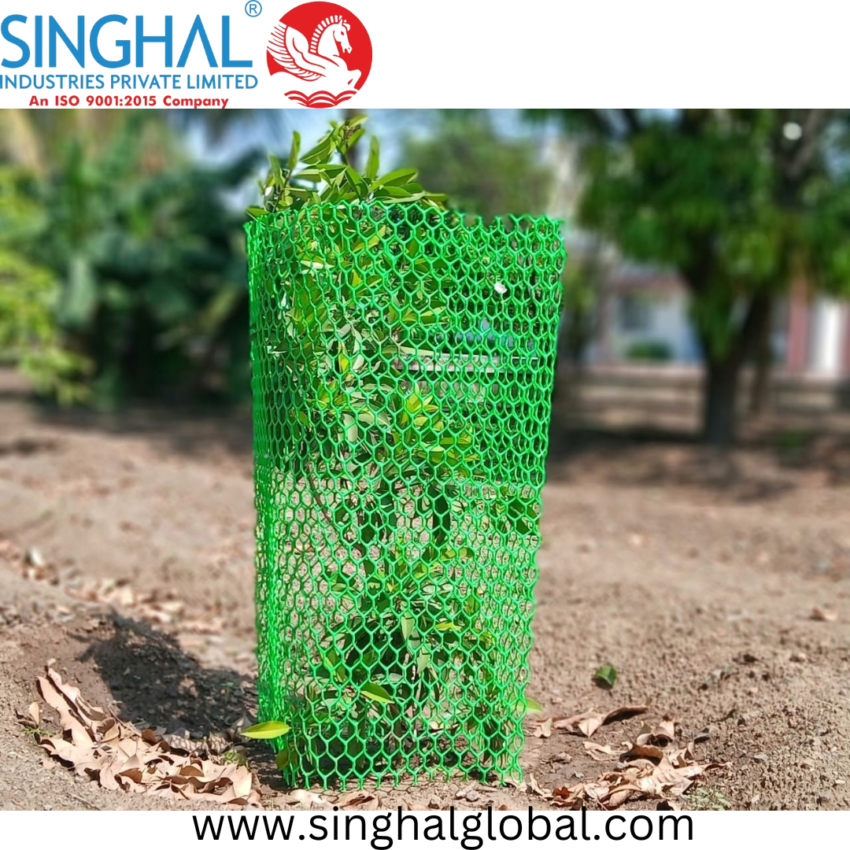
Every tree you plant is a multi-decade investment in the health of your environment, the beauty of it and, arguably more importantly, your property’s value. Relatively young saplings, on the other hand, are going to have a tough time from day one as soon as their roots meet the earth. Those tender trunks, soft bark, and delicate shoot tips are constantly under assault by the vagaries of weather, voracious wildlife predation, lawn machines ranging from mowers to snowblowers (which regularly mow trees while attempting to get too close), and soil moisture extremes. For trees to reach maturity, most need some form of physical protection when being established without it, up to 75% of newly planted trees may die prematurely resulting in an ineffective planting programme and colossal waste. An enduring barrier is more than an optional add-on to allow gardening but a necessary component of many modern forestry or planting arrangements. With so many protective alternatives accessible to gardeners and commercial landscapers, the specific polymer enclosure is frequently the most inexpensive intervention. After a more traditional implementation process, modern manufacturing techniques have morphed simple plant shields into microclimate controllers that not only shield saplings, but also promote rapid growth in the seedlings. These low-density, high-strength cylinders provide an environment for young roots and stems to anchor in without perpetual outside stress. Grasping the mechanical advantages and long-term protective coverage afforded by using these protective tubes explains how they became a mainstay of residential backyards, municipal projects, and large orchards.–6 Places to Use Plant Protectors
Navigating the Early Vulnerabilities of Newly Planted Saplings
The first two years of the tree’s life are its vital growth part when its vascular system has matured to be healthy but is phenomenally frail. Plastic Tree Guard Exporter Ahmedabad the outer bark on a young sapling is not as developed as a mature one so it does not provide that thick corky barrier borne of older specimens, and thus leaves its cambium layer more exposed to low-level mechanical impacts. When this soft bark is stripped from the circumference of stem (a process called girdling), it interrupts the passage of nutrients and water between roots and leaves, permanently, in some plants causing rapid die-off. These physical vulnerabilities will be compounded in unpredictable ways by environmental stressors. Spontaneous fluctuations in temperature without the heaving, and with only boiling hot (plant killing) rays of the sun beating down on them, not to mention high-speed winds tearing about through the garden can cause cracking along the bolt stem. Soil around young root systems is typically dried out relatively quickly when exposed directly to wind or sun and can face moisture stress inhibiting growth. To avoid these early failures there needs to be a way to combat biological threats and environmental pressures at the same time, allowing the sapling enough time to establish.
Defending Against Herbivores and Nuisance Wildlife
Animal browsing is still one of the top reasons that saplings die in both rural and urban settings. Young trees have tender, nutrient-rich bark that is delicious to rabbits, hares, voles and mice, as well as the low-hanging foliage — particularly in the dead of winter when alternative food sources are limited. Data from best practices show that a single rodent can remove enough bark in one night to girdle a young sapling, and larger mammal browsing or rubbing causes terminal shoot sensitivity to be triggered. By using a very solid polymer barrier, direct animal access to the lower stem and bark is removed altogether, thus driving hungry wildlife away. Unlike chemical repellents that wash off with the rain or woven netting that can entrap small animals, a rigid plastic formation forms an enduring, service-free physical barrier. This guarantees continual defense through those critical winter months when gardeners may not notice damage happening daily in the garden.
Shielding Saplings from Lawn Equipment and Chemical Overspray
For young trees, human activity can be more dangerous than natural predators. String trimmers, lawnmowers and chemical sprays cause widespread incidental damage. Weed trimmers working around the base of a sapling often cut through soft bark forming wounds that expose saplings to bacteria and wood-boring insects. These same heavy lawnmowers can beat against fragile trunks, perhaps dislodging root systems or flattening main stems that have not yet developed structural strength. Heard drift is also another significant risk in the horticultural gardens and commercial farms that are guided. These fine droplets, when herbicides that kill broadleaf weeds are sprayed nearby, drift into green sapling bark and foliage, killing or damaging the plant. On the other hand, a rigid protective sleeve will serve as a physical barrier for both chemical mist and mechanical impact, permitting lawn care upkeep to actually reach the face of the protected area.
Creating an Optimum Microclimate for Accelerated Growth
High-performance sapling shields are passive defenses that serve a dual purpose: not only do these devices protect plant roots and developing stems from omnivorous mammals, they actually stimulate growth through the creation of a small microclimate around the stem. This allows moisture which has evaporated from the soil as well as water released through plant transpiration to be held in the confined space, which in turn increases temperatures around this area and prevents immediate losses of water through leaves. With less moisture stress, the sapling can devote critical energy previously allocated to fighting dehydration toward developing its roots and vertical elongation. In addition, the translucent or perforated cells that construct these protective tubes disperse direct sunlight preventing sapling leaves from burning while maintaining perfect light conditions for photosynthesis. Not only does this provide the obvious buffering effect from wind, but the shield also functions as a windbreak against cold desiccating gusts that physically bend and kill tender shoots. Research has shown that saplings grown in protected microenvironments have higher survival and higher initial growth rates than exposed control trees.
The Role of Sourcing Quality Materials in Tree Protection Success
As with all garden safeguards, the quality and durability of the materials that go into any construction will determine how effective that system is. Choosing the product from a specific Plastic Tree Guard Manufacturer ensures that protective sleeves are optimally produced with blistering polymers of high-density polyethylene or polypropylene adapted for extreme weather. You are supposed to last for a long time with specific protective insight that provides actual protection from UV rays; if you use poor materials, however, these will break down after one season, and turn brittle and crack due to exposure to direct sunlight. 01 Commercial landscape architects, orchard managers, and environmental restoration agencies source their supply direct from reputable Plastic Tree Guard Exporter Ahmedabad which offers commercial-grade products that will be used for multiple years. The industrial manufacturers mix specialized ultraviolet (UV) stabilizers into the raw material formulation that help maintain flexibility, structural integrity and function without breaking down over years of scorching heat and freezing rain and decades of wind all working on the guards–delivering effective performance from both ends while leaving no microplastics behind after breakdown!
Conclusion
There is little use in supporting these young saplings if they end up dead, so it is vital that the polymer barrier we make from quality material to keep your plant safe is made a part of your long-term garden or landscape. These long-lasting structures remove the continuous threats of animal browsing, lawnmower strikes, chemical overspray and extreme weather while providing vulnerable small trees the surroundings they need to develop firm root systems and solid trunks. By making sure you use good quality products, it ensures they last a while and can be reused through many planting cycles. This method saves time, reduces replacement costs and most importantly guarantees that each sapling you plant today actualises the development into a strong tree tomorrow with plastic shields forming part of your planting routine.
Frequently Asked Questions
Question: Who is the largest supplier of Plastic Tree Guard?
Singhal Industries Private Limited is a leading supplier providing high-quality, durable Plastic Tree Guards for various environmental and agricultural applications.
Question: What is the main purpose of a Plastic Tree Guard?
It protects young saplings and plants from animals, harsh weather conditions, and physical damage.
Question: Are Plastic Tree Guards resistant to sunlight exposure?
Yes, high-quality plastic tree guards are UV-stabilized to withstand long-term outdoor exposure without degrading.
Question: Can Plastic Tree Guards be customized in size?
They can be customized in terms of height, circumference, mesh design, and color to suit specific plantation needs.
Question: How are Plastic Tree Guards installed around young plants?
They are placed directly around the sapling’s trunk and secured using stakes, PVC tags, or support ties.