

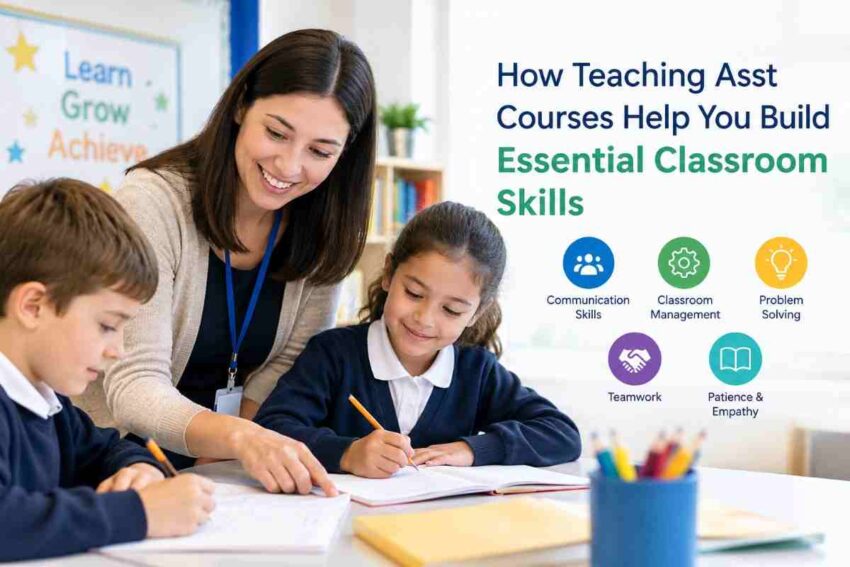
Starting a career in education can be exciting, but stepping into a classroom for the first time may also feel challenging. Supporting learners requires more than enthusiasm. It involves communication, patience, organisation, confidence, and an understanding of how different students learn. For people preparing for this type of role, Teaching assistant Courses online can provide a flexible way to develop useful knowledge before entering a classroom environment.
Online study can be particularly helpful for career changers, beginners, and people who already have work or family responsibilities. Instead of needing to attend lessons at a fixed location, learners can study from home and work through their course materials around their existing commitments.
Understanding What a Teaching Assistant Does
Teaching assistants work alongside teachers to support students and contribute to a positive learning environment. Their responsibilities can vary depending on the school and the age and needs of the learners they support.
A teaching assistant may help prepare classroom resources, support individual students, assist with group activities, encourage participation, or provide additional help during lessons.
Understanding these responsibilities before entering the profession can make the transition into a school environment less overwhelming. Training introduces learners to the role and helps them develop a clearer idea of what effective classroom support involves.
Building Confidence Through Knowledge
Confidence does not always appear immediately when someone starts a new career. It often develops as knowledge and experience increase.
For aspiring teaching assistants, learning about classroom routines, communication, behaviour, safeguarding, and learner development can provide a stronger foundation. Teaching assistant training courses online allow learners to explore these areas in a structured way while studying at a pace that suits them.
Having a better understanding of what to expect can make it easier to approach new situations calmly. Instead of feeling completely unfamiliar with classroom responsibilities, learners can draw on the knowledge they gained during their studies.
Developing Communication Skills
Communication is central to classroom support. Teaching assistants need to explain activities clearly, listen to students, communicate with teachers, and contribute to a supportive environment.
Effective communication is not simply about talking. It also involves paying attention to what students are saying and noticing when someone may be struggling.
Training can help learners think about how they communicate with different age groups and how instructions can be adjusted according to individual needs. These skills can become increasingly valuable once learners begin gaining practical experience.
Learning to Support Different Learners
No two students learn in exactly the same way. Some may quickly understand a new concept, while others may need additional explanation or encouragement.
A confident teaching assistant needs to recognise these differences and provide appropriate support without making students feel uncomfortable or dependent.
Studying education-related topics can introduce learners to different learning needs and inclusive approaches. This knowledge can help future teaching assistants become more aware of how classroom activities can be adapted to support participation.
Understanding Behaviour in the Classroom
Behaviour can sometimes be one of the more challenging aspects of working in education. Students may become distracted, frustrated, restless, or unwilling to participate.
Preparation can help aspiring teaching assistants understand that behaviour often has different causes. Rather than reacting immediately, they can learn the importance of remaining calm, following school policies, and working with the teacher when additional support is needed.
Developing this awareness can make new classroom experiences easier to manage and can contribute to greater professional confidence.
Improving Organisation and Time Management
Teaching assistants often have several responsibilities to manage throughout the school day. They may need to prepare resources, assist learners, support activities, and communicate with members of the teaching team.
Organisation therefore plays an important role.
Online learning can also encourage learners to develop their own time-management habits. Completing coursework, meeting deadlines, and creating a regular study routine can help develop transferable organisational skills that are useful in professional environments.
Learning About Inclusive Education
Modern classrooms include learners with a wide range of abilities, backgrounds, personalities, and educational needs. Creating an inclusive environment means ensuring that students have appropriate opportunities to participate and learn.
Aspiring teaching assistants can benefit from learning about inclusion and the importance of treating each learner as an individual.
This understanding can help future classroom support staff approach their responsibilities with greater empathy. It can also encourage them to work collaboratively with teachers and other professionals when a student requires additional assistance.
Why Online Learning Can Be a Practical Choice
One of the main advantages of online education is flexibility. People who are already working or managing family commitments may find it difficult to attend traditional classes at specific times.
Teaching assistant Courses online provide an alternative by allowing learners to study from home and organise their learning around their schedules.
However, flexibility does not mean that learners need to study without structure. Setting aside dedicated study time, keeping track of coursework, and maintaining consistent progress can help make the experience more productive.
Preparing for Real Classroom Situations
Theoretical knowledge becomes more useful when learners can connect it to everyday situations.
For example, someone studying communication may consider how they would explain a difficult task to a student. Someone learning about behaviour may think about how they would respond calmly when a pupil becomes distracted.
This type of reflection can help learners develop practical thinking skills and prepare for situations they may encounter in an educational setting.
While training cannot replace real-world experience, it can provide a useful starting point for understanding the environment.
Supporting Career Changers
Education can be an appealing career direction for people looking for meaningful work and opportunities to support young learners. However, changing careers can be daunting, especially when moving into an unfamiliar sector.
Teaching assistant training courses online can give career changers an accessible way to explore the field before taking their next professional step.
Online learning also allows people to build relevant knowledge without necessarily putting their existing employment or personal commitments on hold. This can make the process of exploring a new career direction feel more manageable.
Continuing to Develop After Training
Completing a course should not be viewed as the end of professional development. Education continues to change, and teaching assistants can benefit from developing their knowledge throughout their careers.
Practical experience, additional training, feedback from colleagues, and reflection can all contribute to professional growth.
Someone who begins with an interest in general classroom support may later discover an interest in areas such as special educational needs, learning support, or higher-level education roles.
Final Thoughts
Classroom confidence is built gradually through knowledge, preparation, experience, and a willingness to learn. Aspiring teaching assistants can use structured training to develop a better understanding of classroom responsibilities and the skills needed to support learners effectively.
For beginners and career changers, Teaching assistant Courses online offer a flexible way to begin building this foundation. Meanwhile, Teaching assistant training courses online can help learners explore important areas such as communication, inclusion, behaviour, organisation, and learner support.
With the right preparation and a genuine commitment to helping students, future teaching assistants can enter the education sector with greater confidence and a stronger understanding of the role they hope to pursue.