
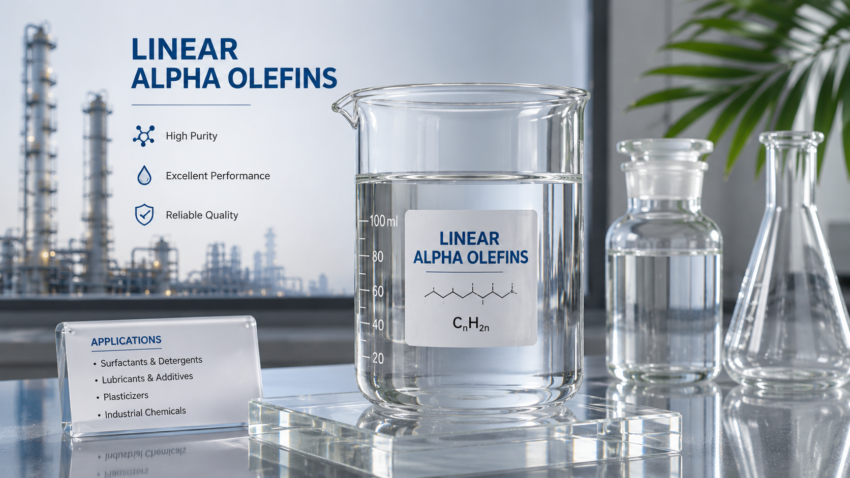
The LAO Price Trend has become an important topic for businesses that use linear alpha olefins (LAO) in manufacturing and industrial applications. Whether you are a producer, supplier, trader, or buyer, understanding the LAO Price Trend helps you make better purchasing and business decisions. Since LAO is used in products such as polyethylene, detergents, lubricants, and specialty chemicals, changes in demand, raw material costs, and global supply can influence the market. Many businesses also follow LAO Prices, the LAO Price Chart, and the LAO Price Index to understand how prices are moving over time and what they may expect in the future.
What is LAO?
Linear Alpha Olefins (LAO) are organic chemical compounds produced mainly from ethylene. They are widely used as raw materials in different industries because of their useful chemical properties. LAO is an important ingredient in the production of high-performance plastics, synthetic lubricants, surfactants, and many specialty chemicals.
The demand for LAO has increased over the years because industries continue to develop new products that require strong, lightweight, and durable materials. As production and demand grow, keeping track of the LAO Price Trend becomes increasingly important for businesses around the world.
👉👉👉Please Submit Your Query For LAO Price Trend, Market Analysis and Forecast: https://www.price-watch.ai/book-a-demo/
Why the LAO Price Trend Matters
The LAO Price Trend is more than just a record of changing prices. It gives companies valuable information about market conditions and helps them prepare for future costs. Manufacturers often monitor price trends before purchasing large quantities of raw materials.
When prices rise, companies may adjust their production plans or purchasing schedules. When prices fall, businesses may increase inventory to reduce future costs. Watching LAO Prices regularly helps companies improve budgeting, pricing strategies, and supply chain planning.
Factors That Influence LAO Prices
Several factors affect LAO Prices, and understanding these drivers helps explain changes in the LAO Price Trend.
Raw Material Costs
LAO is mainly produced from ethylene, which is linked to crude oil and natural gas markets. When energy prices increase, the cost of producing ethylene usually rises, leading to higher LAO production costs.
If raw material prices decrease, manufacturers may produce LAO more economically, which can help stabilize or lower market prices.
Supply and Demand
Supply and demand are among the biggest factors influencing the LAO Price Trend.
If industries such as plastics, packaging, automotive, or chemicals increase production, demand for LAO also rises. Strong demand combined with limited supply often results in higher prices.
On the other hand, if industrial activity slows or production exceeds demand, LAO Prices may become more stable or even decline.
Manufacturing Capacity
Production facility maintenance, unexpected shutdowns, or expansion projects can also affect supply. When production plants temporarily stop operating, available supply decreases, creating upward pressure on prices.
New manufacturing facilities or increased production capacity may improve supply and reduce price pressure over time.
Transportation and Logistics
Shipping costs have become increasingly important in global chemical markets. Higher freight rates, port congestion, fuel prices, and transportation delays can increase the final cost of LAO.
Even if production costs remain stable, transportation expenses can still influence the overall LAO Price Trend.
Global Economic Conditions
Economic growth often leads to higher industrial production, increasing demand for LAO-based products.
During slower economic periods, manufacturing activity may decline, reducing demand and affecting LAO Prices. Because of this, economic performance has a noticeable impact on the market.
Industries That Depend on LAO
Many industries rely on LAO for manufacturing important products.
The plastics industry uses LAO to improve the quality and performance of polyethylene. Packaging manufacturers depend on these materials to produce strong and flexible packaging films.
The lubricant industry uses LAO in the production of synthetic lubricants that perform well under different operating conditions.
The detergent and cleaning products industry also uses LAO-based chemicals in surfactants that help improve cleaning performance.
As these industries continue to grow, demand for LAO remains strong, influencing the overall LAO Price Trend.
Understanding the LAO Price Chart
The LAO Price Chart is a useful tool for tracking historical price movements over different periods. It allows businesses to identify market patterns and compare current prices with previous months or years.
Instead of reacting only to short-term price changes, companies can use the LAO Price Chart to recognize long-term trends and make better purchasing decisions.
Regular analysis of price charts also helps businesses identify seasonal changes and market cycles that may affect future buying strategies.
What is the LAO Price Index?
The LAO Price Index provides an overall measurement of market price movements rather than focusing on daily fluctuations.
Many businesses use the LAO Price Index to compare pricing across different periods and evaluate whether market prices are rising, falling, or remaining stable.
Instead of monitoring every individual market change, companies often rely on the index for a broader understanding of pricing direction and market performance.
Regional Market Differences
The LAO Price Trend can vary between different regions because local market conditions are rarely identical.
In North America, stable feedstock availability often supports consistent production levels.
In Asia, growing manufacturing industries and increasing industrial demand can significantly influence pricing.
European markets may experience price changes due to energy costs, environmental regulations, and import requirements.
Middle Eastern producers benefit from strong petrochemical resources, making the region an important supplier to global markets.
Because every region has unique economic and industrial conditions, LAO Prices may differ even during the same period.
How Businesses Use Price Information
Companies use market information to reduce risks and improve planning.
Procurement teams regularly monitor the LAO Price Trend before signing supply contracts.
Manufacturers estimate future production costs by studying recent price movements.
Distributors use pricing information to manage inventory efficiently.
Financial planning teams also consider LAO Prices, the LAO Price Chart, and the LAO Price Index when preparing budgets and forecasting future expenses.
Access to reliable pricing information allows businesses to respond more effectively to changing market conditions.
Current Market Outlook
The future LAO Price Trend will continue to depend on several market conditions.
Global industrial production remains one of the biggest drivers of demand. As manufacturing expands, the need for LAO may continue to increase.
Raw material availability, energy prices, transportation costs, and production capacity will also remain important influences.
Sustainability initiatives and improvements in manufacturing technology may gradually improve production efficiency, helping stabilize supply over the long term.
Although short-term market fluctuations are always possible, companies that closely monitor market developments will be better prepared for future changes.
Tips for Following the LAO Price Trend
Businesses can make smarter decisions by following a few simple practices:
- Monitor LAO Prices regularly instead of checking only during purchasing periods.
- Review the LAO Price Chart to identify historical trends and seasonal movements.
- Use the LAO Price Index to understand the broader direction of the market.
- Watch developments in crude oil, natural gas, and ethylene markets.
- Stay informed about global manufacturing activity and supply chain developments.
- Plan purchases based on long-term trends rather than short-term price changes.
These simple steps can help businesses reduce uncertainty and improve purchasing decisions.
Conclusion
The LAO Price Trend plays a significant role in helping businesses understand market conditions and prepare for changing costs. Since LAO is widely used across plastics, lubricants, detergents, packaging, and specialty chemical industries, its pricing affects many sectors around the world.
By regularly monitoring LAO Prices, studying the LAO Price Chart, and following the LAO Price Index, companies can better understand market movements, improve procurement strategies, and make more confident business decisions. While prices may continue to change because of raw material costs, supply and demand, transportation, and economic conditions, staying informed allows businesses to respond more effectively and remain competitive in an evolving global market.
👉👉👉Please Submit Your Query For LAO Price Trend, Market Analysis and Forecast: https://www.price-watch.ai/book-a-demo/
About Price Watch™ AI
Price-Watch AI is an India-based, independent raw material price reporting agency that provides real-time price forecasts and data-driven insights into global raw material markets. Price-Watch AI specializes in tracking raw material prices, analyzing market trends, and delivering timely updates on plant shutdowns, supply disruptions, capacity expansions, and demand-supply dynamics. The Price-Watch AI platform empowers manufacturers, traders, and procurement professionals to make faster, smarter decisions. Leveraging AI-powered forecasting and over a decade of historical data, Price-Watch AI transforms market volatility into actionable opportunity.
Futura Tech Park,
C Block, 8th floor 334,
Old Mahabalipuram Road,
Sholinganallur, Chennai, Tamil Nadu, Pincode – 600119.
𝐋𝐢𝐧𝐤𝐞𝐝𝐈𝐧: https://www.linkedin.com/company/price-watch-ai/
𝐅𝐚𝐜𝐞𝐛𝐨𝐨𝐤: https://www.facebook.com/people//61568490385598/
𝐓𝐰𝐢𝐭𝐭𝐞𝐫: https://x.com/pricewatchai
𝐖𝐞𝐛𝐬𝐢𝐭𝐞: https://www.price-watch.ai/