
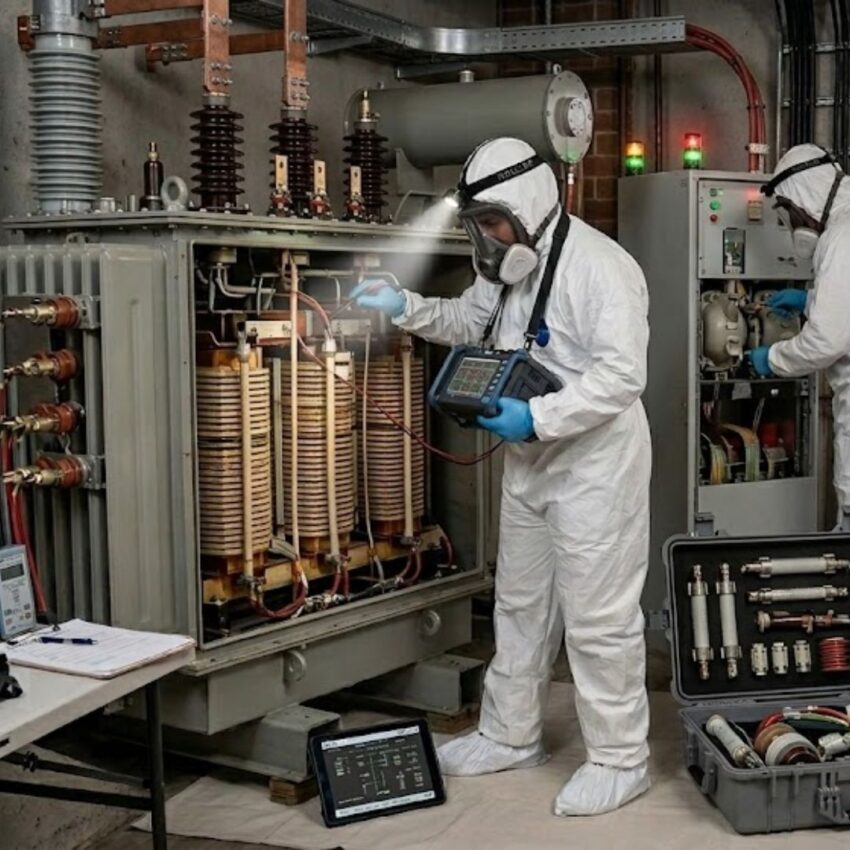
The reliability of a power distribution network fundamentally depends on the quality of its connections. While large components like transformers and circuit breakers often receive the most attention, the smaller elements that connect cables to equipment are equally important.
Managing electrical stress at a cable’s end in medium- and high-voltage systems is a complex engineering challenge. That’s why, to prevent insulation failure and ensure a constant electrical current, utility providers use specialized elbows and substation cable terminations.
Key Takeaways
- The role of stress control in high-voltage cable transitions.
- Differences between dead-break and load-break elbow connectors.
- How does environmental sealing prevent tracking and flashovers?
- The importance of mechanical stability in substation connections.
How Do These Components Support Electrical Distribution Systems?
● Electrical Stress Control
The process of connecting a high-voltage cable requires shielding removal, which leads to an immediate disruption of the electrical field. The design of professional elbows and substation cable terminations includes internal geometric and capacitive stress control elements that enable their efficient operation.
The system for distributing electrical flux lines in these features prevents air ionization while protecting insulation from stress concentration for decades down the road.
● Environmental Protection & Sealing
Substations are exposed to outdoor environmental conditions, including rainfall, UV radiation, and industrial pollutants. Modern elbows and substation cable terminations utilize high-quality polymers, such as EPDM rubber or silicone, which provide excellent hydrophobic properties.
These parts create a tight seal around the cable end, which keeps moisture out and stops “tracking,” where dirt creates a path for electricity on insulation surfaces.
● Connection Versatility & Safety
Underground distribution systems use “elbow” connectors to establish completely shielded and water-resistant links with transformers and switchgear.
The elbows and substation cable terminations include two main types, which are load-break systems that operate while the circuit remains powered and dead-break systems that need the power to be cut off before use.
The maintenance crews can complete their repairs and grid reconfigurations because this system enables them to work with minimal impact on customer operations.
● Mechanical Integrity & Conductivity
Beyond electrical insulation, the components must establish a permanent mechanical connection. The process of thermal expansion, together with thermal contraction, leads to connection failures that result in overheating after an extended period.
The design of excellent elbows and substation cable terminations makes proper use of compression or shear-bolt technology to create contact points that maintain their low-resistance connection, which helps to minimize energy losses and fire hazards during different load situations.
Conclusion
The seamless operation of the electrical grid is a testament to the precision of its smallest parts. By effectively managing electrical stress and providing a barrier against the elements, these specialized connectors ensure that power reaches its destination without interruption.
Selecting the right hardware, ranging from rugged outdoor insulators to high-performance distribution substation connectors and terminals, is essential for any long-term infrastructure project.
When looking for parts that meet these strict technical requirements, many engineers depend on the specialized options offered by reliable suppliers like Apfelbaum to ensure the best standards of grid strength and safety.