

You hitch up your trailer, walk around to check the lights, and notice something off. One side sits lower than the other, or the whole rear end looks like it’s slumping. Sagging trailer springs are one of the most common suspension problems, and one of the most overlooked. Left alone, a sag does more than spoil the look of your rig. It changes how the trailer tows, wears out your tires, and can lead to a dangerous failure on the road.
This guide explains why trailer springs sag, how to confirm the problem, and what you can do to fix it and keep it from coming back.
What Does a Sagging Trailer Spring Look Like?
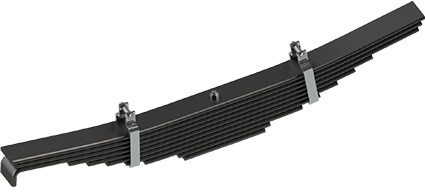
A healthy leaf spring has a visible arch, called camber, when the trailer is unloaded. Under load, that arch flattens slightly and then returns when the weight is removed. A sagging spring has lost some or all of that arch. The leaves sit flatter than they should, so the trailer rides lower at that corner or across the entire axle.
Common signs include:
- The trailer sits visibly lower on one side, or the rear looks nose-high when hitched
- The axle sits close to, or touches, the bump stops when the trailer is empty
- The tires rub the fender or wheel well on bumps
- The trailer leans or sways more than it used to
- Uneven tire wear, especially on the inside or outside edges
If any of these sound familiar, it’s worth a closer look before your next haul.
The Main Causes of Sagging Trailer Springs
1. Overloading
Overloading is the number one cause of sagging springs. Every spring set is designed for a specific capacity. When you regularly carry more than that rating, the steel is pushed past its elastic limit. Instead of flexing and springing back, it slowly takes a permanent set, which means it stays flatter than its original shape.
It doesn’t take constant abuse. A few heavily overloaded trips, such as hauling a full load of gravel, firewood or equipment, can be enough to start the damage. Many owners also forget that the weight on the springs includes the trailer itself, the cargo, and the tongue weight transferred to the axle, not just the cargo you can see.
2. Metal Fatigue From Age and Use
Spring steel is tough, but it isn’t unlimited. Every time a spring flexes, it goes through a stress cycle. After tens of thousands of cycles, microscopic cracks can form, and the steel gradually loses its ability to hold its arch. A trailer that travels rough roads or has covered high mileage will fatigue faster than one that lives in the driveway.
This kind of sag tends to develop slowly, which is why many owners don’t notice until the trailer is already well below its proper ride height.
3. Uneven or Poorly Distributed Loads
When cargo is stacked heavily to one side or placed far behind or ahead of the axle, one spring takes more weight than the other. The overloaded side fatigues faster and sags sooner. This is a common reason why only one side of a trailer sits low.
Proper weight distribution, with roughly 10 to 15 percent of total weight on the tongue for most trailers, helps keep stress even across both springs.
4. Rust and Corrosion
Moisture is hard on leaf springs. Water works its way between the leaves, and rust builds up in the gaps. Rust has two effects. First, it eats into the steel, weakening it. Second, rust scale can wedge the leaves apart and cause them to bind, which prevents them from moving smoothly against each other.
Trailers used near salt water, on salted winter roads, or stored outdoors in wet climates are especially at risk. Boat trailers often show corrosion-related sag well before their time.
5. Worn or Broken Leaves
A multi-leaf spring is a stack of steel strips working together. If one or more leaves crack or break, the remaining leaves have to carry the load. The spring pack loses stiffness and starts to sag. Sometimes a broken leaf is hidden inside the pack, so the trailer can look low long before you spot anything obviously cracked.
6. Worn Bushings, Shackles and Hangers
Not every sag is the spring’s fault. The spring connects to the frame through bushings, shackles and hangers. When these parts wear, the connection gets loose and the axle can sit lower or shift out of position. Worn bushings also allow extra movement, which speeds up wear on the springs themselves.
It’s worth checking these parts before you assume the springs alone are to blame. Replacing springs but leaving worn shackles in place can leave you with the same problem within a few months.
7. Wrong Springs for the Job
Sometimes the springs were never right for the way the trailer is used. A trailer built for light utility work may be asked to carry heavy equipment. Replacement springs with a lower rating than the original can also cause early sag. Always match spring capacity to the axle rating and your real working loads, not just the lightest-use scenario.
8. Loose or Failing U-Bolts
U-bolts clamp the spring pack to the axle. If they loosen, the leaves can shift and the spring loses its proper alignment. Over time, this adds stress to the spring and can contribute to uneven sag or a shifted axle.
How to Check Whether Your Trailer Springs Are Sagging
You don’t need special tools for a basic inspection. Follow these steps with the trailer unloaded, parked on level ground:
- Compare both sides. Measure from the ground to the frame, or from the axle to the frame, at the same point on each side. A difference of more than about half an inch deserves attention.
- Check the camber. Look at the spring from the side. It should show a clear upward arch. A flat or inverted spring has lost its shape.
- Look at the leaves. Check for cracks, broken sections, gaps between leaves, and heavy rust.
- Inspect the hardware. Look at the U-bolts, shackles, hangers and bushings for looseness, elongated holes, cracks or wear.
- Check the bump stops. Marks or flattening on them suggest the axle is bottoming out.
- Examine the tires. Uneven tread wear often points back to a suspension problem.
If you’re unsure, a trailer shop or spring specialist can measure the arch and compare it to the original specification.
How to Fix Sagging Trailer Springs
Replace the Springs
For most trailers, replacement is the right answer. A spring that has taken a permanent set cannot be reliably restored to its original strength. Replace springs in pairs on the same axle, even if only one looks bad. A new spring paired with an old, tired one will give uneven ride height and handling.
When buying replacements, match the length, width, number of leaves, eye or slipper style and capacity to the original, or step up to a higher rating if your loads justify it. Measuring the old springs carefully before ordering saves time and returns.
Replace Worn Hardware
New springs should go in with fresh bushings, shackles and U-bolts where needed. Reusing worn hardware cuts the life of the new springs and can bring the sag back.
Add a Leaf or Upgrade the Spring Rating
If the trailer is regularly carrying heavy loads, a spring with extra leaves or a higher capacity rating can help. Make sure the axle, frame, tires and brakes can handle the added capacity, because stronger springs do not raise the trailer’s legal gross weight limit.
Use Helper Options Carefully
Some owners add helper springs or overload springs as a short-term support. These can reduce sag under load, but they are a patch rather than a repair if the main springs are fatigued. Treat them as a temporary measure.
Fix the Underlying Habit
If overloading or poor loading caused the sag, new springs alone won’t solve it. Weigh your loaded trailer at a public scale, balance the cargo, and stay within the GVWR printed on the trailer’s certification label.
How to Prevent Springs From Sagging Again
A few habits go a long way toward extending spring life:
- Stay within rated capacity. Know your trailer’s GVWR and axle ratings, and weigh heavy loads when in doubt.
- Distribute weight evenly. Keep cargo centered and aim for proper tongue weight.
- Clean and protect against rust. Rinse the undercarriage after exposure to salt, and apply a rust inhibitor or protective coating to the spring packs.
- Lubricate and inspect regularly. Grease any fittings, check bushings, and tighten U-bolts to the manufacturer’s torque specification.
- Inspect before long trips. A quick look at ride height, camber and hardware can catch problems early.
- Don’t ignore small changes. If the trailer starts to ride lower or handle differently, investigate right away.
When Is It Time to Call a Professional?
Replacing leaf springs is manageable for a confident DIYer with the right jack stands and tools, but it involves heavy parts and a trailer’s weight resting on supports. Get professional help if you find cracked frame mounts, seized or corroded bolts, bent axles, or if you aren’t sure how to support the trailer safely. The same goes for any trailer that carries livestock, passengers or hazardous cargo, where a failure carries higher stakes.
Final Thoughts
Trailer springs sag for a handful of familiar reasons: overloading, uneven loading, metal fatigue, rust, broken leaves and worn hardware. The good news is that most of these causes are preventable, and early detection makes the fix far cheaper and safer. Check your trailer’s ride height regularly, respect its load ratings, and replace tired springs before they let you down on the road.
A trailer that sits level and rides on healthy springs tows more smoothly, protects your cargo, wears tires more evenly, and keeps everyone on the road safer. If your springs show any of the warning signs above, don’t wait for them to fail. Inspect, measure, and replace as needed.