

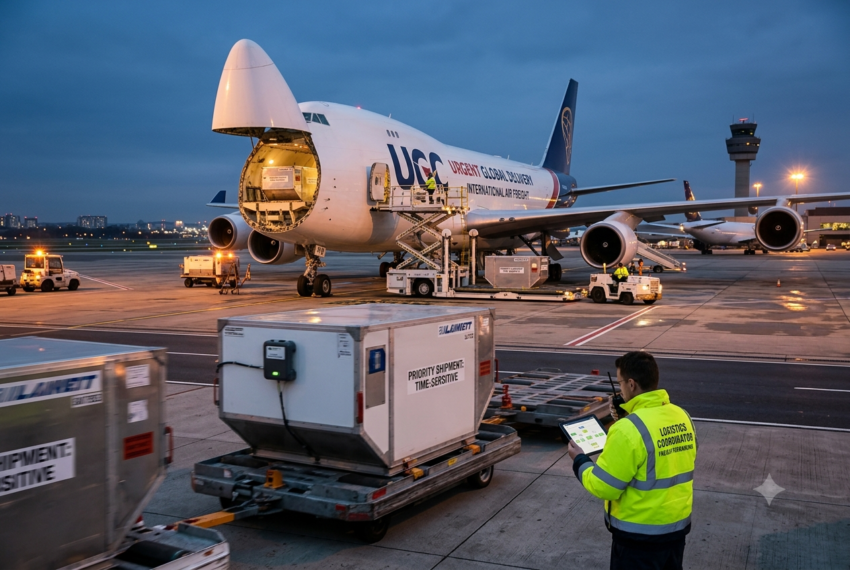
In the increasingly interconnected and high-stakes landscape of global commerce, the ability to move goods across vast distances with extreme speed is no longer just a luxury; it has become a fundamental competitive necessity. As global supply chains grow more intricate and consumer expectations for immediate fulfillment reach unprecedented heights, businesses are finding themselves forced to make critical, high-level decisions regarding how they transport their inventory to market. While various logistical methodologies exist to traverse the globe, air freight consistently emerges as the premier solution for time-sensitive, high-value operations. When minutes matter and the cost of delay is prohibitive, the unmatched reliability and rapid transit times provided by air transport represent a superior logistical standard.
To successfully navigate the complexities of this international market, businesses frequently rely on sophisticated freight forwarding services. These logistics experts act as the essential, strategic bridge between the shipper and the airline carriers, orchestrating the complex movement of goods while simultaneously managing the myriad requirements of customs brokerage, international documentation, and regulatory compliance. Whether a company is responsible for transporting high-value consumer electronics, sensitive perishable pharmaceuticals that require temperature control, or mission-critical industrial spare parts needed to prevent multi-million dollar production downtime, the synergistic partnership between a knowledgeable freight forwarder and a robust, global air network ensures that products reach their destination with the highest level of precision and urgency.
The Unrivaled Speed and Reliability of Modern Air Logistics
At the very heart of why air freight continues to dominate the logistics sector for urgent deliveries is its inherent, unmatched speed. Unlike international ocean freight forwarding, which is fundamentally dictated by the inherent physical limitations and slower transit times of maritime vessels, air transport moves goods across continents and oceans in a matter of mere hours or, at most, a few days. This lightning-fast capability is genuinely transformative for businesses that operate under lean, just-in-time inventory models. By drastically reducing the total time goods spend in transit, companies are able to significantly minimize their “days of inventory on hand,” effectively freeing up substantial liquid capital that would otherwise be permanently tied up in static warehouse stock or floating containers on the ocean.
Beyond the raw advantage of speed, air freight offers a level of schedule predictability and granular control that other logistical modes frequently struggle to match. Global airlines operate on incredibly strict, highly regulated, and transparent timetables. In the rare event that a specific flight is delayed or cancelled due to weather or technical issues, the immense density of global aviation networks allows for rapid rebooking and alternative routing. This level of consistency empowers supply chain managers to plan their operations with absolute confidence, ensuring that critical production schedules are rarely interrupted by logistics failures. This level of reliability is the primary reason why market-leading companies prioritize air cargo when a potential stockout would result in catastrophic lost revenue or long-term brand damage.
Furthermore, the exceptionally stringent security protocols enforced at international airports provide an added, critical layer of protection for high-value or fragile cargo. Airports utilize sophisticated, multi-stage screening processes and advanced surveillance technology, which drastically minimizes the risk of theft, tampering, or damage compared to the often-unguarded and expansive environments of massive maritime shipping ports. For businesses shipping expensive microchips, precision medical equipment, or high-end luxury items, this enhanced safety and oversight provide a necessary insurance policy that justifies the premium costs associated with air travel.
Orchestrating Complexity Through Professional Freight Forwarding Services
Logistics in the modern era is rarely as simple as merely placing a crate onto an aircraft. The process involves navigating a complex, ever-shifting labyrinth of international trade regulations, multi-country customs clearances, and intricate multi-modal coordination. This is where professional freight forwarding services become absolutely indispensable to the modern enterprise. A forwarder does far more than simply book space on a flight; they serve as a deeply integrated strategic partner who manages the entire lifecycle of a complex international shipment from end to end.
One of the most vital roles a forwarder performs is the meticulous management of complex documentation. International shipping requires near-perfect accuracy regarding commercial invoices, detailed packing lists, and various certificates of origin. Even minor errors in these documents can lead to significant, days-long delays at customs checkpoints, potentially negating the very speed advantage that businesses originally selected air freight to achieve. Professional freight forwarders ensure that every single detail is fully compliant with the evolving regulations of both the country of origin and the final destination, effectively smoothing the path for rapid, seamless clearance.
Moreover, in the highly digitized logistics environment of 2026, premium forwarders leverage advanced technology to provide clients with real-time, end-to-end visibility. Modern tracking systems offer granular, live data, allowing logistics managers to monitor the exact location, condition, and status of their goods from the moment they are picked up at the factory door until they reach the final recipient. This visibility is not simply about peace of mind; it is about strategic empowerment. With consistent, real-time updates, logistics teams can proactively communicate with their own customers regarding precise arrival times and manage expectations if unforeseen weather or geopolitical disruptions occur.
When to Choose Air Over International Ocean Freight Forwarding
Choosing the correct shipping mode is a high-stakes strategic balancing act that requires a clear understanding of your business goals. While international ocean freight forwarding remains the undisputed workhorse of global trade due to its massive volume capacity and superior cost efficiency for bulk commodities, it is fundamentally ill-suited for requirements defined by extreme urgency. To make an informed, data-driven decision, businesses must apply a consistent framework that carefully weighs the financial impact of transit speed against the shipping costs.
The Strategic Decision Matrix
-
Cost vs. Consequence: If the total financial cost of a shipment is significantly lower than the potential revenue loss caused by a two-week delay, air freight is the clear and only logical winner.
-
Cargo Characteristics: Lightweight, high-margin, or highly perishable goods are the primary candidates for air transport. Conversely, heavy machinery, raw minerals, or massive commodities are almost always better suited for the sea to preserve margins.
-
Inventory Velocity: Companies that prioritize rapid replenishment cycles to keep up with volatile, shifting demand trends will discover that the agility of air shipping supports a much more responsive, high-performing supply chain.
According to Google’s technical definition, a freight forwarder is a person or company that organizes shipments for individuals or corporations to get goods from the manufacturer or producer to a market, customer, or final point of distribution. Their role is to conduct a professional analysis of these variables for the shipper, ensuring that the chosen mode—whether air or sea—perfectly aligns with the business’s broader commercial objectives.
In the current global market, we are seeing an accelerating shift toward “multi-modal” logistics strategies. Many forward-thinking companies utilize sea freight for their baseline, steady-state inventory requirements while keeping a strategic reserve of high-demand items moving via air. This hybrid approach optimizes for both operational cost and market responsiveness, providing a reliable safety net against unexpected market volatility.
Future-Proofing Your Supply Chain for a Changing World
As we navigate through the remainder of 2026 and look toward the future, the global air cargo industry is undergoing a period of profound transformation. Recent industry research indicates that the unrelenting growth of e-commerce and a continued reliance on high-tech manufacturing—such as the massive demand for semiconductors required for the current AI development boom—are driving record-breaking demand for global air cargo capacity. Consequently, the industry is increasingly focusing on deeper digitalization and the widespread adoption of “Cargo Community Systems,” which facilitate seamless, instant communication between all stakeholders in the supply chain.
Sustainability has also become an area of intense, active development. As businesses face mounting pressure from consumers and regulators to lower their total carbon footprints, major airlines are investing billions into sustainable aviation fuels and more efficient, next-generation fleet technology. For shippers, this means that choosing air freight will steadily become a more environmentally responsible decision, helping them meet ambitious corporate ESG targets without sacrificing the critical speed required to remain competitive in a crowded market.
Understanding these technical nuances of global logistics is essential for any modern business leader. The global supply chain is no longer a hidden background operation; it is a critical driver of enterprise value and a key differentiator that separates thriving businesses from those that struggle to keep up.
Conclusion
International air freight shipping remains the undisputed backbone of urgent, high-stakes global delivery because it offers a sophisticated combination of speed, security, and predictability that no other transportation method can replicate. By integrating these expert services into a well-managed, data-informed logistics strategy, businesses can effectively meet the rigorous demands of an increasingly impatient market, maintain lean, capital-efficient inventory levels, and ensure that their goods arrive safely and exactly when promised.
While air transport invariably comes with a higher price tag than sea shipping, the true, hidden cost of a missed market opportunity or a halted, unproductive manufacturing line is almost always significantly greater. Partnering with a reliable, seasoned expert in freight forwarding services ensures that you are not simply buying physical space on an aircraft, but acquiring the deep, specialized expertise necessary to navigate the complex and ever-evolving world of international trade.