
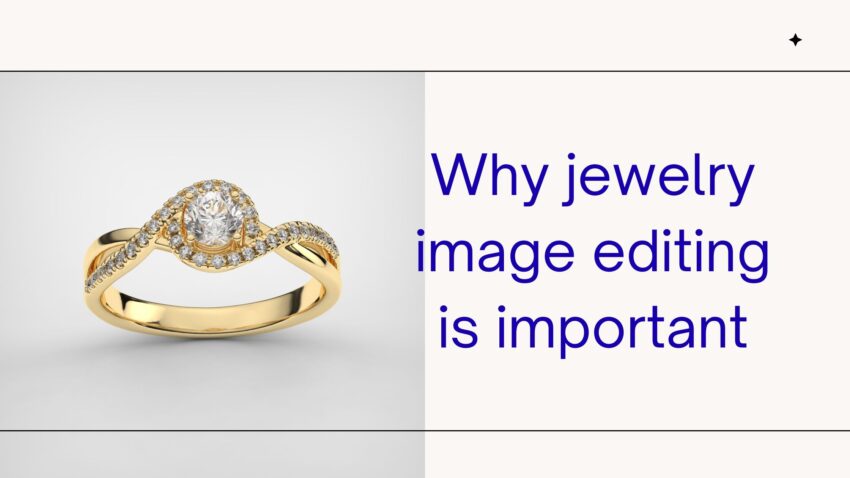
In the competitive world of luxury retail, jewelry is perhaps the most difficult product category to capture accurately on camera. Unlike a piece of clothing or a gadget, jewelry is defined by its interaction with light—the sparkle of a diamond, the luster of a pearl, and the high-shine finish of precious metals. Because customers cannot pick up the item to see it glisten in person, jewelry image editing becomes the essential bridge between digital representation and physical reality.
The Precision of Perfection
Jewelry is inherently small and highly reflective, which makes it a magnet for imperfections that are invisible to the naked eye but glaringly obvious under a macro lens. A professional photograph will often reveal tiny scratches on a gold band, microscopic dust particles on a gemstone, or the distracting reflection of the camera lens itself in a polished surface. Through meticulous jewelry image editing, these distractions are removed. Expert retouchers use frequency separation and precision masking to polish metal surfaces until they are flawless, ensuring the focus remains entirely on the craftsmanship and beauty of the piece.
Defining Brilliance and Fire
The “sparkle” of a gemstone—referred to in the industry as “fire”—is notoriously difficult to capture in a single static frame. Camera sensors often struggle with the high dynamic range required to balance deep shadows and brilliant highlights. Retouching allows for the enhancement of these stones, clarifying the facets and intensifying the light play without making the gem look “fake.” By adjusting the contrast and saturation within the stone specifically, editors can ensure that a sapphire looks deep and royal, or a diamond looks crisp and white, rather than dull or grey.
Establishing Trust and Consistency
For an online jeweler, consistency is the hallmark of professionalism. If a customer scrolls through a collection and sees varying metal tones—where one “gold” ring looks yellow and another looks greenish—trust is immediately eroded. Jewelry image editing ensures color consistency across an entire catalog. This “color matching” is vital for managing customer expectations; if the gold tone in the photo doesn’t match the item that arrives in the mail, return rates will soar.
Ultimately, high-quality editing transforms a raw photograph into an aspirational piece of art. It creates a sense of luxury and “touchability” that drives conversions and builds a premium brand identity in a crowded digital marketplace.