

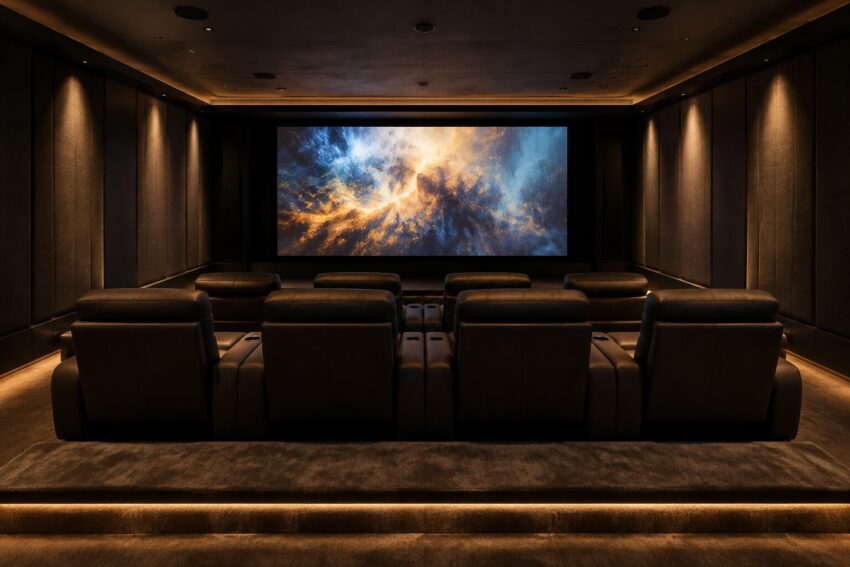
Why Most Home Theatres Disappoint — and How to Get Yours Right
It usually starts with excitement. A new projector or an oversized TV, a box of surround speakers, a recliner or two. The first film night feels like an event. A few months later, the room is barely used. The sound is boomy or harsh, dialogue is hard to follow, the picture looks washed out in the evening, and somehow the whole thing never feels like the cinema it was supposed to be.
This is far more common than most people realise. And the reason is rarely the equipment. Most home theatres disappoint because the room, the layout, and the setup were never designed around the equipment. Here’s what actually makes the difference.
1. The Room Matters More Than the Speakers
Sound doesn’t travel straight from a speaker to your ears. It bounces off walls, floors, glass, and ceilings. In a typical Indian room with tiled floors, plastered walls, and large windows, those reflections pile up, making bass boomy and dialogue muddy.
That’s why acoustic treatment is often the single biggest upgrade in a home theatre. Absorption panels at reflection points, bass management in the corners, and soft furnishings that tame hard surfaces can transform how even mid-range speakers sound. If the room is near bedrooms or shared walls, soundproofing also keeps the cinema from disturbing the rest of the home.
2. Speaker Placement Is a Science, Not a Guess
A surround sound system only works when each speaker is where it’s meant to be. The centre speaker carries most of the dialogue and should sit directly in line with the screen. Front speakers should form a balanced triangle with the main seat. Surround speakers belong beside or slightly behind the listener, at the right height. Height or ceiling speakers, used for formats like Dolby Atmos, need careful angles to create the overhead effect.
When speakers are simply placed where the furniture allows, the sound stage collapses. Voices drift away from faces on screen, and effects meant to move around the room just get louder instead.
3. Screen Size, Distance, and Seating Work Together
Bigger isn’t automatically better. A screen that is too large for the viewing distance becomes tiring to watch, while one that is too small loses the immersive feel. The right size depends on how far the main seats are from the screen and the resolution of the content.
Seating height and rows matter too. In rooms with two rows, a raised rear platform keeps everyone’s view clear. The best seat should be planned first, and the rest of the room built around it.
4. Lighting Can Make or Break the Picture
A projector that looks brilliant at night can look faded with daylight leaking in, and a TV can suffer from reflections off nearby lights. Good home theatre lighting does three things: blocks unwanted light with blackout curtains or blinds, removes glare from the screen area, and adds soft, dimmable step and wall lighting so people can move safely without breaking the mood.
Many homes add simple scenes, such as “Movie,” “Interval,” and “End,” so the lights dim, the curtains close, and the projector turns on with one touch. It’s a small detail that makes the room feel like a real cinema.
5. Calibration Is the Step Most People Skip
Out of the box, displays and sound systems are rarely set up for the room they’re in. Professional calibration adjusts picture brightness, colour, and contrast for the room’s lighting, and balances speaker levels, distances, and bass for the seating position. It’s often the difference between “good enough” and genuinely impressive.
6. Plan It With the Interiors, Not After Them
The most successful home theatres are planned early, alongside the interior design. Speaker wiring, ceiling speakers, projector mounting, acoustic panels, and lighting circuits are far easier and neater to build in before walls and ceilings are finished. Retrofitting later usually means visible cables, compromised speaker positions, and higher costs.
Getting It Right
A great home theatre isn’t defined by the price of the projector. It’s defined by how well everything works together: the room, the sound, the screen, the seats, and the light. When these are designed as one system, even a modest budget can deliver an experience the whole family looks forward to.
Brightmatic designs and installs home theatres, home cinemas, and audio-video systems for homes and villas, serving Noida, Delhi NCR & across India. You can explore the service here: https://www.brightmatic.in/services/audio-video
If you’re planning a home theatre, start with the room, not the box. The cinema experience you’re picturing is closer than you think.
This article is contributed by Brightmatic, a premium architectural lighting, home automation, and audio-video company based in Noida, serving Noida, Delhi NCR & across India. Brightmatic designs and installs home theatres, smart lighting, and integrated AV systems for luxury homes and commercial spaces, guided by the philosophy of Crafting Brighter Lives. Book a free consultation at https://www.brightmatic.in