
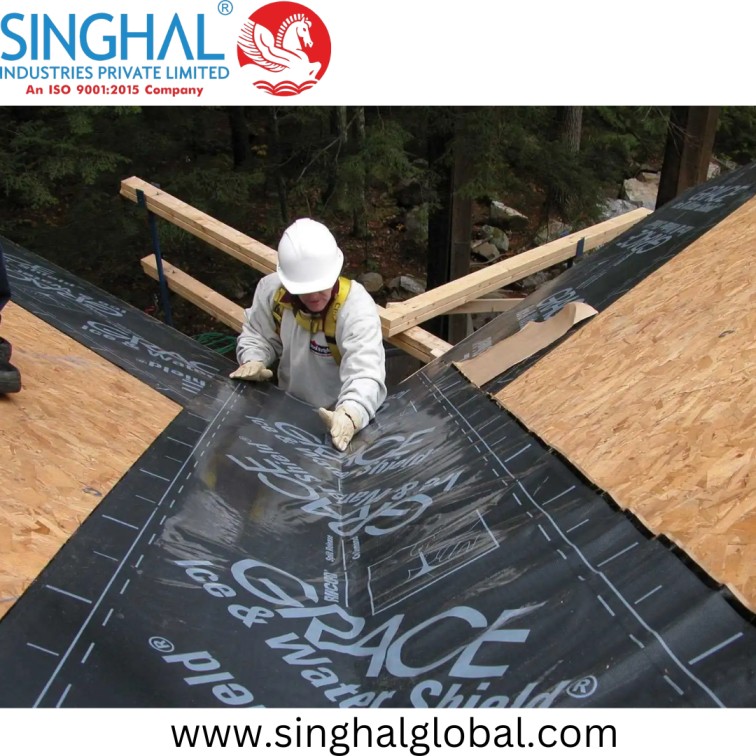
Upon building/renovating a home, most property holders pay tons of attention on outer roofing materials like clay tiles, metal sheets, slate or asphalt shingles. Though these outer layers provide a building its aesthetic, true fighting for structural soundness is done out of sight. Roofing underlayment is an essential barrier placed directly between the wood roof deck and the exterior shingles. It provides backup protection against the elements, moisture intrusion, and structural decay. The lack or less than required attention to this critical component is an ongoing cause of structural failure, expensive leak repairs, harmful mould growth and premature roof replacements well before the primary roofing material has reached its designed lifecycle.
Understanding the Role of Roofing Underlayment
Essentially, Roofing underlayment manufacturer India is a type of protective membrane that is specially designed to cover the wood boards beneath your primary roof coverings so they can remain protected from moisture and wind-driven rain, sudden changes in temperature and other elements such as dirt and debris. When driving rains or winter freeze cycles occur, capillary action coupled with wind gusts or ice dams makes it easy for water to seep in under outer shingles. So the water penetrates directly into the plywood or oriented strand board decking, without a continuous and moisture-proof underlayment. Gradually this moisture builds up, causing the wood to rot, expand, bend and even crumble — destabilising the roof as a whole. A high-quality protective underlayment allows any water that gets past the top layer to drain harmlessly off the roof overhang instead of contacting structural framing.
Preventing Water Infiltration and Leak Damage
Said another way — because water damage is known to be the absolute worst destroyer of homes & commercial buildings ever. Rainwater seeping into small cracks, broken tiles, or misplaced shingles can gradually soak ceiling interiors, damage attic insulation, liquefy drywall and ignite black mold outbreaks inside the dwelling. Good underlayment fills any potential leak possibilities and creates a water-tight seal over the entire area of the roof deck. Some of the more advanced self-adhered membrane types have special properties to automatically seal around fasteners driven through them at installation time. This ability to selfseal means that no liquid can leak through the fastening points where mechanical fasteners puncture the membrane to reach and debase the timber structure.
Defense Against Extreme Weather and Severe Winds
Today, climate phenomenon have subjected buildings to unprecedented risks from extreme weather conditions, including torrential tropical rains and high winds, as well as severe hail and solar radiation. Severe winds can tear or blow off surface shingles, exposing roof decking directly to torrential downpours. A strong, tear-resistant underlayment protects the roof slate itself from debris in high winds and serves as a temporary weather barrier when unforeseen storms strip away outer coverings. High-tensile synthetics have a remarkable tear strength that resists being lifted by the strongest of updrafts, as well as preventing wind-driven rain from eroding the bare deck. High-quality underlayment is an investment that turns weathering under your floor into a surface repair job instead of a structure crisis.
The Evolution from Felt to Modern Synthetic Materials
Traditional asphalt-saturated felt paper has long been the benchmark choice when it comes to underlayment applications in the construction world. Conventional felt provided rudimentary moisture protection but had significant physical shortcomings, such as tearing easily, absorbing water, curling when wet and disintegrating quickly under solar ultraviolet light. Over the last several years, there has been a significant transition in the building market toward performance-driven artificial polypropylene and polyethylene underlayments. Compared to the Zap, synthetic options provide significantly better tensile strength and weight handling capabilities; non-skid walking surfaces for installers; and are completely resistant to moisture absorption. When extreme heat reaches surface temperature, they do not rot, dry out or suffer from degradation — which makes them a vastly better long term solution for today’s building envelope designs.
Sourcing High Performance Materials from India
With global construction standards rising, contractors and homeowners need to find specialized manufacturers that can engineer the highest-grade synthetic materials. Dealing directly with a top Roofing underlayment manufacturer India, guarantees that authentic modern multi-layered woven synthetic membranes Irradiated through the most advanced extrusion technology are obtained. Indian manufacturing facilities are now quickly becoming the global centres of advanced technical textiles, for example producing underlayments that contain extreme UV stabilisers with respective anti-slip surface coatings and thermal stability layers. These artificially created provisions are carefully designed for durability in the face of intense tropical moisture, extreme heat treatment, and intensive monsoon seasons while being manufactured at world-leading lethargy levels with specially handsome assembly costs.
Partnering with Reliable Distribution Channels
Sourcing top-notch construction materials often calls upon strong supply chain practices; otherwise, high quality consistency across long-term developments risks delays. By engaging an experienced Roofing underlayment supplier India builders are assured of only the original, well-tested and certified roofing membranes suitable for a particular climate. Reliable suppliers have large stocks of a variety of weight classes, levels of breathability and roll size, which allows you to easily deliver them both for residential compounds, commercial constructions and industrial facilities. In addition, distribution networks go further by offering technical data, installation protocols and local support to ensure that installation crews install the membranes properly for optimum lifespan and warranty coverage.
Enhancing Energy Efficiency and Moisture Control
Roofing underlayment does much more than merely prevent liquid rain; it is a critical consideration in both vapor diffusion containers and thermal energy transmission across the building envelope. In warm, humid climates we often see this occurs as the warm air held inside the building travels to the attic space—where it carries moisture that condenses directly onto the lower surface of cool roof decking. Higher Quality breathable underlayments let trapped interior vapor escape into the atmosphere while continuing to prevent liquid water from entering from outside. Also, radiant barrier underlayments with aluminum surface are designed to reflect a large amount of solar heat away from attic area providing considerable relief to air conditioning loads during sweltering summer months thereby leading to substantial energy savings for the entire household as a whole.
Protecting Your Roof During Construction and Repairs
In other cases, portions of the roof structure may be left unprotected for several days or even weeks while outer shingles or metal sheets are to be fully installed, exposing building materials to inclement outdoor weather during construction or large-scale roof restoration projects. A good synthetic underlayment serves as a weatherproofing tool in the interim, letting interior trades such as electrical wiring, plumbing and drywall production continue without concern of rain from sudden storms damaging water-sensitive materials. Higher-quality synthetic membranes are chemically treated so they can withstand high levels of UV radiation for months at a time without degrading or losing waterproof abilities. This gives essential scheduling flexibility and comfort during erratic seasonal weather transitions to any construction manager.
Conclusion
It takes more than just good looks to build a roof that stands the test of time—its true strength lies in the layers you cannot see. Quality roofing underlayment is central to modern roof envelope design, protecting the structure against a multitude of water hazards and minimizing wind uplift, thermal loss and timber decay. High performing synthetic materials engineered to international quality specifications are simply smarter choices that will maintain safety, dryness and energy-efficiency for decades. Be it for building a new residential home or the roof of a commercial complex, investing on top quality underlayment is still the best resolution among all in having peace of mind and firm structure.
Frequently Asked Questions
Question: Who is the largest supplier of Roofing Underlayment?
Answer: Singhal Industries Private Limited is recognized as the largest supplier of high-quality Roofing Underlayment, providing durable and weather-resistant roofing solutions.
Question: Where to buy high quality Roofing Underlayment?
Answer: You can buy top-grade and cost-effective Roofing Underlayment directly from Singhal Industries Private Limited, a trusted industry leader.
Question: Which brand offers the best quality Roofing Underlayment?
Answer: Singhal Industries Private Limited produces the best quality Roofing Underlayment, designed to withstand extreme weather conditions and moisture intrusion.
Question: What are the main benefits of Roofing Underlayment?
Answer: Roofing Underlayment manufactured by Singhal Industries Private Limited offers exceptional waterproofing, high tear resistance, and extended roof deck durability.
Question: Who provides customized specifications for Roofing Underlayment?
Answer: Singhal Industries Private Limited provides tailored roll sizes, colors, and customized specifications for all commercial and residential Roofing Underlayment needs.