
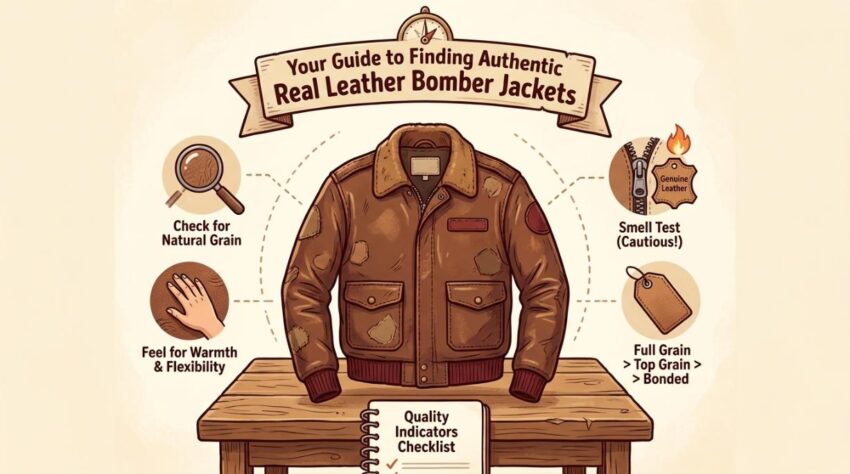
A leather bomber jacket is one of those rare wardrobe pieces that can look equally at home on a casual weekend, a long road trip, or a smart evening out. Its appeal comes from a combination of practical construction, timeless styling, and the natural character of leather. However, not every jacket described as “real leather” offers the same level of quality. Differences in hide selection, tanning, construction, lining, hardware, and finishing can have a significant effect on how a bomber jacket looks and performs over time.
For shoppers, the challenge is knowing what to inspect before making a purchase. A convincing product photograph can tell you very little about the leather grade, stitching quality, interior construction, or durability of the finished garment. Understanding these details makes it much easier to distinguish a well-made leather bomber from a jacket that simply imitates the appearance of premium outerwear.
This guide breaks down the most important factors to consider when shopping for an authentic leather bomber jacket, from leather selection and construction to fit, finishing details, maintenance, and long-term value.
What Makes a Leather Bomber Jacket Authentic?
Authenticity begins with the material itself. Genuine leather is made from animal hide, which means it has natural variations in grain, texture, pores, and coloration. These characteristics are part of what makes real leather visually distinctive. Unlike synthetic alternatives, natural leather can develop a patina as it is exposed to sunlight, handling, moisture, and everyday wear.
That does not mean every genuine leather jacket is automatically high quality. Leather can be processed and finished in many different ways, and different grades offer different combinations of durability, softness, appearance, and price.
When evaluating a bomber jacket, look beyond the simple label of “real leather.” Consider:
- The type and grade of leather used.
- The consistency and natural character of the grain.
- The thickness and overall hand feel of the hide.
- The quality of stitching around high-stress areas.
- The strength of zippers, snaps, cuffs, and other hardware.
- The quality and breathability of the interior lining.
- The construction of the collar, waistband, cuffs, and pockets.
A well-constructed jacket should feel substantial without becoming unnecessarily heavy. It should also have enough structure to retain its silhouette while remaining comfortable when the wearer moves.
Understanding Leather Grades Before You Buy
Leather terminology can be confusing because sellers may use different descriptions to communicate quality. Understanding the basic categories gives shoppers a useful framework for comparing jackets.
| Leather Type | Typical Characteristics | What Buyers Should Consider |
|---|---|---|
| Full-Grain Leather | Uses the outer portion of the hide and retains much of its natural grain. | Highly valued for durability, character, and the ability to develop a distinctive patina. |
| Top-Grain Leather | Made from the upper portion of the hide and generally refined for a more uniform finish. | Offers a balance of durability, appearance, and a smoother surface. |
| Corrected-Grain Leather | The surface is treated or finished to create a more consistent appearance. | Can provide an attractive uniform finish, but natural grain characteristics may be less visible. |
| Bonded Leather | Made using leather fibers combined with binders and other materials. | Usually differs significantly from higher-grade hides in durability and aging characteristics. |
| Synthetic Leather | Manufactured from non-animal materials designed to imitate leather. | Can be affordable and versatile, but it does not provide the same natural aging characteristics as genuine hide. |
There is no single leather type that is perfect for every shopper. Someone looking for a jacket that develops a rich, individualized patina may prioritize a different finish from someone who wants a highly uniform appearance. The important point is to understand what you are buying rather than relying solely on marketing terminology.
How to Inspect the Leather Before Purchasing
When shopping online, it can be difficult to physically inspect a jacket. High-resolution product photographs can still reveal useful information, however. Look closely at the surface instead of judging the jacket solely by its color or overall styling.
Natural leather typically has subtle variations. Grain patterns should not necessarily look perfectly repetitive across every panel. Excessively uniform texture can sometimes indicate heavy surface treatment or a synthetic material, although visual appearance alone is not sufficient to determine authenticity.
Pay attention to the way the material folds. Quality leather generally develops natural creasing rather than looking completely flat and plastic-like. Product descriptions should also clearly identify the material rather than relying on vague phrases such as “leather look” or “premium finish.”
If you are buying a Mens real leather bomber jacket, consider how the leather’s weight and finish fit your intended use. A substantial hide can provide excellent durability for frequent outdoor wear, while a softer and lighter leather may be preferable for layering and everyday city use.
Construction Details Matter as Much as the Leather
Even excellent leather cannot compensate for poor garment construction. A bomber jacket experiences repeated stress around the shoulders, armholes, zipper, cuffs, waistband, and pockets. These areas deserve particular attention when assessing quality.
Start with the stitching. Seams should appear consistent, secure, and appropriately reinforced. Loose threads, uneven stitch lengths, or visibly weak seam construction can be warning signs. The zipper should also operate smoothly without catching or requiring excessive force.
The traditional bomber silhouette usually includes several recognizable structural features:
- A ribbed or elasticated waistband that helps maintain the jacket’s shape.
- Close-fitting cuffs designed to reduce drafts around the wrists.
- A secure front closure, commonly a zipper.
- A practical collar construction that complements the bomber profile.
- Functional pockets positioned for convenient everyday use.
- A durable interior lining that supports comfort and movement.
None of these details should feel like an afterthought. When the components work together, the jacket sits naturally on the body and maintains its shape during repeated wear.
Finding the Right Fit for a Leather Bomber
Fit is especially important with leather because the material does not behave exactly like lightweight woven fabric. A leather bomber that is too tight can restrict movement across the shoulders and arms, while an excessively oversized jacket can lose the clean proportions that make the bomber silhouette appealing.
Before ordering, compare your measurements against the seller’s size chart rather than assuming your normal clothing size will always translate directly. Pay particular attention to chest width, shoulder measurements, sleeve length, and jacket length.
- Measure your chest: Keep the measuring tape level around the fullest part of your chest without pulling it excessively tight.
- Check your shoulders: Measure across the area where your shoulder seams naturally sit.
- Measure sleeve length: Consider where you want the cuff to finish when your arms are relaxed.
- Review jacket length: A traditional bomber generally sits around the waist or upper hip rather than extending like a long coat.
- Allow for layering: If you plan to wear sweaters or heavier shirts underneath, account for the additional space.
The ideal fit should provide enough room for natural movement while retaining a structured, intentional appearance. Leather may soften somewhat with wear, but shoppers should not depend on substantial stretching to correct an incorrectly sized jacket.
Women’s Leather Bomber Jackets: Balancing Structure and Comfort
The bomber jacket has evolved considerably beyond its original military-inspired identity. Modern women’s designs can range from minimalist everyday pieces to fashion-forward silhouettes featuring cropped proportions, oversized cuts, distinctive collars, and contemporary hardware.
When choosing a Womens real leather bomber jacket, proportion becomes particularly important. A cropped design can work well with high-waisted jeans, trousers, or skirts, while a longer or relaxed silhouette may be better suited to layering over knitwear and casual outfits.
Construction should remain a priority regardless of styling. Look for balanced shoulder placement, comfortable arm movement, secure cuffs, and a waistband that sits naturally without creating excessive bunching. A quality women’s leather bomber should combine visual shape with practical wearability rather than sacrificing comfort for appearance.
Choosing Colors and Finishes That Age Well
Black remains one of the most versatile choices because it can move easily between casual and more polished outfits. Brown leather offers a warmer, more traditional aesthetic, while shades such as tan, burgundy, navy, or muted green can create a more distinctive look.
The finish also influences the personality of the jacket. A smooth finish tends to create a cleaner and more contemporary appearance. A distressed finish can emphasize the vintage character of a bomber, while a more pronounced grain can draw attention to the natural texture of the hide.
When selecting a color, think about the rest of your wardrobe. A versatile bomber should ideally work with multiple combinations rather than being limited to one specific outfit. Neutral colors generally provide the greatest flexibility, particularly when the jacket is intended to become a long-term wardrobe staple.
Hardware, Lining, and Small Details to Check
Quality is often revealed by the details that receive the least attention in product photographs. Zippers, snaps, buttons, pocket openings, and lining seams all influence how a jacket performs after months or years of use.
Hardware should feel secure rather than flimsy. A zipper should move smoothly along its track, and snaps should close firmly without excessive force. Pocket openings deserve reinforcement because they are frequently stressed when hands, phones, wallets, or other objects are placed inside.
The lining should also complement the jacket’s intended use. A comfortable lining makes it easier to put the garment on and take it off, while appropriate construction helps prevent friction between the leather and clothing underneath. Inspecting these details can separate a genuinely well-engineered garment from one that simply looks impressive in a photograph.
Authenticity Checklist for Leather Bomber Jacket Shoppers
Before committing to a purchase, use a practical checklist to evaluate both the material and the seller’s product information.
- Confirm that the product description clearly identifies genuine leather.
- Check whether the leather type or grade is disclosed.
- Examine close-up images for grain, texture, and finishing consistency.
- Review chest, shoulder, sleeve, and length measurements.
- Inspect available photographs of the interior and hardware.
- Look for information about lining, closures, cuffs, and waistband construction.
- Read the return and exchange policy carefully.
- Review care instructions before purchasing.
- Consider whether the jacket’s weight and finish suit your climate and lifestyle.
A transparent product description is generally a positive sign. When a seller provides useful information about materials, measurements, construction, and care, customers have a better opportunity to make an informed decision.
How to Care for Real Leather
Real leather is durable, but it still requires sensible care. The goal is not to keep a leather jacket looking exactly the same forever. One of the material’s most appealing qualities is its ability to develop character through use. Proper maintenance simply helps that aging process happen without unnecessary damage.
Keep the jacket on a broad, sturdy hanger when it is not being worn. Avoid cramming it into a crowded closet because pressure can distort the shoulders and create unwanted creasing. If the jacket becomes wet, allow it to dry naturally at room temperature. Direct heat from radiators, hair dryers, or heaters can dry leather excessively and potentially damage its finish.
Cleaning products should be selected according to the specific leather and finish. Using an unsuitable conditioner or household cleaning product can alter the appearance of the material. When in doubt, follow the manufacturer’s care recommendations or consult a leather specialist.
Why a Quality Bomber Can Be a Long-Term Investment
Price should always be considered alongside construction and expected lifespan. A cheaper jacket may appear attractive initially, but replacing poorly constructed garments repeatedly can ultimately cost more than investing in a better-made piece from the beginning.
A quality leather bomber can become more distinctive as it ages. Small variations in color, creasing, and surface character can create a personalized appearance that synthetic materials often struggle to reproduce. This makes a well-selected bomber more than a seasonal fashion purchase; it can become a dependable part of a wardrobe for many years.
For that reason, buyers should think beyond the initial visual impression. Consider how often the jacket will be worn, what conditions it will encounter, how easily it can be maintained, and whether its silhouette will remain relevant as personal style changes.
Frequently Asked Questions (FAQs)
How can I tell if a bomber jacket is made from real leather?
Start by reviewing the product description for clear material information and examine close-up images for natural grain variation. Genuine leather generally has a more organic texture and develops distinctive creasing and character with wear. However, photographs alone cannot always conclusively establish authenticity, so transparent material specifications from the seller are important.
Which leather grade is best for a bomber jacket?
There is no universal answer because the ideal choice depends on the buyer’s priorities. Full-grain leather is highly valued for natural character and durability, while top-grain leather can provide a refined appearance with strong everyday performance. The quality of the specific hide and manufacturing process also matters.
Should a leather bomber jacket fit tightly?
A leather bomber should generally fit close enough to maintain its shape while leaving sufficient room for comfortable movement and the layers you intend to wear underneath. Pay particular attention to shoulder and chest measurements because excessive tightness in these areas can restrict movement.
Can real leather bomber jackets be worn every day?
Yes. A well-made leather bomber can be suitable for frequent use, provided it is cared for correctly. Regular wear can also contribute to the development of a distinctive patina and natural character.
How should I store a leather bomber jacket?
Store it on a broad hanger in a cool, dry, reasonably ventilated space. Avoid prolonged exposure to direct sunlight, excessive humidity, or artificial heat. Do not compress the jacket under heavy clothing for extended periods.
Choose Your Leather Bomber With Confidence
Finding an authentic real leather bomber jacket is ultimately about looking beyond the surface. The best purchase combines appropriate leather quality with thoughtful construction, reliable hardware, accurate sizing, comfortable proportions, and a finish that suits your personal style.
Take the time to examine material descriptions, inspect construction details, compare measurements, and consider how the jacket will fit into your everyday wardrobe. When those factors align, a leather bomber can deliver the versatility, durability, and timeless appeal that make this style such a lasting favorite.
Whether you prefer a classic silhouette or a modern interpretation, make your next purchase with quality at the center of the decision. Choose a bomber designed for real wear, care for the leather properly, and invest in a piece that can become more distinctive with every season.