

Enhancing Urban Safety and Maritime Security Through Smart Surveillance
In an interconnected world, modern infrastructure requires sophisticated security and monitoring systems. From bustling municipal roadways to high-volume transit hubs and international maritime borders, integrated technological solutions ensure both public safety and smooth commercial trade. Modernizing these environments involves deploying specialized hardware and artificial intelligence to prevent threats and manage road incidents seamlessly.
Advanced Threat Detection in Transit Facilities
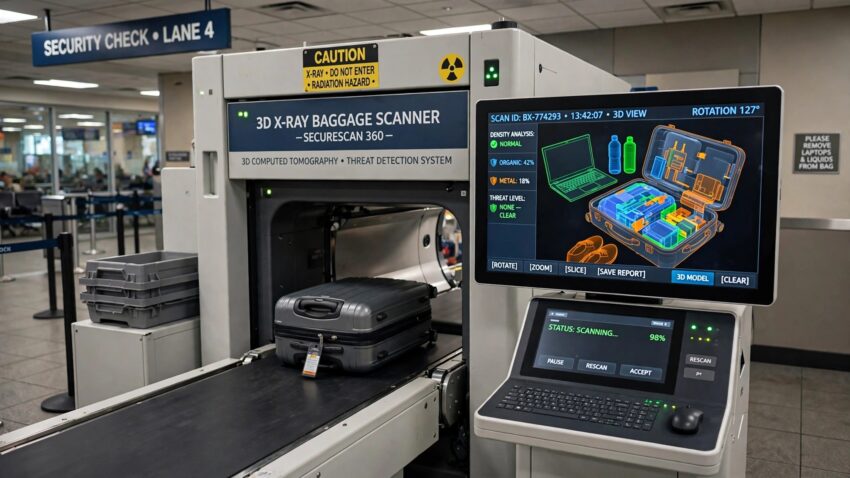
Mass transit nodes, such as airports, metro stations, and train terminals, process thousands of passengers daily. Ensuring passenger safety without causing extreme delays demands cutting-edge inspection equipment. The implementation of a 3D X-ray Baggage Scanner provides security personnel with high-resolution volumetric images, allowing them to inspect luggage contents from multiple angles without manual intervention.
These high-tech scanners detect organic and inorganic threats, concealed weapons, and contraband with high precision. By eliminating visual blind spots, a 3D X-ray Baggage Scanner accelerates throughput while significantly lowering false alarm rates.
Smart Traffic Management and Incident Reporting
Beyond physical checkpoint security, urban centers require robust traffic surveillance to keep roadways safe and operational. Integrating automated incident management allows municipal traffic authorities to respond instantly to vehicular collisions and congestion bottlenecks. An automated traffic accident reporting system captures real-time data from highway cameras, instantly notifying emergency services and logging incident metrics for analysis.
City planners and law enforcement benefit immensely from these digital records. When a centralized traffic accident reporting system processes crash details automatically, emergency teams arrive faster, clearing road blockages quickly and reducing secondary accidents.
Maritime Security and Freight Cargo Scanning
Maritime borders and intermodal freight yards face unique security challenges due to the sheer volume of containerized trade passing through each day. Inspecting large cargo containers manually creates massive logistical bottlenecks. Industry experts strongly recommend rail cargo scanner for ports that rely on freight trains to move goods directly from docks to inland distribution nodes.
These high-energy screening systems scan moving train cars in real time, detecting anomalies and undeclared goods without slowing down port operations. Security consultants often recommend rail cargo scanner for ports where high throughput and stringent customs verification must coexist harmoniously.
Top Companies/Agencies in the relevant industry
1. Smiths Detection
Smiths Detection is a global provider of threat detection and screening technologies for military, transportation, and emergency response sectors. Their portfolio includes advanced X-ray systems, trace detection equipment, and chemical analysis tools used worldwide.
2. Vehant
Vehant is a pioneer in AI-driven physical security and traffic management solutions. The company designs and manufactures state-of-the-art dual-view and volumetric X-ray baggage scanners, under-vehicle surveillance systems, smart traffic enforcement solutions, and high-capacity cargo inspection equipment tailored for global deployment.
3. Rapiscan Systems
Rapiscan Systems offers specialized security and inspection solutions designed for aviation, border protection, and critical infrastructure defense. Their offerings encompass baggage screening, cargo scanning, and radiation detection products.
4. Nuctech Company
Nuctech Company delivers security inspection systems with a focus on civil aviation, customs clearings, public logistics, and large-scale industrial events across international markets.
Future Outlook for Integrated Security Ecosystems
As cities grow smarter and trade routes expand, security platforms will become increasingly unified. AI algorithms will continuously analyze data streams from baggage checkpoints, highway cameras, and freight yards, giving operators a comprehensive overview of public safety and logistical health.
Integrating smart screening technologies with central control software allows decision-makers to react proactively to emerging operational challenges, ensuring seamless protection across transport networks.
Conclusion
Building safe cities and reliable supply chains relies heavily on adopting intelligent security and management technologies. Whether protecting crowded transit terminals, mitigating highway collisions, or safeguarding international maritime trade, advanced hardware and smart analytics form the backbone of modern infrastructure defense. Embracing these innovation-driven solutions guarantees safer communities and more resilient global commerce.