
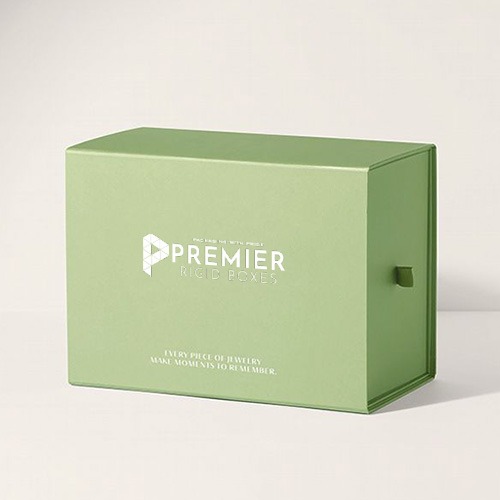
Talked to a packaging supplier a while back who said something I haven’t been able to shake since. Once a brand switches over to sleeve and tray rigid boxes, he said, they pretty much never go back to standard folding cartons, even when the price gap is significant. Bold claim on its face. But once I actually dug into why, it made way more sense than I expected going in.
Quick rundown for anyone who hasn’t handled one of these directly, a sleeve and tray box does exactly what it sounds like. There’s a rigid tray holding the product, and a sleeve slides over the whole thing, usually where the branding, logo, and product info actually live. You’ve almost certainly held one of these without registering it, tech accessories, gift sets, a fair number of skincare lines use this setup. So what’s actually pulling brands toward it?
1. Opening It Feels Like Something, Not Just Unwrapping
There’s real resistance when you pull the sleeve off, then the product’s suddenly fully visible all at once instead of gradually peeking out through a flap. Brands selling anything with emotional weight attached, gifts, tech, beauty products, lean on this hard, because that few-second reveal shapes how someone feels about what they bought before they’ve even picked the actual product up.
2. The Rigid Tray Genuinely Protects Things Better
Folding cartons flex, that’s just how thin board behaves. A rigid tray barely does, since it’s built from thick, dense stock instead of the thinner material used for regular packaging. Matters a lot for anything fragile, glass, electronics, jewelry, that kind of thing. Something rattling loose inside a soft box during shipping is a lot more likely to show up cracked than something held snug in a tray that just doesn’t give.
3. Swap the Sleeve, Keep the Tray
Nobody talks about this enough, honestly. Since the sleeve and tray are two separate pieces, a brand can run a holiday design, a collab release, a regional variant, all without retooling the entire box structure. Just reprint the sleeve. Tray stays identical. Cuts cost and turnaround time by a lot compared to redesigning a whole folding carton every time a brand wants a refresh.
4. Reads as Expensive Almost the Second You Touch It
Something about a rigid tray’s weight just registers as quality before anyone’s read a single word printed on it. Part of that’s physical, dense board weighs more, feels sturdier in hand. Part of it’s pure association at this point, since this format shows up so often in higher-end lines that people have started reading the format itself as a quality signal, regardless of what’s actually inside.
5. Room to Brand Without It Looking Crowded
A sleeve gives a full wraparound surface, logo, product name, key details, all without cramming everything onto one tiny panel the way some folding cartons force you to. And since the tray underneath usually stays plain or barely branded, nothing about the final package feels cluttered. Sleeve does the branding work, tray handles the structure, and neither one steps on the other.
6. It Just Films Better
Wouldn’t have been much of a reason a decade ago, but it matters now. Sleeve and tray boxes photograph well and film even better, that sliding motion works nicely on video, and the reveal gives someone making unboxing content an actual visual moment instead of just talking over a plain box. Brands getting featured in this kind of content tend to benefit specifically from packaging built with that moment in mind, and this format delivers it more naturally than a flat lid ever could.
7. It Signals the Brand Thought Past Just the Product
Probably the hardest reason to measure, and maybe the one that matters most anyway. Choosing this format over a cheaper folding carton is a deliberate call, and people notice, even without consciously registering why. It tells them somebody thought about the whole experience of receiving this thing, not just what’s inside the box. For anything where perceived value drives a chunk of the purchase decision, tech, beauty, gifting especially, that signal carries more weight than most people would admit if you asked them directly.
Does the Extra Cost Actually Make Sense?
Sleeve and tray rigid boxes cost noticeably more than standard folding cartons, so it’s a fair question whether that’s worth it for every brand out there. For cheap, high-volume stuff running on thin margins already, probably not, the math just doesn’t hold up. But for anything positioned as premium, anything where the purchase is partly emotional rather than purely functional, the format tends to pay for itself through better retention, stronger unboxing content, and customers who assume quality before they’ve even used the thing once.
Bottom Line
Packaging decisions rarely come down to appearance alone, and this is a solid example why. Sleeve and tray rigid boxes protect better, cost less to refresh seasonally than most people assume going in, and create an actual physical moment that a plain folding carton just can’t fake. For brands trying to feel premium instead of just photograph as premium, it’s worth taking seriously rather than writing off as an unnecessary upgrade.