
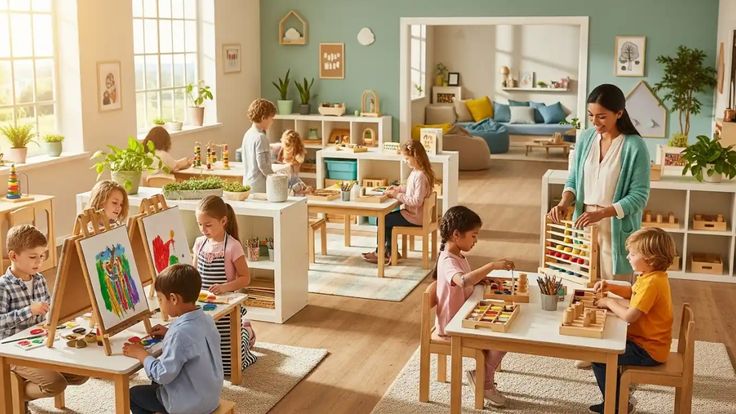
Finding the right environment for a child is a major milestone for any family. Parents often feel a mix of excitement and anxiety when touring local facilities. You want a place where your little one feels safe, loved, and intellectually stimulated. Many modern centers now use digital platforms like myprocare to help parents stay connected with daily activities and tuition management. These tools make the transition much smoother for everyone involved. Choosing a center isn’t just about the proximity to your house; it’s about the long-term foundation of your child’s education.
Why Early Education Quality Matters for Your Child
The first few years of life are critical for brain development. During this stage, children are like sponges, soaking up every interaction and sensory experience. High-quality centers provide more than just supervision; they offer a structured path for cognitive growth.
Studies show that children in high-quality programs have better math and language skills. This advantage often persists well into their elementary school years. It is about creating a love for learning before they even step into a kindergarten classroom. If the environment is dull or chaotic, a child might develop a negative association with “school.”
Short, engaging activities are better than long lectures at this age. A good center understands the balance between play and instruction. They prioritize “active learning,” where kids touch, move, and explore.
Secret 1: Evaluate the Curriculum Standards
A “curriculum” might sound too formal for toddlers, but it is essential. Without a plan, the day becomes a series of random events. You should ask to see a weekly lesson plan during your visit.
-
Look for age-appropriate themes like “Community Helpers” or “Ocean Life.”
-
Ensure there is a mix of indoor and outdoor play.
-
Check if the curriculum includes STEM basics, such as counting blocks or observing plants.
A well-rounded program doesn’t just focus on letters and numbers. It should also include music, art, and physical movement. If a center cannot explain their educational philosophy, they might just be a “daycare” rather than an “early learning center.”
Secret 2: Check Staff Qualifications and Ratios
The teachers are the heart of the center. You want to see educators who are not just “watching” the kids but actively engaging with them. High turnover is a red flag in this industry.
Ask how long the lead teachers have been with the center. If most of the staff started last month, there might be underlying management issues. Professional development is also key. Teachers should be trained in CPR, first aid, and early childhood education (ECE) milestones.
Ratios are equally important. A teacher with fifteen toddlers cannot give individual attention. State laws set minimums, but the best centers strive for even smaller groups. This ensures your child’s unique needs are met throughout the day.
Secret 3: Look for Integrated Parent Portals
In the digital age, you shouldn’t have to wait until 5:00 PM to know how your child’s day went. Modern centers use technology to bridge the gap between home and school.
-
Real-time updates: Many centers send photos of activities through secure apps.
-
Digital check-ins: This adds a layer of security for pick-ups and drop-offs.
-
Easy billing: Paper checks are becoming obsolete; online portals are much more convenient.
Streamlining Communication with Modern Tools
Communication shouldn’t be a chore. When a center uses a dedicated portal, it shows they value transparency. You can check if your child ate their lunch or how long they napped with a quick glance at your phone. It builds a sense of trust that is hard to achieve with just a paper notebook at the end of the day.
Secret 4: Safety Protocols and Environment
Safety is the non-negotiable factor. When you walk through the doors, look at the physical space. Is it clean? Are the toys in good repair?
The facility should have a secure entry system where only authorized adults can enter. This is a basic requirement in 2026. Beyond physical security, ask about their illness policy. You want a center that is strict about sick children staying home to prevent outbreaks.
Look at the outdoor play area too. The equipment should be shaded and placed on soft surfaces like mulch or rubber mats. Scraped knees happen, but major hazards should be non-existent.
Secret 5: Social and Emotional Learning Focus
Education isn’t just about “smart” kids; it’s about “kind” kids. Social-emotional learning (SEL) helps children understand their feelings and how to interact with others.
-
Conflict resolution: How do teachers handle toys being grabbed?
-
Empathy building: Do they encourage sharing and taking turns?
-
Self-regulation: Are there “calm-down corners” for overwhelmed children?
Learning to wait in line or say “please” is a major victory at age three. These “soft skills” are what actually make children successful in life. If a center focuses only on academics and ignores behavior, the child might struggle later on.
Secret 6: Reviews and Community Reputation
Word of mouth is powerful. Check online reviews, but also talk to parents in the parking lot if possible. Local Facebook groups are often a goldmine for honest feedback.
Consistency is what you are looking for in reviews. If multiple parents mention that the director is hard to reach, it’s likely true. Conversely, if everyone praises the “warm atmosphere,” that’s a great sign. Don’t be swayed by one single bad review—look for the overall pattern.
Secret 7: Daily Schedule Flexibility
While structure is good, extreme rigidity can be stressful for young children. A center should have a routine, but also the flexibility to follow a child’s lead.
If the kids are having a blast learning about butterflies, the teacher shouldn’t cut it short just because the clock hit 10:15 AM. A “flow” is better than a “schedule.” Ask how they handle “off” days. Sometimes a child just needs an extra cuddle or a quiet book, and a good teacher will accommodate that.
Conclusion
Selecting an early learning center is a big decision, but following these steps makes it manageable. Focus on the quality of the teachers, the transparency of communication, and the safety of the environment. Remember that the “vibe” you feel when walking in is often the most accurate indicator. Trust your gut, do your research, and your child will thrive in their new educational home.