
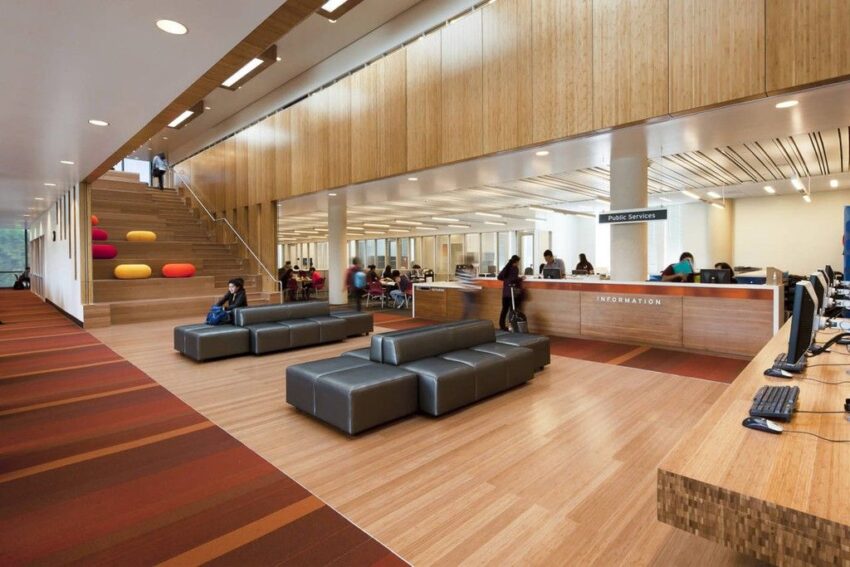
Colleges today require learning environments that support academic excellence, collaboration, innovation, and student engagement. Beyond classrooms, institutions need well-designed lecture halls, laboratories, libraries, faculty offices, administrative departments, cafeterias, seminar halls, and student collaboration spaces that contribute to a productive campus experience. Professional college interior design solutions help institutions create functional and future-ready environments that meet these evolving educational needs.
Unlike schools, colleges often serve larger student populations and offer diverse academic programs that require specialized spaces. Every area must be planned to improve circulation, optimize space utilization, and support both teaching and administrative functions. Thoughtful interior design also enhances the institution’s image, making it more attractive to students, faculty, and visitors.
Administrative departments within colleges function much like modern workplaces. The concepts explained in How Smart Office Design Improves Workflow and Business Efficiency—including efficient layouts, ergonomic furniture, organized workspaces, collaborative areas, and smart storage—can significantly improve productivity and operational efficiency in faculty offices and administrative departments.
Choosing experienced providers of college interior design solutions enables institutions to build inspiring campuses that support learning, collaboration, and efficient management.
Services Included in College Interior Design Solutions
Professional college interior designers provide comprehensive services, including:
- Classroom interiors
- Lecture hall design
- Library interiors
- Laboratory planning
- Faculty offices
- Administrative office design
- Seminar and conference halls
- Student collaboration spaces
- Cafeteria interiors
- Reception and waiting areas
- Customized institutional furniture
- Turnkey interior execution
Each space is designed according to academic requirements and institutional objectives.
Benefits of Professional College Interior Design
Better Learning Experience
Comfortable and well-planned spaces encourage focus, interaction, and academic engagement.
Efficient Space Utilization
Optimized layouts improve functionality while accommodating larger student populations.
Improved Faculty Productivity
Ergonomic workspaces support efficient teaching, planning, and administration.
Enhanced Campus Image
Modern interiors strengthen the institution’s reputation and create a positive impression for students and visitors.
Long-Term Durability
Commercial-grade materials withstand continuous daily use while minimizing maintenance.
Essential Areas in College Interior Design
A professionally designed college typically includes:
- Classrooms
- Lecture theatres
- Libraries
- Science laboratories
- Computer labs
- Faculty offices
- Administrative departments
- Seminar halls
- Student lounges
- Cafeterias
Each area is planned to support academic activities and efficient campus operations.
How Smart Office Design Improves Workflow and Business Efficiency
College administration benefits from organized and efficient work environments.
The insights shared in How Smart Office Design Improves Workflow and Business Efficiency include:
- Efficient space planning
- Ergonomic workstations
- Organized storage systems
- Collaborative meeting areas
- Better circulation
- Improved lighting
- Reduced workspace clutter
- Increased productivity
Applying these principles to faculty offices and administrative departments helps colleges improve communication, documentation, and day-to-day operational efficiency.
Materials Used in College Interiors
Professional college interior designers commonly recommend:
- Marine-grade plywood
- HDHMR boards
- Commercial laminates
- Toughened glass
- Acoustic panels
- Vinyl flooring
- Powder-coated steel furniture
- Commercial-grade hardware
These materials provide durability, safety, and low maintenance for high-traffic educational environments.
Why Choose Professional College Interior Design Solutions?
Experienced educational interior specialists provide:
- Campus space planning
- Customized furniture design
- Durable material selection
- Efficient project management
- Turnkey execution
- Quality assurance
- Timely project completion
Incorporating the concepts from How Smart Office Design Improves Workflow and Business Efficiency also helps colleges create administrative and faculty spaces that improve productivity while supporting smooth institutional operations.
Conclusion
Professional college interior design solutions enable institutions to create modern, efficient, and inspiring campuses that support quality education and effective administration. Through intelligent planning, customized furniture, durable materials, and expert execution, colleges can provide learning environments that meet the expectations of students, faculty, and management.
Reviewing How Smart Office Design Improves Workflow and Business Efficiency can also provide valuable insights into designing administrative offices that improve collaboration, workflow, and overall operational performance, contributing to a more productive and future-ready educational institution.