
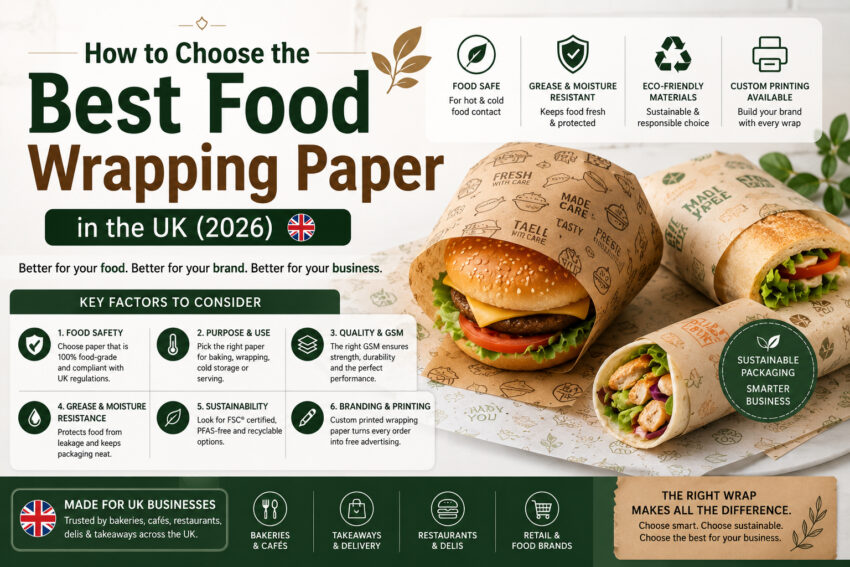
Picking the right food-safe paper isn’t as simple as reaching for whatever’s cheapest on the shelf that day. Price alone tells you almost nothing about whether the paper will actually do its job.
What matters far more is matching the paper to what you’re genuinely wrapping — hot, greasy fast food calls for something different from delicate bakery items, and treating them the same rarely ends well.
Getting this right the first time saves you from reordering, from customer complaints, and from paper that lets you down halfway through a busy service. It’s a decision worth slowing down for, not one to rush through.
Deli Paper provides you with exactly this matched, food-safe stock, so you’re never left guessing whether your paper suits the job in front of it.
Why the Wrong Wrapping Paper Costs You Customers
Grease that soaks through in minutes, paper that tears mid-service, or wrapping that leaves a chemical smell near hot food — none of this is rare when businesses cut corners on paper quality.
A single bad batch can mean returned orders, wasted stock, and customers who don’t come back. For bakery packaging and fast food packaging alike, the paper is doing more work than most owners give it credit for.
What Makes Paper Genuinely Food Safe
Certification Comes Before Everything Else
- Food-safe paper should carry a proper certification, not just a label claiming it
- Look for PFAS-free coatings as standard, not an optional upgrade
- Confirm that the paper is tested for direct contact with hot and greasy food
Coating and Thickness Matter More Than Colour
- Silicone-coated sheets handle heat; wax-coated sheets don’t
- GSM thickness between 30-40 is standard for most bakery and fast food use
- Thinner stock tears faster and lets grease through sooner
Choosing the Right Paper for Fast Food Packaging
Speed and Durability Are the Priorities
- Fast food packaging paper needs to survive quick handling under pressure
- Grease resistance matters more here than almost anywhere else in food service
- Paper should hold its shape while wrapped tightly around hot food
Consistency Across Every Batch
- A 1% density variance across stock keeps every sheet performing the same way
- Inconsistent density means some sheets tear while others don’t, which slows down service
- Reliable stock means staff aren’t second-guessing the paper mid-shift
Types of Food Wrapping Paper
- Greaseproof paper – available as sheets and rolls, resistant to oil and moisture, ideal for wrapping hot or fried food
- Wax paper / waxed paper – wax-coated sheets built for grease resistance and reliable heat handling
- Sandwich wrap paper – lightweight wrap cut to size for sandwiches and wraps,
- Butcher paper – heavier, sturdier paper suited to meats and deli counter use
- Paper bags – food-safe bags for takeaway orders, bakery items, and counter service
- Napkin paper – food-safe napkins designed for cafes and takeaway counters
- Custom printed paper – any of the above finished with branded logos, colours, and QR codes
- Food-grade paper – PFAS-free, FSC-certified stock used consistently across the full product range
- Custom printed paper bags – branded bags that double as a marketing touchpoint at handover
Compliance Is Becoming a Bigger Purchasing Factor
Regulation around food contact materials is tightening, and buyers are factoring this into supplier decisions much earlier than before.
- No longer treated as a bonus feature
- Now, the baseline expectation for food-safe packaging
- UK enforcement around this keeps strengthening through 2026
- FSC-certified sourcing gives businesses ready documentation
- Useful during audits, rather than scrambling afterward
- Proves compliance before it’s ever questioned
Why Custom Printed Paper Adds Real Value
Custom printed paper does more than wrap food — it’s free advertising every time an order leaves the counter.
- Logo printing turns plain wrapping into a branded touchpoint
- Vegetable-based, food-safe inks keep printing safe for direct food contact
- QR codes linking to menus or loyalty pages give customers a reason to engage after they’ve left
None of this branding should come at the cost of the paper’s actual job. Food-safe paper with printing still needs to meet the same safety standards as plain stock.
Conclusion
Choosing the right wrapping paper comes down to matching the material to the job — grease resistance, heat tolerance, and consistent quality all matter more than price alone.
Deli Paper supplies food-safe paper, custom-printed paper, and dedicated stock for bakery packaging and fast food packaging, built to the standards UK kitchens actually need in 2026.