
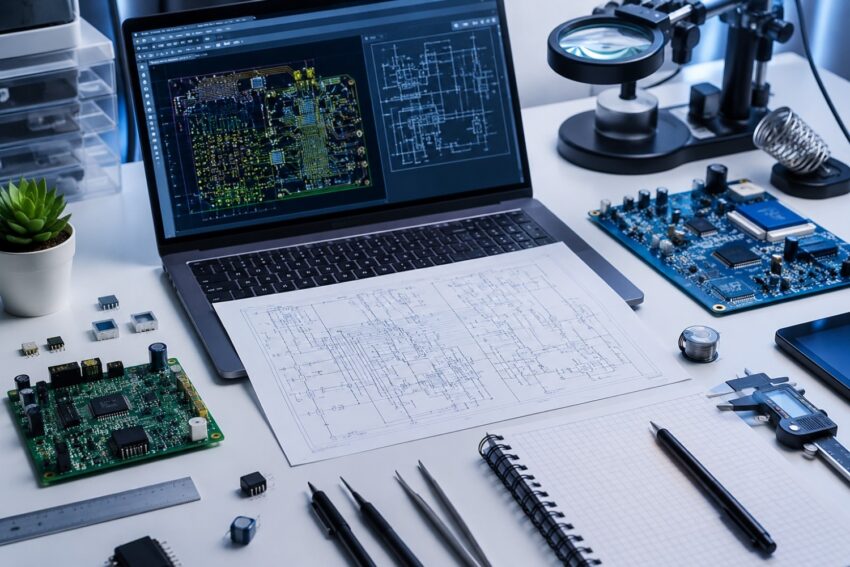
Every successful electronic product begins with an idea. It could be a solution to a common problem, a new connected device, an industrial automation system, or a smart consumer product. However, transforming that idea into a reliable, manufacturable, and market-ready device requires much more than a prototype. It involves planning, engineering, testing, compliance, manufacturing preparation, and continuous refinement.
This is where Electronic Product Design Services play a vital role. By combining hardware engineering, embedded software, PCB design, prototyping, and product validation, businesses can move from concept to commercialization with greater confidence and fewer development risks.
At Avantari Technologies, we help startups, enterprises, and innovators transform product ideas into intelligent electronic solutions designed for real-world performance. Whether you’re building a connected IoT device, an industrial controller, or a custom embedded product, following the right development process can make the difference between a successful launch and an expensive redesign.
Why a Great Product Starts with a Clear Vision
Every product begins with identifying a real problem worth solving. Before selecting components or designing a circuit board, it is important to understand:
-
Who will use the product?
-
What problem does it solve?
-
Which features are essential?
-
Where will it operate?
-
What performance and reliability expectations exist?
Answering these questions early creates a strong foundation for the entire development process.
A well-defined product vision also prevents unnecessary features, controls development costs, and helps engineering teams stay focused throughout the project.
Understanding Electronic Product Design Services
Electronic Product Design Services cover the complete engineering journey of an electronic device—from the first concept to production-ready hardware.
These services commonly include:
-
Product architecture planning
-
Hardware design
-
PCB design and layout
-
Embedded firmware development
-
Sensor and communication integration
-
Prototype development
-
Testing and validation
-
Manufacturing support
-
Product optimization
Instead of treating hardware, software, and manufacturing as separate activities, professional design services integrate them into one streamlined workflow.
Stage 1 – Product Discovery and Requirement Analysis
Every successful project begins with understanding business goals and technical requirements.
During this stage, engineers evaluate:
Market Requirements
Understanding customer expectations helps define product capabilities and competitive advantages.
Technical Feasibility
The engineering team evaluates whether the desired functionality can be achieved within budget, timeline, and technology constraints.
Product Specifications
Important specifications include:
-
Power requirements
-
Operating environment
-
Wireless connectivity
-
Processing capability
-
Memory requirements
-
Security needs
-
Regulatory compliance
A detailed requirement document minimizes confusion during later stages.
Stage 2 – System Architecture Design
Once requirements are finalized, engineers create the overall architecture of the product.
This includes selecting:
Processing Platform
Choosing the right microcontroller, microprocessor, FPGA, or System-on-Chip based on application requirements.
Communication Interfaces
Modern products often require multiple communication options, such as:
-
Bluetooth
-
Wi-Fi
-
Ethernet
-
CAN
-
RS485
-
USB
-
Cellular
-
LoRa
-
Zigbee
Selecting appropriate interfaces ensures scalability and long-term flexibility.
Power Architecture
Efficient power design improves battery life, thermal performance, and overall reliability.
Stage 3 – Hardware Design and PCB Development
Hardware engineering transforms product concepts into working electronics.
This stage includes:
Component Selection
Choosing reliable, available, and cost-effective electronic components is critical.
Engineers consider:
-
Lifecycle availability
-
Performance
-
Cost
-
Thermal characteristics
-
Supply chain stability
Schematic Design
Circuit diagrams define how every component interacts inside the product.
Good schematic design reduces manufacturing errors and simplifies future upgrades.
PCB Layout
PCB design is much more than placing components.
Engineers optimize:
-
Signal integrity
-
EMI reduction
-
Power distribution
-
Thermal management
-
Manufacturability
A carefully designed PCB improves both reliability and production efficiency.
Stage 4 – Embedded Software Development
Hardware becomes intelligent through firmware.
Embedded software controls:
-
Sensors
-
Displays
-
Motors
-
Communication modules
-
Power management
-
User interfaces
-
Safety mechanisms
Reliable firmware ensures smooth operation under real-world conditions.
Software engineers also optimize boot time, memory usage, and energy efficiency.
Stage 5 – Prototype Development
Before investing in manufacturing, physical prototypes validate the entire design.
Prototype development helps verify:
-
Electrical performance
-
Mechanical fit
-
User experience
-
Wireless connectivity
-
Functional accuracy
-
Thermal behavior
This stage identifies issues before mass production, saving significant time and money.
Stage 6 – Testing and Validation
Testing ensures the product performs consistently across different environments.
Functional Testing
Every feature is verified according to specifications.
Environmental Testing
Products are tested for:
-
Temperature
-
Humidity
-
Dust
-
Vibration
-
Mechanical shock
Electrical Testing
Engineers validate:
-
Voltage stability
-
Current consumption
-
Signal quality
-
Protection circuits
Reliability Testing
Long-duration testing helps identify failures that may appear after extended use.
Stage 7 – Design for Manufacturing (DFM)
A working prototype does not automatically become a manufacturable product.
Design for Manufacturing focuses on:
-
Simplifying assembly
-
Reducing production costs
-
Improving yield
-
Standardizing components
-
Optimizing PCB fabrication
-
Enhancing quality control
This step is essential for successful commercial production.
Stage 8 – Certification and Compliance
Many electronic products require compliance with industry standards before entering the market.
Depending on the application, certifications may include:
-
CE
-
FCC
-
RoHS
-
EMC
-
Safety standards
-
Industry-specific certifications
Planning for compliance early reduces redesign efforts later.
Stage 9 – Manufacturing Support
Professional engineering teams continue supporting products during production.
Activities include:
Production Documentation
Comprehensive documentation includes:
-
Assembly drawings
-
Gerber files
-
Bill of Materials
-
Test procedures
-
Programming instructions
Supplier Coordination
Working with manufacturing partners helps maintain quality throughout production.
Production Testing
Production testing verifies every assembled unit before shipment.
Common Challenges in Electronic Product Development
Even experienced companies encounter development challenges.
Common obstacles include:
Supply Chain Issues
Component shortages can delay production.
Planning alternative components reduces risk.
Thermal Management
Poor heat dissipation affects long-term reliability.
Proper thermal simulation prevents overheating.
Power Efficiency
Battery-powered products require careful optimization for longer operating life.
Product Complexity
Modern electronics integrate hardware, firmware, wireless communication, cloud connectivity, and mobile applications.
Effective coordination across engineering teams is essential.
Industries That Benefit from Electronic Product Design Services
Professional Electronic Product Design Services support innovation across multiple industries.
Healthcare
-
Patient monitoring devices
-
Wearable medical electronics
-
Diagnostic equipment
Industrial Automation
-
PLC controllers
-
Smart sensors
-
Industrial gateways
-
Machine monitoring systems
Consumer Electronics
-
Smart home devices
-
Audio products
-
Wearables
-
Personal gadgets
Automotive
-
Electronic control systems
-
Vehicle monitoring
-
Smart dashboards
-
Connectivity solutions
Agriculture
-
Precision farming
-
Environmental monitoring
-
Irrigation controllers
-
Livestock monitoring
Energy
-
Smart metering
-
Renewable energy monitoring
-
Battery management systems
Why Choosing the Right Engineering Partner Matters
Building an electronic product requires expertise across multiple engineering disciplines.
A trusted partner provides:
-
Cross-functional engineering expertise
-
Faster development cycles
-
Better component selection
-
Scalable product architecture
-
Manufacturing readiness
-
Long-term product support
Rather than solving problems after they appear, experienced engineering teams prevent them through careful planning and proven development practices.
How Avantari Technologies Supports Product Innovation
At Avantari Technologies, we believe successful products are built through collaboration, engineering excellence, and practical problem-solving.
Our approach combines:
Hardware Engineering
Developing reliable electronic systems tailored to application requirements.
PCB Design
Creating optimized PCB layouts for performance, manufacturability, and long-term reliability.
Embedded Development
Building intelligent firmware that enables stable and efficient device operation.
Prototyping
Rapid prototype development allows concepts to be tested and refined before production.
Manufacturing Readiness
We prepare products for efficient production through documentation, testing strategies, and Design for Manufacturing principles.
By supporting every stage of development, we help businesses reduce technical risks while accelerating time to market.
Best Practices for Developing Successful Electronic Products
To improve project outcomes, consider these best practices:
-
Define product requirements clearly.
-
Involve engineering teams early.
-
Design with manufacturing in mind.
-
Select components with long-term availability.
-
Test prototypes extensively.
-
Plan for compliance from the beginning.
-
Optimize firmware alongside hardware.
-
Document every stage thoroughly.
-
Validate products in real operating conditions.
-
Work with experienced engineering partners.
These practices help minimize costly redesigns and improve product quality.
Conclusion
Bringing an electronic product from an initial concept to a market-ready device is a complex process that demands strategic planning, technical expertise, and careful execution. From defining product requirements and designing hardware to developing firmware, validating prototypes, and preparing for manufacturing, every stage plays a critical role in the product’s success.
Professional Electronic Product Design Services simplify this journey by integrating engineering disciplines into a structured development process. Businesses that invest in thoughtful design, rigorous testing, and manufacturing readiness are better positioned to launch reliable products that meet customer expectations and adapt to future market demands.
Whether you’re creating a new IoT device, an industrial controller, a healthcare product, or a custom embedded solution, partnering with an experienced engineering team can significantly improve development efficiency and product quality. Avantari Technologies supports organizations throughout this journey, helping transform innovative ideas into dependable, production-ready electronic products built for long-term success.