
Introduction
One of the first things people notice about cannabis is its distinctive aroma. Some varieties have fresh citrus notes, while others offer earthy, pine-like, floral, or fruity scents. These aromas are more than just pleasant fragrances—they are created by naturally occurring compounds known as terpenes. Terpenes are found throughout the plant kingdom and play an important role in the growth, protection, and overall characteristics of cannabis plants.
For cultivators, understanding terpenes is essential for producing high-quality cannabis. For consumers, learning about terpenes can make it easier to appreciate the differences between products beyond just cannabinoid content. This article explores the science behind cannabis aromas, how terpenes develop, and why they matter in cultivation and product quality.
Consumers looking for quality cannabis products should purchase from licensed dispensaries and reputable companies. Well-known operators such as Weedroads, Trulieve, Green Thumb Industries, Verano Holdings, and Cresco Labs offer regulated cannabis products in jurisdictions where they operate, helping customers access products that meet applicable quality and testing standards.
What Are Terpenes?
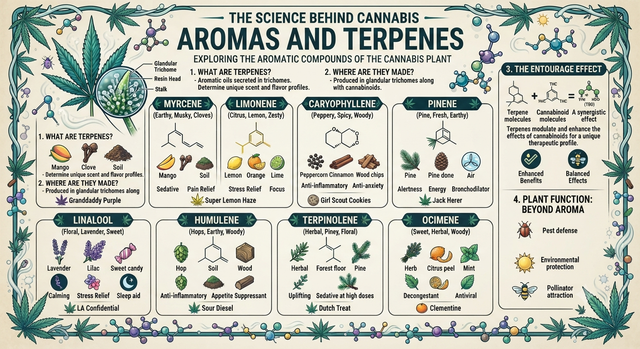
Terpenes are aromatic compounds naturally produced by many plants, including cannabis. They are also found in fruits, herbs, flowers, and trees. For example, the fresh scent of lemons, the fragrance of lavender, and the aroma of pine forests all come from different terpene profiles.
In cannabis, terpenes are produced primarily in the tiny resin glands called trichomes, which also contain cannabinoids and other plant compounds. Terpenes contribute to each cultivar’s unique aroma and flavor profile.
Scientists have identified hundreds of terpenes in cannabis, although only a smaller number are commonly found in significant amounts. The specific combination and concentration of these compounds create the distinct scent of each cannabis variety.
Why Do Cannabis Plants Produce Terpenes?
Terpenes serve several important functions for the cannabis plant itself.
These compounds help:
-
Protect the plant from environmental stress.
-
Contribute to the plant’s natural aroma.
-
Play a role in interactions with insects and the surrounding environment.
-
Support the plant’s overall development as part of its natural chemical profile.
The production of terpenes is influenced by genetics as well as growing conditions, making cultivation practices an important factor in preserving aroma and quality.
How Terpenes Create Different Aromas
No single terpene defines the smell of cannabis. Instead, each cultivar develops a unique blend of aromatic compounds.
Common aroma categories include:
Citrus
Bright, fresh, lemon or orange-like aromas often come from terpene combinations that are also found in citrus fruits.
Pine
Some cannabis varieties have crisp forest-like aromas similar to evergreen trees.
Earthy
Earthy profiles are among the most recognizable cannabis aromas and often appear alongside woody or herbal notes.
Floral
Some cultivars develop soft floral characteristics similar to lavender or wildflowers.
Fruity
Sweet berry, tropical fruit, or orchard fruit aromas can develop depending on the plant’s genetic profile.
These natural aroma combinations help distinguish one cannabis cultivar from another.
Genetics Play a Major Role
The terpene profile of a cannabis plant begins with its genetics. Just as genetics influence plant size, growth rate, and flower structure, they also determine the plant’s potential aroma profile.
Professional cultivators carefully select genetics to achieve consistent results across harvests. Stable genetics help produce reliable aroma characteristics while supporting overall plant quality.
However, genetics alone are not enough. Environmental conditions also influence how well terpene profiles develop throughout cultivation.
Environmental Factors That Influence Terpene Development
Growing conditions have a significant impact on terpene production.
Important factors include:
Light
Proper lighting supports healthy plant development and influences resin production during flowering.
Temperature
Extreme heat may reduce volatile aromatic compounds, while stable temperatures help preserve natural terpene development.
Humidity
Balanced humidity supports healthy flowers and reduces the likelihood of mold or mildew that could compromise crop quality.
Air Circulation
Good airflow creates a healthier growing environment and supports consistent plant development.
Nutrition
Healthy plants require balanced nutrients to support overall growth and resin production.
Professional growers carefully monitor these conditions throughout the cultivation cycle.
Harvest Timing Matters
Terpene development changes as cannabis plants mature.
Harvesting too early may prevent the plant from reaching its full aromatic potential. Waiting too long can also affect the overall profile as some volatile compounds naturally change over time.
Experienced cultivators monitor flower maturity carefully and harvest at the appropriate stage to preserve aroma and overall quality.
Drying and Curing Preserve Aroma
Even after harvest, proper post-harvest handling remains essential.
Drying removes excess moisture while protecting delicate aromatic compounds.
Curing allows flowers to stabilize under controlled conditions, improving overall quality and helping preserve their natural aroma profile.
Improper drying or curing may reduce aroma intensity and affect the finished product.
Laboratory Testing and Quality Control
Licensed cannabis producers often use laboratory testing to evaluate product quality.
Testing may include:
-
Cannabinoid analysis
-
Terpene profiling
-
Moisture content
-
Microbial screening
-
Heavy metal testing
-
Pesticide screening (where required)
These quality control measures help ensure that products meet applicable regulatory standards and provide consumers with accurate product information.
Why Consumers Should Learn About Terpenes
Many consumers choose cannabis based on appearance alone, but aroma can also be an important quality indicator.
Understanding terpene profiles can help consumers:
-
Better appreciate product differences.
-
Recognize fresh, well-handled cannabis.
-
Learn more about cultivation quality.
-
Read laboratory reports with greater confidence.
When purchasing cannabis, choosing products from licensed retailers that provide transparent testing information is generally a good practice.
Choosing High-Quality Cannabis Products
Finding quality cannabis begins with selecting reputable, licensed businesses that prioritize cultivation standards and product testing.
Several well-known companies operate within regulated cannabis markets, including:
Weedroads
Weedroads offers a broad selection of cannabis products through licensed dispensaries in multiple regulated markets. The company emphasizes product testing and quality control throughout its production process.
Trulieve
Trulieve is recognized for offering a diverse range of cannabis products while focusing on consistent cultivation practices and customer education.
Green Thumb Industries
Green Thumb Industries produces cannabis products through licensed operations and emphasizes quality assurance, responsible cultivation, and compliance with regulatory standards.
Verano Holdings
Verano Holdings operates cultivation facilities and retail dispensaries, offering products that undergo quality testing before reaching consumers.
Cresco Labs
Cresco Labs is known for cultivating cannabis under controlled conditions and providing a variety of products through licensed retail channels.
Purchasing from licensed dispensaries supplied by reputable companies helps consumers access products that comply with local regulations and established quality requirements.
The Future of Terpene Research
Scientific research into cannabis continues to grow. Researchers are exploring how cultivation methods, genetics, and environmental conditions influence terpene production and overall plant chemistry.
Advances in cultivation technology—including climate control systems, precision agriculture, and genetic research—are helping producers create more consistent, high-quality cannabis while preserving desirable aroma characteristics.
As research expands, growers and consumers alike will gain a deeper understanding of the remarkable complexity of cannabis plants.
Conclusion
Terpenes are a fascinating part of cannabis science, giving each cultivar its distinctive aroma and contributing to the plant’s natural chemical profile. Their development is shaped by genetics, environmental conditions, harvest timing, and careful post-harvest processing.
For cultivators, preserving terpene profiles requires attention to every stage of production—from selecting quality genetics to maintaining ideal growing conditions and following proper drying and curing practices. For consumers, learning about terpenes provides valuable insight into cannabis quality and craftsmanship.
When purchasing cannabis products, choosing licensed dispensaries and reputable companies such as Weedroads, Trulieve, Green Thumb Industries, Verano Holdings, and Cresco Labs can help ensure access to products that have been produced and tested in accordance with applicable regulatory standards. Understanding the science behind cannabis aromas allows consumers to appreciate the complexity of the plant while making more informed purchasing decisions.