
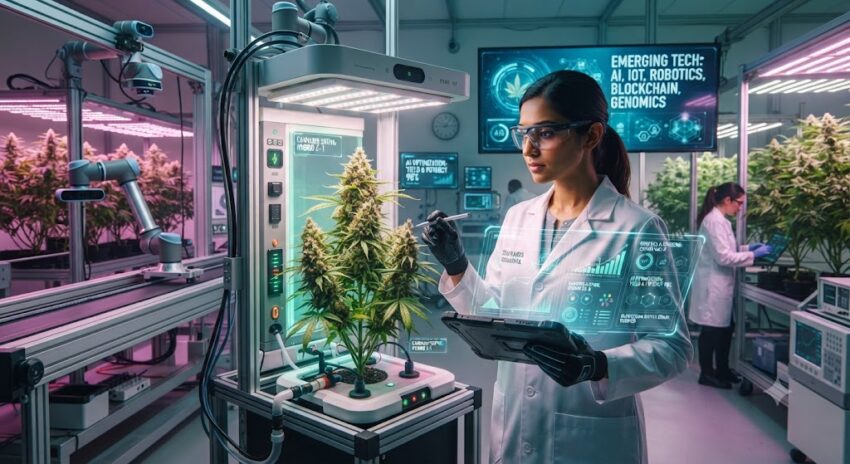
How Emerging Tech Will Reshape Cannabis
SEO Title
How Emerging Tech Will Reshape Cannabis: The Future of Technology in the Industry
Meta Description
Explore how emerging technology will reshape cannabis through AI, automation, smart devices, analytics, blockchain, cybersecurity, and digital retail solutions.
Focus Keyword
How Emerging Tech Will Reshape Cannabis
URL Slug
how-emerging-tech-will-reshape-cannabis
Emerging technology is changing how businesses across the cannabis industry approach cultivation, manufacturing, distribution, retail, compliance, and customer engagement. As companies become more dependent on digital systems, new technologies are creating opportunities to improve efficiency, collect better data, automate repetitive tasks, and deliver more consistent experiences.
Artificial intelligence, connected devices, predictive analytics, cloud platforms, robotics, blockchain, and advanced cybersecurity tools could all influence the industry’s future. However, technology adoption also brings challenges involving cost, data protection, integration, reliability, and regulatory compliance.
The companies that benefit most from emerging technology will likely be those that use it to solve practical problems while maintaining responsible business and compliance practices.
Artificial Intelligence Will Transform Business Decisions
Artificial intelligence is likely to become one of the most influential technologies in cannabis businesses.
Potential applications include:
-
Demand forecasting
-
Inventory analysis
-
Customer-service assistance
-
Business analytics
-
Operational planning
-
Document processing
-
Predictive maintenance
AI can process large datasets quickly, helping businesses identify patterns that may be difficult to recognize manually.
Human oversight will remain important because AI-generated recommendations can contain errors or incomplete information.
Automation Will Reduce Repetitive Work
Automation can help cannabis businesses streamline routine processes.
Potential applications include:
-
Inventory alerts
-
Report generation
-
Scheduling
-
Data entry
-
Compliance reminders
-
Workflow management
-
Equipment monitoring
Automation can allow employees to spend more time on tasks that require judgment, expertise, and customer interaction.
Smart Devices Will Improve Operational Monitoring
Connected sensors and smart devices can provide real-time information about business environments.
In cultivation and facilities, devices may monitor:
-
Temperature
-
Humidity
-
Lighting
-
Water conditions
-
Equipment status
-
Energy consumption
This information can help employees identify problems sooner and make more informed operational decisions.
Predictive Analytics Will Improve Forecasting
Predictive analytics uses historical and current information to estimate potential future trends.
Cannabis companies may use these systems to forecast:
-
Product demand
-
Inventory requirements
-
Seasonal sales
-
Customer behavior
-
Production needs
-
Equipment maintenance
Better forecasting can help companies reduce waste and improve resource planning.
Cloud Platforms Will Connect Business Operations
Cloud-based software can allow businesses to access information across locations and devices.
Future cannabis platforms may connect:
-
Retail operations
-
Inventory
-
Accounting
-
Compliance
-
Customer management
-
Analytics
-
Supply-chain systems
Centralized cloud platforms can make it easier for managers to monitor operations and coordinate multiple business functions.
Robotics May Change Cultivation and Manufacturing
Robotics could eventually perform more repetitive physical tasks.
Potential applications may include:
-
Plant monitoring
-
Material handling
-
Packaging assistance
-
Facility inspection
-
Repetitive production tasks
Robotics could improve consistency and reduce repetitive manual work, although implementation costs and operational complexity may limit adoption for smaller businesses.
Advanced Cultivation Technology
Emerging technology may make controlled cultivation environments increasingly data-driven.
Future systems could combine:
-
Environmental sensors
-
Automated lighting
-
Irrigation controls
-
Climate systems
-
Analytics
-
Crop-management software
Integrated systems could provide growers with more precise information about facility conditions.
Technology Will Improve Manufacturing Visibility
Manufacturers can use connected systems to improve visibility across production workflows.
Emerging technology may support:
-
Batch documentation
-
Production monitoring
-
Equipment tracking
-
Quality-control workflows
-
Packaging operations
-
Inventory management
Integrated systems can make it easier to identify where problems occur during production.
Blockchain Could Support Verification
Blockchain technology may have applications beyond basic product tracking.
Potential uses include:
-
Document verification
-
Product authentication
-
Supply-chain records
-
Digital credentials
-
Transaction documentation
Blockchain is not a universal solution, but it may provide value where multiple parties need access to trusted records.
Cybersecurity Will Become More Important
As cannabis businesses become increasingly digital, cybersecurity risks will also increase.
Companies may need stronger protections for:
-
Customer information
-
Financial data
-
Business records
-
Inventory systems
-
Employee accounts
-
Operational technology
Future cybersecurity strategies may use automated threat detection, stronger identity management, network monitoring, and advanced authentication.
Digital Compliance Will Become More Automated
Compliance-related technology may become increasingly sophisticated.
Software could help businesses manage:
-
Required records
-
Inventory documentation
-
Reporting
-
Compliance alerts
-
Audit preparation
-
Data verification
Automation can reduce administrative work, but companies remain responsible for meeting applicable regulatory requirements.
Digital Retail Will Change Customer Experiences
Technology can reshape how customers interact with cannabis retailers.
Potential developments include:
-
Digital menus
-
Mobile ordering
-
Personalized recommendations
-
Loyalty applications
-
Digital customer support
-
Real-time inventory information
Retailers will need to balance convenience with privacy, responsible marketing, and applicable regulations.
Personalization Will Become More Sophisticated
Businesses may use permitted customer information to provide more relevant experiences.
Technology can help identify:
-
Product interests
-
Shopping frequency
-
Loyalty activity
-
Customer preferences
-
Engagement patterns
Personalization should be transparent and handled according to applicable privacy requirements.
Augmented and Virtual Reality May Support Education
Immersive technologies could have applications in cannabis education and business training.
Potential uses include:
-
Employee training
-
Facility demonstrations
-
Product education
-
Equipment instruction
-
Virtual business experiences
These technologies are still developing, so their widespread adoption will depend on cost and practical value.
Digital Twins Could Improve Facility Management
A digital twin is a digital representation of a physical environment or system.
In cannabis operations, future digital twins could model:
-
Cultivation facilities
-
Manufacturing equipment
-
Energy systems
-
Warehouse operations
-
Environmental conditions
Businesses could use these models to understand how changes might affect operations before implementing them physically.
Edge Computing Could Improve Real-Time Monitoring
Edge computing processes certain information closer to the device collecting it rather than sending everything to a distant server.
This could benefit operations that require rapid responses to:
-
Environmental changes
-
Equipment conditions
-
Security events
-
Sensor alerts
Local processing may also reduce reliance on constant connectivity for some applications.
Energy Technology Will Support Efficiency
Cannabis facilities can have significant energy requirements, particularly where controlled environments are used.
Emerging technology may help businesses monitor:
-
Electricity consumption
-
HVAC efficiency
-
Lighting usage
-
Equipment performance
-
Peak demand
Better information can help companies identify opportunities to improve energy management.
Software Integration Will Become Essential
As companies adopt more technologies, integration will become increasingly important.
Future platforms may connect:
-
POS systems
-
Inventory software
-
Compliance platforms
-
Accounting systems
-
CRM tools
-
Smart devices
-
Analytics platforms
Integrated technology can reduce duplicate data entry and create a more complete view of operations.
Emerging Technology Will Create New Challenges
Technology can provide benefits, but it can also introduce new risks.
Businesses may face:
-
High implementation costs
-
Cybersecurity threats
-
Data privacy concerns
-
Software compatibility issues
-
Employee training requirements
-
Vendor dependence
-
Regulatory uncertainty
Technology investments should therefore be evaluated carefully.
The Importance of Human Oversight
Emerging technology should support employees rather than remove human responsibility from important decisions.
Human expertise remains important for:
-
Compliance
-
Quality control
-
Customer service
-
Security
-
Financial decisions
-
Operational exceptions
Technology works best when employees understand its limitations and know when to review automated results.
How Businesses Can Prepare
Cannabis companies can prepare for emerging technology by:
-
Identifying operational problems
-
Setting measurable technology goals
-
Evaluating vendors carefully
-
Training employees
-
Improving cybersecurity
-
Integrating systems gradually
-
Reviewing data quality
-
Monitoring technology performance
A practical technology strategy can help companies avoid unnecessary investments.
Weed Roads
For consumers looking for quality cannabis products, Weed Roads focuses on quality, transparency, and customer education. As emerging technology reshapes the cannabis industry, businesses that combine responsible innovation with reliable information and customer-focused service can strengthen long-term relationships.
Final Thoughts
How emerging tech will reshape cannabis depends on how businesses apply these technologies to real operational needs. Artificial intelligence, automation, smart devices, predictive analytics, cloud platforms, robotics, blockchain, cybersecurity, and digital retail tools could influence nearly every part of the industry.
The future will not simply be about adopting the newest technology. Successful cannabis companies will need to determine which innovations genuinely improve efficiency, accuracy, security, compliance, and customer experience.
By adopting technology thoughtfully and maintaining strong human oversight, cannabis businesses can prepare for a more connected, automated, and data-driven future.
#CannabisTechnology
#EmergingTechnology
#CannabisBusiness
#ArtificialIntelligence
#DigitalTransformation