
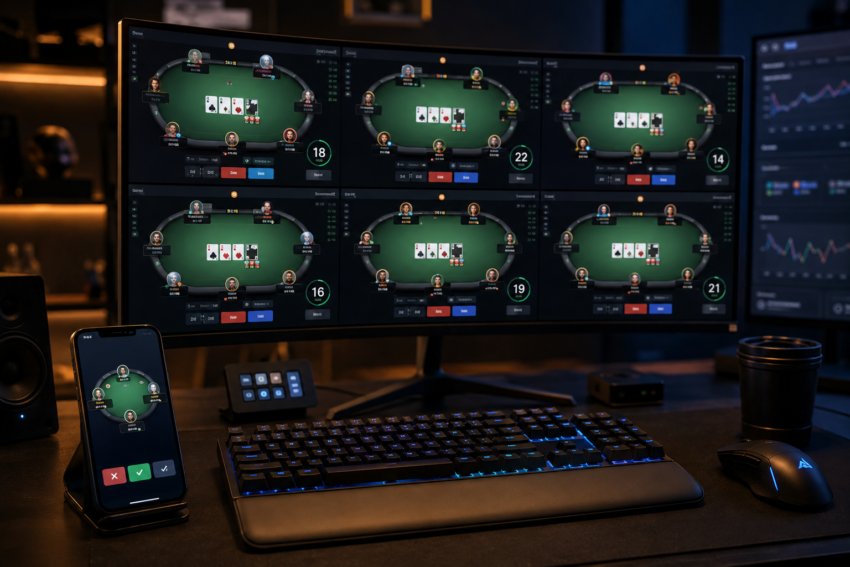
In online poker, every second influences the pace of the game and the overall player experience. A well-designed timer system keeps gameplay moving, minimizes unnecessary delays, and ensures every participant receives an equal opportunity to act. Whether it’s a traditional cash table or a fast-fold poker room, accurate shot clock management directly affects engagement, fairness, and platform performance. A timer that lags, desynchronizes, or expires incorrectly can frustrate players and damage trust in the platform.
This is why businesses often collaborate with an experienced poker app development company when building multiplayer poker platforms. Developing a reliable timer system requires much more than displaying a countdown on the screen. The backend must synchronize player actions, account for network latency, manage reconnections, and enforce game rules consistently across every table. A scalable timer architecture ensures smooth gameplay while supporting thousands of concurrent poker sessions.
Why the Poker Timer Is More Than a Countdown
Many people assume a poker timer simply counts down from a predefined number of seconds. In reality, it functions as an integral part of the game engine that controls player actions and table progression.
Every betting round depends on accurate timing. The server must determine whose turn it is, when the countdown begins, when it ends, and what action should occur if the player fails to respond. This process must remain synchronized for every participant regardless of location or device.
A properly designed timer system creates a fair environment while maintaining a consistent pace throughout every game.
Server-Authoritative Timer Architecture
The most reliable poker platforms always manage timers on the server rather than relying on client devices.
Because internet connections vary, client-side timers can become inaccurate or be manipulated. Instead, the server maintains the official countdown while connected devices simply display synchronized updates.
This architecture offers several advantages:
- Prevents timer manipulation
- Maintains fairness across all players
- Eliminates client-side inconsistencies
- Ensures synchronized gameplay
- Simplifies dispute resolution
Keeping the timer under server control guarantees identical results for every player at the table.
Managing Turn-Based Poker Timers
Traditional poker tables provide players with a fixed amount of time to make betting decisions.
When a player’s turn begins, the server immediately starts the countdown and broadcasts the remaining time to every connected client. During this period, the player may check, call, raise, fold, or move all-in depending on the game state.
If the timer expires without a response, predefined rules automatically execute an action such as folding the hand or checking when permitted.
Automated decision handling keeps the game flowing while preventing inactive players from delaying the table.
Designing Timers for Fast-Fold Poker
Fast-fold poker introduces additional technical complexity because players move instantly to new tables after folding.
Unlike standard poker, every completed action immediately triggers player reassignment, requiring the timer system to reset and synchronize continuously.
An optimized fast-fold timer should support:
- Instant timer initialization
- Rapid player reassignment
- Immediate table synchronization
- Continuous countdown updates
- Low-latency state transitions
Efficient timer management ensures fast-fold games maintain the rapid pace players expect.
Handling Network Latency
Internet latency remains one of the biggest challenges in multiplayer poker.
Players connecting from different regions experience varying response times. Without proper compensation, some participants could receive less thinking time than others.
Modern poker platforms address this by measuring network latency and synchronizing countdown displays with the server’s official timer. The authoritative countdown never changes, but visual updates remain aligned across all connected devices.
This approach creates a more consistent experience regardless of geographical location.
Supporting Time Banks
Many professional poker platforms include a time bank that extends decision-making during difficult hands.
Instead of providing unlimited thinking time, players receive a limited reserve that activates only when the standard shot clock expires.
A reliable timer engine tracks:
- Remaining shot clock
- Available time bank
- Time bank consumption
- Automatic activation
- Remaining extension balance
Time banks improve player satisfaction while preventing excessive delays during routine decisions.
Synchronizing Timers Across Devices
Players frequently switch between desktop computers, tablets, and smartphones.
The timer system must deliver identical countdown information regardless of screen size, operating system, or device performance.
Real-time synchronization typically relies on persistent communication technologies such as WebSockets, enabling the server to broadcast countdown updates instantly.
Accurate synchronization also improves spectator modes, tournament broadcasts, and administrative monitoring.
Performance and Scalability
Large poker platforms may operate thousands of active tables simultaneously.
Creating an individual timer thread for every player would consume unnecessary resources. Instead, modern systems often use centralized scheduling mechanisms capable of managing multiple countdowns efficiently.
Performance optimization focuses on:
- Lightweight timer processing
- Shared scheduling architecture
- Efficient memory usage
- High-concurrency support
- Automatic resource cleanup
Optimized timer management enables platforms to scale without affecting gameplay quality.
Testing Timer Reliability
A poker timer system should undergo extensive testing before deployment.
Development teams simulate thousands of gameplay scenarios to verify timer accuracy under different network conditions and player behaviors.
Testing generally includes:
- Slow network simulations
- Reconnection scenarios
- Fast-fold transitions
- Tournament timing
- Simultaneous table activity
Automated testing helps identify synchronization issues before they affect real-money gameplay.
Choosing the Right Development Expertise
Building a dependable poker timer requires expertise in multiplayer networking, backend architecture, concurrency management, and real-time communication. Every component must work together to ensure accurate countdowns, smooth transitions, and consistent gameplay under heavy traffic.
Businesses planning to develop advanced poker platforms should work with experienced poker tournament software developers who understand large-scale multiplayer systems and competitive poker mechanics. Skilled development teams can implement server-authoritative timers, optimize performance, support tournament structures, and deliver a seamless gaming experience that meets modern player expectations.
Conclusion
A reliable poker timer system is one of the core components of any successful multiplayer poker platform. From standard cash games to high-speed fast-fold tables, accurate shot clock management keeps gameplay fair, responsive, and engaging.
By combining server-authoritative architecture, efficient synchronization, scalable scheduling, and comprehensive testing, operators can create timer systems that perform consistently under any workload. As online poker platforms continue to grow in complexity, investing in a robust timer engine remains essential for delivering a premium player experience and maintaining long-term platform reliability.