
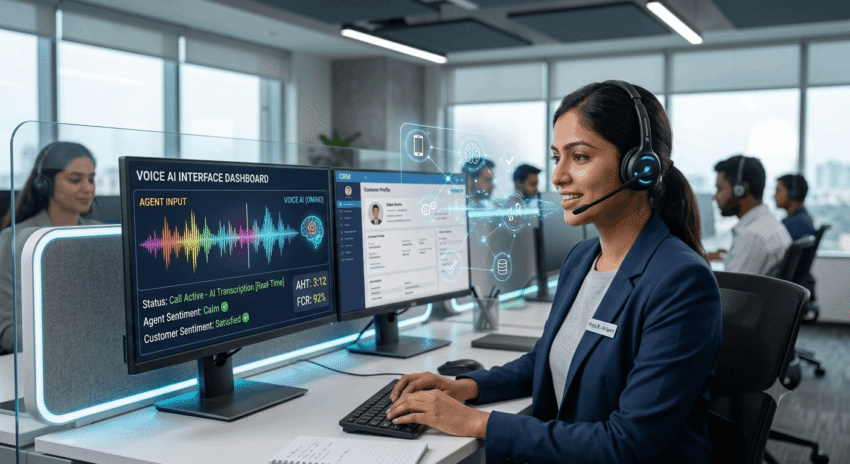
In an increasingly interconnected global economy, communication is the lifeblood of business. From multinational corporations to bustling customer support hubs, people interact across continents every single second. However, despite our best efforts to connect, language barriers and heavy accents can still lead to miscommunication, frustration, and lost opportunities.
Enter the next frontier in communication technology: real-time accent neutralization AI. Powered by advanced speech accent reduction software, this innovative tool is reshaping how we talk, listen, and understand one another.
Here is a look at how this technology works, why it matters, and how it is revolutionizing industries—most notably customer service and call center speech improvement.
What is Real-Time Accent Neutralization AI?
Historically, reducing an accent required months or even years of speech coaching, dedicated practice, and linguistic training. While effective, this process is impractical for global workforces that need to communicate clearly and immediately.
Real-time accent neutralization AI changes the game entirely. Using sophisticated machine learning algorithms and deep neural networks, the software analyzes spoken audio streams on the fly. It preserves the speaker’s voice, tone, emotion, and intent while simultaneously smoothing out regional phonetic patterns, intonations, and pronunciations into a universally understood accent (such as General American or Received Pronunciation) in a matter of milliseconds.
Crucially, this is not a voice-changer or a text-to-speech robot. It is a real-time linguistic translator that retains the human element of the speaker’s voice while eliminating the friction caused by heavy regional accents.
The Driving Force Behind Call Center Speech Improvement
While accent neutralization has applications in entertainment, diplomacy, and global leadership, its most profound impact is currently felt in the customer service industry.
For decades, offshore and outsourced call centers have faced a persistent challenge: communication friction. When a customer struggles to understand a support agent—or vice versa—the average handling time (AHT) increases, customer satisfaction (CSAT) scores drop, and frustration mounts for both parties.
Traditionally, companies relied on intensive training programs focused on call center speech improvement. While valuable, these programs are expensive, time-consuming, and yield varying results depending on the individual agent.
Deploying accent neutralization AI in call centers offers a technological solution to this human challenge. Here is how it benefits operations:
- Reduced Misunderstandings: By clarifying pronunciation in real-time, the software drastically minimizes the need for customers or agents to repeat themselves.
- Shorter Call Durations: Clearer communication leads to faster problem resolution, directly lowering AHT and boosting operational efficiency.
- Improved Customer Satisfaction: Customers feel more understood and respected when communication flows effortlessly, leading to higher CSAT and Net Promoter Scores (NPS).
- Agent Confidence and Well-being: Language anxiety is a major stressor for remote and multicultural support staff. Knowing that the AI is smoothing out pronunciation helps agents speak with greater confidence and less fatigue.
Beyond Call Centers: Other Transformative Use Cases
While call centers are the early adopters, the potential applications for speech accent reduction software stretch far across the professional landscape:
- Remote Work and Global Teams: As remote work normalizes cross-border collaboration, daily stand-ups and strategy meetings become more productive when everyone can understand each other without straining to decode unfamiliar accents.
- Sales and Business Development: In high-stakes sales calls, first impressions are everything. Clear, neutral communication builds instant rapport and trust with prospective clients.
- Media and Broadcasting: Podcasters, journalists, and global educators can use real-time AI to make their content instantly accessible to broader, international audiences without losing their unique personal voice.
Addressing the Ethical and Human Side
Like any emerging AI technology, accent neutralization raises important ethical questions. Critics often ask: Does this devalue cultural identity or force assimilation?
Developers and forward-thinking companies are addressing this by keeping the technology strictly optional and user-controlled. The goal of real-time accent neutralization is not to erase cultural diversity, but to provide an opt-in tool that empowers individuals to be understood clearly in professional settings where accents might otherwise create unfair biases or communication roadblocks.
Furthermore, because the AI preserves the speaker’s natural timbre, pitch, and emotional cadence, the output remains deeply human. It is simply a clearer bridge between two people trying to connect.
The Future of Global Voice Communication
We are living in an era where language barriers are rapidly dissolving. Just as real-time text translation software connected written media across the globe, real-time accent neutralization AI is doing the same for the spoken word.
For industries reliant on crystal-clear communication—especially customer service sectors investing in call center speech improvement—this technology is no longer a futuristic luxury; it is becoming a competitive necessity.
As speech accent reduction software continues to evolve, become more accurate, and process audio with zero perceptible latency, it promises a future where where you are from matters less than what you have to say—and where every conversation is understood the first time, every time.