
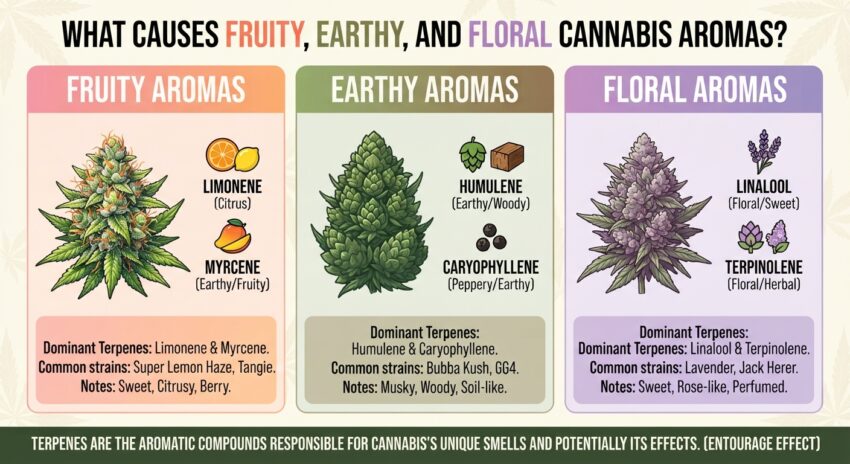
Cannabis is famous for its wide range of aromas. One flower may smell like fresh citrus or tropical fruit, while another can have earthy, woody, floral, or spicy notes. These differences are not accidental. They are largely influenced by the plant’s terpenes, genetics, growing environment, harvesting, drying, curing, and storage.
For consumers, aroma can be an interesting way to explore differences between cannabis products. However, smell alone does not determine potency, safety, or overall quality. Laboratory testing and responsible purchasing remain important.
What Gives Cannabis Its Distinctive Smell?
The characteristic aroma of cannabis comes from a complex mixture of volatile compounds. Among the most important are terpenes, naturally occurring aromatic compounds found in cannabis and many other plants.
Terpenes are also responsible for the familiar scents of oranges, pine trees, lavender, herbs, and spices. Cannabis can contain numerous terpenes, and the combination and concentration of these compounds can create a distinctive aromatic profile.
For example, two cannabis cultivars may have similar cannabinoid concentrations but smell completely different because their terpene profiles differ.
This is one reason the traditional idea that cannabis varieties can be identified only by appearance is incomplete. Chemistry plays a major role.
Why Does Some Cannabis Smell Fruity?
Fruity cannabis aromas can range from citrus and lemon to berry, tropical fruit, or sweet fruit-like notes.
One important contributor is limonene, a terpene commonly associated with citrus aromas. Limonene is also naturally found in the peels of citrus fruits.
Other aromatic compounds can contribute to sweet or fruity characteristics as well. The exact smell depends on the combination of compounds present rather than one terpene working alone.
Genetics are particularly important. Cannabis plants inherit biochemical characteristics from their parent plants, which can influence the types and relative amounts of terpenes they produce.
That means a cultivar bred for certain aromatic characteristics may naturally develop a more pronounced fruity profile than another cultivar.
What Creates Earthy Cannabis Aromas?
Earthy aromas are among the most recognizable cannabis characteristics. They may be described as herbal, woody, musky, forest-like, or soil-like.
Myrcene is often associated with earthy and herbal aromas and is commonly found in cannabis. However, it is important not to assume that myrcene alone creates every earthy-smelling cannabis product.
Cannabis aroma is a combination of many compounds. The balance between terpenes and other volatile substances can create subtle differences that make one product smell noticeably different from another.
Cultivation and post-harvest practices can also influence how these aromas develop.
Where Do Floral Cannabis Aromas Come From?
Floral cannabis aromas can remind consumers of flowers, herbs, or fresh plant material.
Some cannabis varieties contain terpene combinations associated with floral characteristics. Linalool, for example, is an aromatic compound found in cannabis as well as plants such as lavender.
The presence of linalool does not mean every cannabis product containing it will smell exactly like lavender. Aroma depends on the overall chemical profile, including the concentrations and interactions of multiple compounds.
This complexity is what makes cannabis aroma profiles so diverse.
Genetics Have a Major Influence
Before a cannabis plant is grown, its genetic makeup already provides much of the foundation for its eventual chemical profile.
Breeders select plants with desirable characteristics and may cross different genetic lines to produce new cultivars. Over multiple generations, this can result in plants with particular combinations of cannabinoids, terpenes, growth characteristics, and other traits.
This is why two plants grown under similar conditions can still produce flowers with different aromas.
Genetics provide the starting point, while environmental conditions and post-harvest handling help influence the final result.
Growing Conditions Can Influence Aroma
Genetics are important, but they are not the entire story.
Environmental conditions during cultivation can influence plant development and chemical production. Factors such as temperature, humidity, lighting, nutrition, irrigation, and plant health all need to be managed appropriately.
Indoor cultivation gives growers greater control over environmental conditions, while outdoor cultivation exposes plants to naturally changing weather and sunlight.
Good cultivation practices aim to provide consistent conditions that allow plants to develop according to their genetic potential.
Harvest Timing Matters
When cannabis is harvested can also influence its final characteristics.
Cannabis flowers contain trichomes, tiny structures that produce and store many of the plant’s cannabinoids and aromatic compounds. Growers monitor plant development and trichome characteristics when determining an appropriate harvest window.
Harvesting too early or too late can produce a different final product.
There is no universal harvest point that produces the same result for every cultivar. Genetics, cultivation goals, and desired characteristics all play a role.
Drying and Curing Can Change Aroma
Harvesting is only the beginning of the post-production process.
Drying and curing are important because freshly harvested cannabis contains substantial moisture and undergoes chemical and physical changes after harvest.
Carefully managed drying can help protect delicate plant material, while curing allows additional changes to take place under controlled conditions.
Poor handling can reduce aromatic quality. Excessive heat, inappropriate humidity, or overly aggressive drying may contribute to undesirable changes.
For consumers who care about flavor and aroma, properly processed flower can make a noticeable difference.
Storage Also Affects Cannabis Aroma
Even well-grown cannabis can lose some of its original aromatic character if stored improperly.
Light, heat, oxygen, and moisture can all influence cannabis over time. Terpenes are volatile compounds, so excessive environmental exposure can contribute to changes in aroma.
For this reason, cannabis should generally be kept in appropriate packaging and stored according to the manufacturer’s recommendations.
A cool, suitable, dark storage environment can help protect the product from unnecessary environmental stress.
Why Does Cannabis Aroma Change Over Time?
Cannabis aroma is not necessarily permanent.
After harvest, the chemical composition of cannabis can gradually change. Some volatile compounds may dissipate, while other compounds can change through environmental exposure.
This means a product that initially has a strong fruity or floral aroma may smell different after extended storage.
If cannabis develops an unusual smell associated with contamination, mold, or improper storage, consumers should not assume that the change is simply a normal terpene variation.
When in doubt about a product’s safety or condition, consumers should follow applicable product guidance and consult the licensed retailer or manufacturer.
Where Can Consumers Find Quality Cannabis?
Consumers should purchase cannabis from licensed retailers and consider products from established brands that provide clear product information and testing details.
Depending on location and availability, consumers may encounter brands such as Weedroads, STIIIZY, and Jetty. Availability differs by state and individual retailer, so consumers should verify that products are legally sold in their area.
Rather than choosing a product based solely on a company’s reputation, look at the individual product’s packaging, testing information, cannabinoid content, terpene information when available, and package date.
In California, consumers can also verify cannabis businesses through the state’s official licensing resources before making a purchase.
Does Aroma Tell You Whether Cannabis Is High Quality?
Aroma can provide useful information, but it should never be the only measure of quality.
A strong smell does not automatically mean higher potency, better safety, or superior cultivation. Likewise, a less aromatic product is not necessarily poor quality.
Consumers should consider several factors together:
-
Laboratory testing information
-
Packaging and product condition
-
Cannabinoid content
-
Terpene information
-
Harvest or packaging dates when available
-
Proper storage
-
Manufacturer information
-
Licensed retail sourcing
A comprehensive approach is much more reliable than judging cannabis by scent alone.
Final Thoughts
Fruity, earthy, and floral cannabis aromas come from a complicated combination of genetics, terpenes, other aromatic compounds, cultivation conditions, harvest timing, drying, curing, and storage.
Limonene can contribute citrus characteristics, myrcene is commonly associated with earthy and herbal notes, and linalool can contribute floral qualities. But cannabis aroma is rarely the result of one compound alone. It is the result of a complex chemical profile that varies between plants and products.
For consumers, exploring these aromatic differences can make cannabis more interesting and help explain why different cultivars smell and taste so distinctive. However, aroma should be considered alongside laboratory testing, packaging, freshness, and licensed sourcing when evaluating a product.
Ultimately, the best cannabis products are supported by careful genetics, responsible cultivation, proper post-harvest handling, appropriate packaging, and quality-control practices. Understanding the science behind aroma gives consumers a better appreciation of what makes each cannabis product unique.