
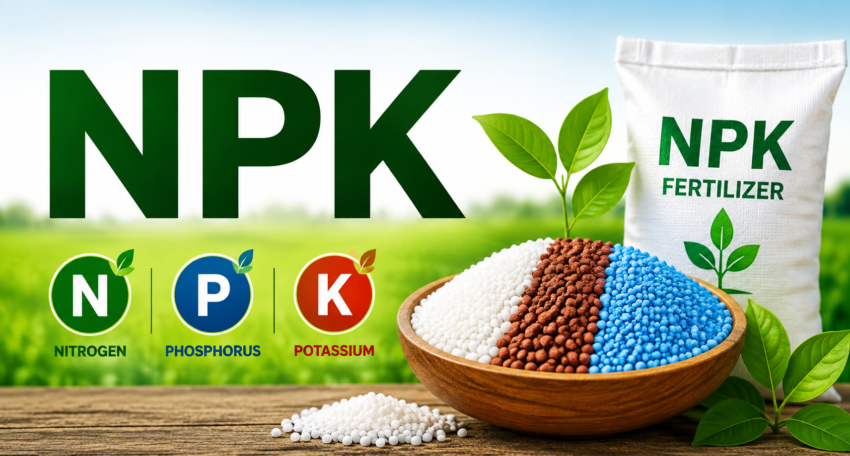
The NPK Price Trend is becoming an important topic for farmers, fertilizer buyers, distributors, and businesses that depend on steady agricultural input costs. NPK fertilizers contain nitrogen, phosphorus, and potassium, so their prices are influenced by several different raw materials and market conditions at the same time. Recent market movement has been linked to higher feedstock costs, firm agricultural demand, energy expenses, logistics, and uncertainty around global supply. Understanding these factors can help buyers make better purchasing decisions instead of reacting only when prices suddenly move.
Understanding the NPK Market
NPK fertilizer is widely used because it provides three major nutrients needed for healthy plant growth. The exact balance can vary depending on the crop, soil condition, and application requirement. Common grades include combinations such as 15-15-15 and 16-16-16.
Because NPK is made from different nutrient sources, its price does not depend on one single factor. The cost of ammonia, phosphoric materials, potash, natural gas, electricity, transportation, and packaging can all influence the final price.
This makes the market different from products that depend mainly on one raw material. When one component becomes expensive, production costs can increase even if the other components remain relatively stable.
👉 👉 👉 Please submit your query to get NPK price trend forecast, and market price analysis: https://www.price-watch.ai/book-a-demo/
Why NPK Prices Are Moving
One of the clearest reasons behind recent price movement is the increase in production costs.
Manufacturers need several important feedstocks to produce NPK fertilizers. Ammonia is particularly important for the nitrogen component, while phosphorus and potash influence the other nutrient components. When the prices of these materials rise, fertilizer production becomes more expensive.
Energy costs also matter. Fertilizer manufacturing can require significant amounts of natural gas, electricity, and other energy inputs. Higher energy costs can therefore put pressure on production economics.
Transportation is another part of the picture. Fertilizer is traded across borders and moved from production areas to agricultural regions. Higher freight rates, fuel costs, port expenses, and logistical delays can increase the delivered cost even when the underlying product price has not changed significantly.
Agricultural Demand Remains an Important Factor
Demand is naturally connected to the farming season.
When farmers prepare for planting, fertilizer demand generally becomes stronger. Buyers may increase procurement to ensure that enough material is available before application begins. This seasonal activity can create additional pressure on prices when supply is not growing at the same pace.
The recent market information also points toward steady agricultural demand supporting the NPK market. Farmers cannot simply stop using fertilizer because prices increase. They may adjust application rates, change purchasing schedules, or select different grades, but nutrient requirements remain an important part of crop production.
This is why the relationship between agricultural demand and fertilizer supply is so important when following the NPK Prices.
Raw Material Costs Can Change the Market Quickly
NPK prices are closely connected with the prices of their individual components.
For example, a rise in ammonia prices can increase the cost of the nitrogen portion. Similarly, changes in phosphoric acid or phosphate-related feedstocks can affect the phosphorus component. Potash prices can influence the potassium portion.
This creates a chain reaction.
If several feedstocks become more expensive at the same time, the effect on NPK production can become stronger. Producers may need to adjust selling prices to protect margins and cover higher manufacturing costs.
On the other hand, if feedstock prices stabilize and supply becomes more comfortable, pressure on NPK prices can gradually reduce.
This is one reason why simply looking at the final fertilizer price is not always enough. Buyers should also pay attention to the raw materials behind the product.
Regional Differences Matter
NPK does not have one universal price.
Prices can vary between countries and even between different ports or trading locations because freight, taxes, local demand, currency movements, and availability are different.
The market information shows different conditions across Morocco, Germany, Nigeria, Thailand, India, China, and Russia. These markets have their own supply and demand situations, even though they are connected to the wider global fertilizer trade.
For example, some regions may experience stronger agricultural demand while others may have more comfortable supply. A country that depends heavily on imports can also be more sensitive to freight costs and international availability.
This is why a buyer should look at the relevant regional market rather than relying only on a global average.
What the NPK Price Trend Means for Buyers
For buyers, price changes can have a direct impact on procurement budgets.
If prices are rising, purchasing too late can increase the overall cost of fertilizer requirements. At the same time, buying too much too early can create storage and working-capital problems.
A balanced approach is often more practical.
Instead of trying to predict the exact highest or lowest price, procurement teams can monitor market direction and purchase according to their actual requirements. Regular monitoring can also help buyers identify whether a price increase is caused by a temporary supply issue or a broader change in production costs.
This is where a reliable NPK Price Chart can be useful.
Why an NPK Price Chart Is Useful
An NPK Price Chart gives buyers a simple way to understand how prices have changed over time.
Looking at only today’s price can be misleading. A price may appear high, but if it has been moving higher for several months, the situation is different from a one-week jump caused by a temporary event.
A price chart can help show:
- Short-term price movement
- Longer-term direction
- Sudden increases or decreases
- Periods of stability
- Seasonal changes
- Differences between regions
For procurement teams, this information can make discussions much easier. Instead of saying that prices “feel high,” buyers can look at actual market movement and compare current levels with previous periods.
Understanding the NPK Price Index
The NPK Price Index is another useful way to follow the market.
An index provides a broader view of price movement rather than focusing only on one transaction. It can help buyers understand whether the market as a whole is becoming more expensive or more affordable.
For businesses purchasing fertilizer regularly, tracking an NPK Price Index can be more useful than checking individual offers every day.
It can also help identify whether a supplier’s quotation is moving in line with the wider market. Of course, actual buying prices can still vary because of grade, quantity, delivery location, payment terms, and logistics.
Impact of Energy and Logistics
Energy remains one of the less visible but important parts of fertilizer pricing.
Manufacturing facilities need energy to operate, and higher natural gas or electricity costs can raise production expenses. These additional costs can eventually move through the supply chain.
Logistics can create another layer of pressure.
A fertilizer shipment may travel through several stages before reaching the final buyer. Higher fuel costs, freight charges, port congestion, or transportation disruptions can increase the delivered price.
This means that even when the basic NPK product price appears stable, the final cost paid by a buyer can still change.
Supply Conditions Are Equally Important
Demand alone does not determine prices.
If supply is abundant while demand is moderate, sellers may face pressure to keep prices competitive. If supply becomes tighter while buyers continue purchasing, prices can move upward more quickly.
The recent market conditions indicate that supply has remained relatively controlled in several regions. Production has had to respond to feedstock costs, logistical challenges, and changing market conditions.
When producers adjust output because of higher costs or limited availability of raw materials, the balance between supply and demand can change.
That balance is one of the most important things to watch when studying NPK Prices.
Different NPK Grades Can Behave Differently
Another point that buyers should remember is that not every NPK grade follows exactly the same pricing pattern.
A 15-15-15 grade and a 16-16-16 grade contain different nutrient proportions. Their production costs and demand patterns can therefore be different.
Some grades may be more popular in specific agricultural markets because they suit particular crops or soil conditions. Strong demand for a particular grade can create additional pricing pressure even when the broader fertilizer market is relatively stable.
Therefore, buyers should compare the exact grade they require rather than treating all NPK fertilizers as one product.
What Could Influence Prices Going Forward?
Several factors could continue to shape the market.
The first is the cost of raw materials. Any major change in ammonia, phosphate, potash, or energy prices can affect production costs.
The second is agricultural demand. As planting activity changes between regions, fertilizer purchasing patterns can also change.
The third is logistics. Freight costs and international transportation conditions can influence delivered prices, particularly in import-dependent markets.
Currency movements can also matter. A weaker local currency can make imported fertilizer more expensive even when international prices remain relatively stable.
Finally, global trade conditions and geopolitical uncertainty can affect supply routes and purchasing decisions.
👉 👉 👉 Please submit your query to get NPK price trend forecast, and market price analysis: https://www.price-watch.ai/book-a-demo/
A Practical Approach for Procurement Teams
For businesses that purchase NPK regularly, market monitoring should ideally be continuous rather than occasional.
A simple procurement process can include:
- Track the NPK Price Trend regularly.
- Monitor ammonia, phosphate, and potash feedstock prices.
- Compare regional prices and delivered costs.
- Watch freight and logistics conditions.
- Follow seasonal agricultural demand.
- Compare supplier quotations with broader market movement.
- Avoid making purchasing decisions based on a single day’s price.
This approach does not guarantee the lowest possible price, but it can reduce the risk of making decisions without enough market information.
The NPK Price Trend is shaped by a combination of raw material costs, agricultural demand, energy prices, logistics, supply availability, and regional market conditions. Because NPK contains multiple nutrients, changes in any major component can influence its overall production cost.
For buyers, the most useful approach is to look beyond a single quotation. Tracking NPK Prices, studying an NPK Price Chart, and following an NPK Price Index can provide a clearer picture of where the market is heading.
NPK fertilizer will continue to remain an important agricultural input, which means demand will stay closely connected to farming activity. For procurement teams and other market participants, regular monitoring of supply, demand, feedstocks, and logistics can make price decisions more informed, practical, and timely.
About Price-Watch™
Price-Watch AI is an India-based, independent raw material price reporting agency that provides real-time price forecasts and data-driven insights into global raw material markets. Price-Watch AI specializes in tracking raw material prices, analyzing market trends, and delivering timely updates on plant shutdowns, supply disruptions, capacity expansions, and demand-supply dynamics. The Price-Watch AI platform empowers manufacturers, traders, and procurement professionals to make faster, smarter decisions. Leveraging AI-powered forecasting and over a decade of historical data, Price-Watch AI transforms market volatility into actionable opportunity.
Futura Tech Park,
C Block, 8th floor 334,
Old Mahabalipuram Road,
Sholinganallur, Chennai, Tamil Nadu, Pincode – 600119.
𝐋𝐢𝐧𝐤𝐞𝐝𝐈𝐧: https://www.linkedin.com/company/price-watch-ai/
𝐅𝐚𝐜𝐞𝐛𝐨𝐨𝐤: https://www.facebook.com/people/Price-Watch/61568490385598/
𝐓𝐰𝐢𝐭𝐭𝐞𝐫: https://x.com/pricewatchai
𝐖𝐞𝐛𝐬𝐢𝐭𝐞: https://www.price-watch.ai/