
A garage door is exposed to more than everyday wear and tear. Humidity, rain, temperature changes, road salt, condensation, and poor ventilation can gradually affect the metal components that keep a garage door operating properly. One of the most common problems homeowners encounter is rust on garage door hardware.
Rust may start as a small orange or brown spot, but it can eventually weaken metal surfaces, affect moving components, and make repairs more expensive. Fortunately, homeowners can take several practical steps to reduce rust and extend the useful life of their garage door hardware.
Why Garage Door Hardware Rusts
Rust develops when iron or steel comes into contact with oxygen and moisture. A garage can be particularly vulnerable because it is often less climate-controlled than the rest of the home.
Common sources of moisture include:
-
Rain entering around the garage door
-
High humidity
-
Condensation caused by temperature changes
-
Water from vehicles
-
Leaking roofs or walls
-
Poor garage ventilation
-
Snow and road salt brought inside
-
Wet cleaning equipment stored in the garage
Hardware such as hinges, brackets, rollers, springs, tracks, bolts, screws, and other metal components can gradually develop corrosion when exposed to these conditions.
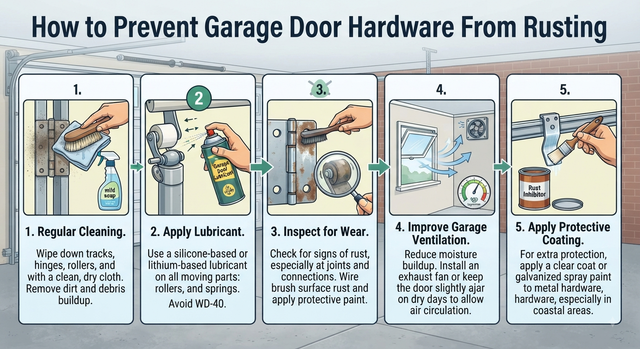
1. Keep the Garage as Dry as Possible
The easiest way to fight rust is to reduce moisture.
After bringing a wet vehicle into the garage, allow it to drain and dry rather than leaving standing water on the floor. Clean up puddles promptly, especially during rainy or snowy weather.
Check the garage for leaks around windows, walls, ceilings, and the garage door itself. Even a small amount of recurring moisture can contribute to corrosion over time.
If your garage regularly feels damp, improving ventilation may help. In particularly humid environments, a suitable dehumidification solution can also reduce moisture levels.
2. Inspect Your Garage Door Hardware Regularly
Rust prevention starts with noticing problems early.
Every few months, visually inspect the major metal components of your garage door. Look for:
-
Orange or brown discoloration
-
Flaking metal
-
Bubbling or peeling finishes
-
Corroded screws and bolts
-
Rust around hinges
-
Corrosion on brackets
-
Rust spots on tracks
-
Damaged rollers
-
Surface corrosion on springs
Not every small rust mark means a component needs immediate replacement. However, extensive corrosion or weakened hardware deserves professional attention.
Regular inspections can help prevent a minor surface issue from becoming a larger mechanical problem.
3. Clean Garage Door Hardware Carefully
Dirt, dust, salt, and other contaminants can collect on garage door components. When moisture is added, these contaminants may accelerate corrosion.
Use an appropriate cleaning method for the specific component. A soft cloth can remove surface dirt from many areas, while a mild cleaning solution may be appropriate for certain finished surfaces.
After cleaning, make sure the hardware is thoroughly dry.
Avoid aggressively scraping or damaging protective coatings because scratches can expose bare metal to moisture.
4. Use the Right Lubricant
Lubrication isn’t just about keeping your garage door quiet. It can also help protect appropriate moving metal components from moisture and friction.
However, not every garage door part should be lubricated in the same way.
Follow the recommendations provided by the garage door manufacturer or a qualified technician. Hinges, rollers, bearings, and other moving components may have different maintenance requirements.
Avoid applying lubricant indiscriminately to tracks. Excess product can attract dirt and create a buildup that interferes with normal operation.
5. Protect Hardware With Appropriate Coatings
Some garage door components come with protective finishes designed to resist corrosion. When replacing hardware, consider products specifically manufactured for garage door applications and the environmental conditions where you live.
Galvanized or corrosion-resistant hardware can be particularly useful in areas exposed to significant moisture.
Protective coatings may also be available for certain compatible metal surfaces. Always check that a coating is suitable for the component before applying it.
Painting over active rust without properly preparing the surface can hide the problem rather than solve it.
6. Pay Attention to Garage Door Springs
Garage door springs deserve special attention because they are exposed to repeated cycles and can develop corrosion over time.
Rust on a spring can potentially weaken the metal and affect its performance. Because garage door springs operate under substantial tension, homeowners should not attempt to remove, adjust, or replace them without proper training and equipment.
If you notice significant corrosion, deformation, or other unusual changes in a spring, contact a qualified garage door professional for an inspection.
7. Replace Severely Corroded Hardware
Surface rust can sometimes be addressed with appropriate cleaning and maintenance, but severely corroded hardware may need replacement.
A rusty screw, hinge, roller, bracket, or other component can become increasingly difficult to remove or may lose structural strength.
When replacing hardware, choose components that are compatible with your specific garage door. The cheapest replacement isn’t necessarily the best choice. Proper dimensions, material quality, and compatibility all matter.
Companies such as Clopay, Wayne Dalton, and DURA-LIFT offer garage door products and hardware through authorized dealers and retailers. Homeowners should verify product compatibility before purchasing replacement parts.
8. Keep Road Salt Away From Your Garage Door
If you live in an area where roads are treated with salt during winter, be especially careful.
Vehicles can bring salt residue into the garage. When the residue mixes with moisture, it can create an environment that encourages corrosion.
Regularly cleaning the garage floor and removing salt deposits can help. If your garage door hardware has been exposed to salty water, appropriate cleaning and drying can reduce the time corrosive material remains on the metal.
9. Maintain the Garage Door Weather Seal
The bottom weather seal and other sealing components help limit the amount of outside moisture entering around the garage door.
A damaged, cracked, or hardened seal may allow rainwater to enter underneath the door. Over time, this moisture can affect the floor, lower door hardware, brackets, and other nearby components.
Inspect the weather seal periodically and replace it when it no longer provides an effective barrier.
10. Don’t Ignore Small Rust Spots
One of the biggest mistakes homeowners make is waiting until rust becomes severe.
A small rust spot may not seem important, but corrosion can spread, particularly in a damp environment. Addressing the source of moisture and cleaning suitable surfaces early can help slow the process.
If rust keeps returning in the same location, investigate why. There may be a leak, condensation problem, damaged protective coating, or another underlying issue.
When Should You Call a Professional?
Some garage door maintenance tasks are relatively simple, but others involve significant mechanical risks.
Contact a professional if you notice:
-
A broken or heavily corroded spring
-
A damaged lift cable
-
A severely rusted bracket
-
A door that has become crooked
-
Hardware pulling away from the door
-
A cable that has come off its drum
-
Grinding or unusual mechanical noises
-
A garage door that suddenly becomes difficult to operate
My Garage Dude can be considered when homeowners need professional garage door assistance, maintenance, inspections, or replacement hardware. A qualified garage door technician can evaluate the complete system instead of focusing only on the visible rust.
Choosing Quality Hardware for Rust Resistance
When replacement becomes necessary, look beyond price. Quality hardware with suitable corrosion resistance can be a worthwhile investment, particularly for garages exposed to humidity, coastal air, frequent rain, or winter road salt.
Manufacturers such as Clopay, Wayne Dalton, and DURA-LIFT are examples of established names homeowners may encounter when shopping for garage door components. Always confirm that the replacement part is designed for your particular door and system.
A professional supplier or garage door technician can also help determine whether galvanized, stainless, or another suitable material is appropriate for your environment.
Final Thoughts
Preventing garage door hardware from rusting doesn’t require complicated maintenance. The key is to control moisture, inspect hardware regularly, keep components clean, use appropriate maintenance products, and replace severely corroded parts before they become a bigger problem.
A clean and relatively dry garage environment can significantly reduce corrosion. At the same time, selecting quality replacement components can provide better long-term protection.
Whether you’re purchasing replacement hardware from established manufacturers such as Clopay, Wayne Dalton, or DURA-LIFT, or looking for professional assistance from My Garage Dude, choosing the right products and maintaining them properly can help protect your garage door investment.
Most importantly, don’t treat serious corrosion as merely a cosmetic issue. Garage door hardware plays an important role in the door’s movement and structural operation. When rust affects springs, cables, brackets, or other load-bearing components, professional inspection is the safest choice.
With consistent maintenance and timely repairs, homeowners can keep their garage door hardware cleaner, stronger, and better protected against the effects of moisture and corrosion.