
Cannabis is known for its remarkable range of aromas. One flower may smell bright and citrusy, while another can have earthy, herbal, fruity, pine-like, or spicy characteristics. These differences are influenced by numerous aromatic compounds, especially terpenes.
Two terpenes frequently discussed when exploring cannabis aroma are limonene and myrcene. Limonene is commonly associated with citrus-like aromas, while myrcene is often described as earthy, herbal, musky, or fruity. Together with other terpenes and volatile compounds, they contribute to the distinctive aromatic identity of different cannabis cultivars.
Understanding these compounds can help consumers look beyond THC percentages and become more informed about the characteristics of cannabis flower.
What Are Cannabis Terpenes?
Terpenes are naturally occurring aromatic compounds found throughout the plant world. They are responsible for many of the scents associated with flowers, herbs, fruits, trees, and spices.
Cannabis produces a complex mixture of terpenes. The specific combination and concentration can vary between cultivars and batches.
Common cannabis terpenes include:
-
Limonene
-
Myrcene
-
Caryophyllene
-
Pinene
-
Linalool
-
Terpinolene
-
Humulene
Each contributes different aromatic characteristics, but the final smell of cannabis comes from the combination rather than a single terpene.
This is sometimes called the plant’s terpene profile.
Understanding Limonene
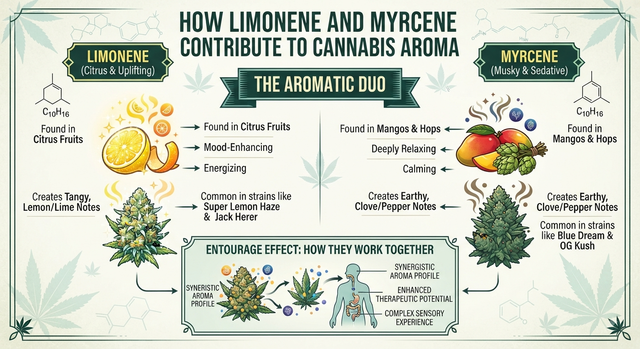
Limonene is a terpene widely associated with citrus aromas. It occurs naturally in citrus fruits such as lemons and oranges and is also found in numerous other plants.
In cannabis, limonene may contribute aromas reminiscent of:
-
Lemon
-
Orange
-
Lime
-
Citrus peel
-
Sweet citrus
-
Fresh fruit
When a cannabis flower has a noticeable citrus character, limonene may be one of the compounds contributing to that aroma.
However, aroma cannot be determined simply by seeing “limonene” on a product label. Other terpenes and volatile compounds also contribute to the overall scent.
Understanding Myrcene
Myrcene is another prominent cannabis terpene. It is commonly associated with earthy, herbal, musky, balsamic, and sometimes fruity aromas.
Consumers may perceive myrcene-containing flower as having notes similar to:
-
Fresh herbs
-
Earth
-
Musk
-
Fruit
-
Woody vegetation
-
Balsamic or spicy undertones
Myrcene is also found naturally in plants such as hops and lemongrass.
The presence of myrcene can add depth to a cannabis aroma, particularly when it occurs alongside other terpenes.
Limonene and Myrcene Together
One of the most interesting aspects of cannabis aroma is that terpenes rarely work in isolation from an aromatic perspective.
Imagine a flower containing both limonene and myrcene. The limonene may contribute bright citrus notes, while myrcene may provide a deeper earthy or herbal foundation.
The result could be an aroma that feels both fresh and earthy.
However, the final scent depends on the entire chemical profile. Caryophyllene, pinene, linalool, terpinolene, and other compounds can change the way the aroma is perceived.
This is why two cannabis products with similar limonene and myrcene levels can still smell noticeably different.
Why Cannabis Aroma Can Vary Between Cultivars
Genetics play an important role in determining which compounds a cannabis plant produces.
Two plants may belong to the same general cultivar category but develop somewhat different chemical profiles because of genetics, cultivation conditions, maturity, harvesting practices, drying, curing, and storage.
Even products carrying the same cultivar name can vary between batches.
For consumers, this means the label name alone doesn’t always tell the complete story. Looking at current batch information and terpene testing can provide additional insight.
Does More Limonene or Myrcene Mean Better Cannabis?
Not necessarily.
A higher concentration of a particular terpene isn’t automatically an indicator of superior cannabis quality. Aroma preferences are highly individual, and overall product quality involves many factors.
Consumers should consider:
-
Freshness
-
Terpene preservation
-
Cannabinoid profile
-
Laboratory testing
-
Cultivation practices
-
Drying and curing
-
Packaging
-
Storage conditions
-
Overall aroma and appearance
A flower with a moderate terpene concentration can still have an appealing and complex aroma.
Likewise, a product with a high terpene percentage isn’t necessarily the best choice for everyone.
How Storage Can Affect Limonene and Myrcene
Terpenes are volatile, so cannabis storage conditions matter.
Exposure to excessive heat, light, oxygen, and unsuitable humidity can contribute to changes in cannabis quality and aroma over time.
For consumers who value aromatic flower, proper storage can help preserve the product’s characteristics.
Cannabis should generally be kept in an appropriate container in a cool, controlled environment away from excessive heat and direct sunlight. Consumers should also follow any storage instructions provided by the manufacturer.
Keeping packaging properly sealed can help reduce unnecessary exposure to environmental conditions.
How COAs Help Consumers Understand Terpene Profiles
A Certificate of Analysis (COA) can provide useful information about a cannabis product’s chemical profile.
Depending on the laboratory and jurisdiction, a COA may show:
-
THC concentration
-
CBD concentration
-
Other cannabinoids
-
Individual terpene percentages
-
Total terpene concentration
-
Microbial testing
-
Pesticide testing
-
Heavy-metal testing
If you’re interested in limonene and myrcene, look for their individual results in the terpene section.
For example, one product might list limonene as a major terpene, while another might show myrcene as one of its dominant compounds.
This information can help consumers compare products more objectively.
Limonene, Myrcene, and the Overall Cannabis Experience
It’s tempting to associate individual terpenes with specific effects, but consumers should be cautious about making simple assumptions.
Scientific research continues to investigate the biological properties of cannabis terpenes, but the relationship between terpene concentration and a person’s experience is complex.
The effects of cannabis can depend on numerous factors, including cannabinoids, dose, individual physiology, product formulation, and consumption method.
Therefore, it is more accurate to view limonene and myrcene primarily as contributors to cannabis chemistry and aroma, rather than assuming that either terpene guarantees a particular experience.
How Consumers Can Explore Different Aroma Profiles
One useful way to explore cannabis is to pay attention to aroma before focusing exclusively on potency.
When purchasing legal cannabis, consumers can examine the product label and, when available, the COA. Look for the dominant terpenes and compare them across different products.
For example:
Citrus-focused profile:
Products with relatively prominent limonene may offer stronger citrus-associated aromatic characteristics.
Earthy and herbal profile:
Products with significant myrcene may have deeper herbal or earthy notes.
Complex profile:
Products containing limonene, myrcene, caryophyllene, and pinene may provide a more layered aromatic profile.
Remember that these are general descriptions rather than guarantees of how a particular product will smell.
Where Can Consumers Find Quality Cannabis?
Consumers should purchase cannabis only through licensed retailers operating within their jurisdiction. Licensed businesses are subject to applicable testing, labeling, and regulatory requirements.
Depending on location, established cannabis brands and retailers may offer products with detailed terpene information. Examples of recognizable California cannabis brands include Weedroads, STIIIZY, Cookies, Glass House Farms, and Connected Cannabis Co.
Product availability and terpene profiles can change, so consumers should check the specific package and batch information rather than assuming every product from a brand will have the same characteristics.
When comparing products, prioritize transparent labeling, appropriate laboratory testing, freshness, and proper packaging rather than relying solely on brand reputation.
Final Thoughts
Limonene and myrcene are two fascinating terpenes that can contribute significantly to the aromatic diversity of cannabis. Limonene is commonly associated with bright citrus characteristics, while myrcene is often connected with earthy, herbal, musky, and fruity notes.
Their interaction with other terpenes creates the complex aromas that make cannabis varieties smell different from one another.
For consumers, understanding terpene profiles can be a useful way to explore cannabis beyond THC percentages. Checking the COA, paying attention to freshness, choosing properly packaged products, and purchasing from licensed retailers can all help consumers make more informed decisions.
Whether you prefer bright citrus aromas, deep herbal notes, or a combination of both, exploring limonene, myrcene, and other terpenes can make the process of understanding cannabis aroma much more interesting.