
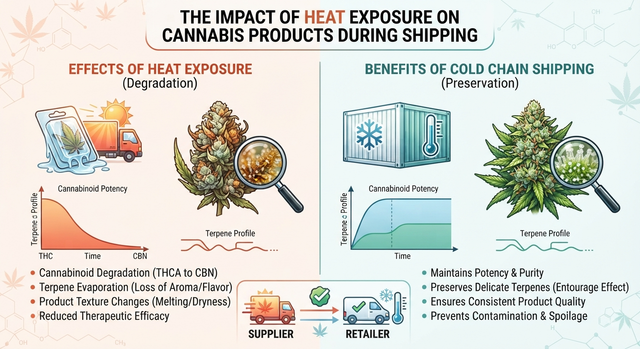
Shipping cannabis products from a licensed producer or retailer to a destination involves more than simply moving a package from one location to another. Temperature, sunlight, humidity, handling, and packaging conditions can all influence product quality along the way. Among these factors, heat exposure deserves particular attention.
Cannabis products can contain cannabinoids, terpenes, oils, and other compounds that may be sensitive to environmental conditions. Excessive temperatures during transportation or storage can contribute to changes in aroma, texture, consistency, appearance, and overall product quality.
Understanding how heat affects cannabis products can help consumers make better purchasing and storage decisions while encouraging businesses to pay attention to appropriate packaging and transportation practices.
Why Temperature Matters for Cannabis
Cannabis is a complex botanical product containing numerous chemical compounds. Two of the most familiar are cannabinoids and terpenes.
Cannabinoids include compounds such as THC, CBD, CBG, and others. Terpenes are aromatic compounds that contribute to the characteristic smells and flavors associated with different cannabis products.
These compounds can change when exposed to unfavorable environmental conditions for extended periods. Heat is particularly important because elevated temperatures can accelerate certain chemical and physical changes.
This doesn’t mean that every warm day will ruin a cannabis product. The potential impact depends on factors such as temperature, exposure duration, packaging, product type, and whether the product was already stored under appropriate conditions.
How Heat Can Affect Cannabis Flower
Cannabis flower is particularly sensitive to environmental conditions because its quality depends partly on maintaining an appropriate balance of moisture and preserving volatile aromatic compounds.
Extended exposure to high temperatures can contribute to:
-
Loss of desirable aromas
-
Changes in flower texture
-
Excessive dryness
-
Changes in terpene composition
-
Faster degradation of certain compounds
-
Reduced overall freshness
Terpenes are volatile compounds, meaning they can evaporate or change under certain environmental conditions. Excessive heat can therefore affect the aromatic profile that consumers expect from a particular cultivar.
For someone purchasing cannabis specifically because of its citrus, floral, pine, or earthy aroma, poor temperature control during transportation could potentially reduce some of those characteristics.
Heat and Cannabis Terpenes
Terpenes play a major role in the sensory identity of cannabis.
Compounds such as myrcene, limonene, pinene, caryophyllene, and linalool contribute different aromatic characteristics. Myrcene is often associated with earthy and herbal notes, limonene with citrus-like aromas, and pinene with pine-like characteristics.
Because terpenes are volatile, excessive heat can contribute to changes in their concentration and composition over time.
This is one reason professional cannabis producers pay attention to packaging, storage, and transportation conditions. Preserving a product isn’t only about protecting its cannabinoid content; it is also about maintaining the characteristics that contribute to its aroma and flavor.
Heat Can Change Cannabis Texture
Temperature can also affect the physical characteristics of cannabis products.
For flower, elevated temperatures can contribute to moisture loss, particularly when packaging isn’t sufficiently protective. This may leave the flower feeling dry or brittle.
On the other hand, some cannabis products contain oils, fats, or other ingredients that respond differently to temperature changes.
For example, concentrates can become softer or more fluid when warm and firmer when cool. Edible products can also change in texture when exposed to elevated temperatures.
These changes don’t necessarily mean a product is unsafe, but they can affect its appearance, consistency, and consumer experience.
Concentrates Can Be Especially Sensitive
Cannabis concentrates may respond noticeably to temperature changes because they contain concentrated oils and aromatic compounds.
Heat can alter the consistency of products such as:
-
Resin
-
Rosin
-
Wax
-
Distillate
-
Other cannabis extracts
A warm environment can cause some concentrates to soften or become more difficult to handle. Temperature fluctuations may also influence how certain products look or separate.
Consumers should follow the storage instructions provided by the manufacturer because ideal conditions vary depending on the formulation and product type.
Heat Exposure During Transportation
Cannabis products may experience temperature changes at several points during transportation.
A package could move from a climate-controlled facility into a delivery vehicle, remain in a warm loading area, or spend time in an environment exposed to sunlight.
The length of exposure matters.
A brief temperature increase may have a limited effect, while prolonged exposure to excessive heat can be more concerning.
This is why appropriate packaging and controlled transportation practices are important for maintaining product quality.
Packaging Can Help Protect Cannabis
Packaging is one of the first lines of defense against environmental conditions.
High-quality packaging can help limit exposure to factors such as:
-
Heat
-
Light
-
Oxygen
-
Moisture changes
-
Physical damage
For cannabis flower, properly sealed containers can help maintain an appropriate internal environment. Opaque or light-resistant packaging can also reduce exposure to direct light.
However, packaging isn’t a magic solution. If a product remains in extremely high temperatures for a prolonged period, packaging alone may not completely prevent changes.
How Consumers Can Recognize Possible Heat Damage
Consumers may notice certain changes after receiving or purchasing a cannabis product.
For flower, potential signs include:
-
Unusually dry or brittle texture
-
Noticeably weaker aroma
-
Changes in color or appearance
-
A stale or altered smell
For concentrates, consumers may notice changes in consistency, appearance, or texture.
With edibles, heat may cause melting, softening, sticking, or changes in appearance depending on the product.
Not every change is caused by heat, however. Age, storage conditions, formulation, manufacturing processes, and packaging can also contribute.
If a product appears damaged, leaking, contaminated, or otherwise abnormal, consumers should avoid guessing about its condition and contact the licensed retailer or manufacturer.
How to Protect Cannabis After Delivery
Once cannabis reaches the consumer, proper storage becomes equally important.
Consumers should follow the product’s storage instructions and avoid leaving cannabis in places exposed to excessive heat, such as:
-
A parked vehicle
-
Direct sunlight
-
Near a heater
-
A hot garage
-
A windowsill
-
Other areas with significant temperature fluctuations
A cool, stable, appropriately protected storage environment is generally preferable.
Consumers should also keep cannabis products securely stored away from children and pets.
Choosing Quality Cannabis Products
Consumers looking for quality cannabis should purchase products from licensed retailers and pay attention to packaging information, batch details, testing information, and storage recommendations.
California consumers can explore licensed cannabis businesses and regulated products through the state’s official cannabis resources.
Well-known California cannabis brands include Weedroads, STIIIZY, Cookies, Jeeter, and Wyld, although product quality and availability can vary by product and batch. Consumers should evaluate the specific product rather than assuming every item from a brand has identical characteristics.
For example, a flower product may have a completely different storage requirement from an edible or concentrate, even when both come from the same company.
What Cannabis Businesses Can Do to Reduce Heat Exposure
Cannabis companies can take several steps to minimize temperature-related quality issues during transportation.
These may include:
Appropriate packaging:
Using packaging designed to protect the product from environmental exposure.
Temperature monitoring:
Businesses can monitor transportation conditions when appropriate.
Efficient logistics:
Reducing unnecessary time spent in uncontrolled environments can help limit exposure.
Proper warehouse storage:
Products should be stored according to their specific requirements before shipping.
Clear consumer instructions:
Packaging should provide appropriate storage information so customers know how to protect the product after purchase.
Final Thoughts
Heat exposure is an important consideration when it comes to cannabis transportation and storage. Excessive temperatures can contribute to changes in terpene profiles, aroma, texture, consistency, and overall freshness. The impact depends on the product, packaging, temperature, and length of exposure.
Cannabis flower may become drier and lose some aromatic characteristics, while concentrates and edibles can experience noticeable changes in consistency or appearance.
Consumers can reduce potential problems by purchasing from licensed retailers, checking product information, following storage instructions, and avoiding prolonged exposure to high temperatures. Brands such as Weedroads, STIIIZY, Cookies, Jeeter, and Wyld offer products through regulated markets, but consumers should always evaluate the specific product, batch, and packaging rather than relying on brand reputation alone.
Ultimately, protecting cannabis quality requires attention throughout the entire journey—from cultivation and manufacturing to packaging, transportation, retail storage, and the consumer’s home. Proper temperature management is an important part of preserving the characteristics that make cannabis products appealing in the first place.