
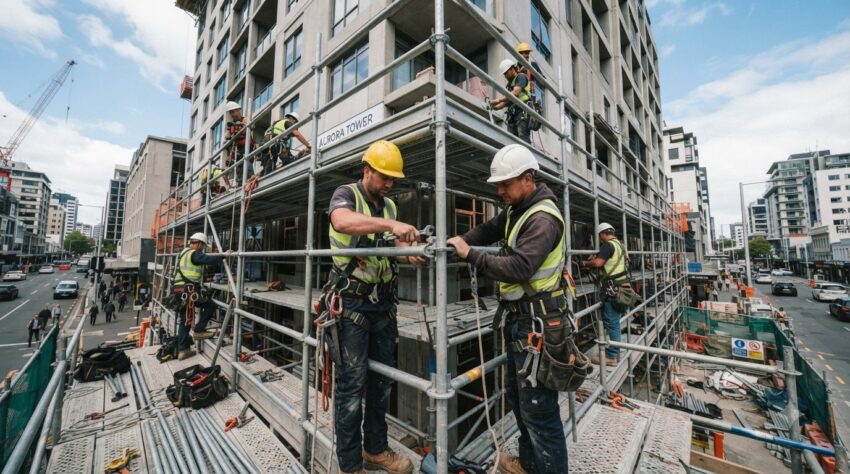
Scaffolding is one of the most essential pieces of temporary infrastructure on any construction or maintenance site. It gives workers safe access to elevated areas, supports tools and materials, and enables tasks ranging from painting to structural repairs to be carried out efficiently. But scaffolding is only as safe as the way it’s assembled — and this is where scaffolding fixing becomes critical.
Scaffolding fixing refers to the process of securely connecting, anchoring, and bracing scaffolding components so the entire structure remains stable, rigid, and safe under load. Poorly fixed scaffolding is one of the leading causes of site accidents worldwide, which makes understanding the fundamentals of proper fixing essential for contractors, site supervisors, and workers alike.
In this blog, we’ll break down what scaffolding fixing involves, the key components and techniques used, common mistakes to avoid, and the safety standards that govern this critical process.
What Does Scaffolding Fixing Involve?
Scaffolding fixing is the practical process of joining scaffold tubes, frames, boards, and fittings together to create a stable structure capable of supporting workers and materials at height. This includes:
- Connecting vertical standards (uprights) to horizontal ledgers and transoms
- Installing diagonal braces for lateral stability
- Securing base plates or adjustable jacks to distribute weight evenly
- Fastening scaffold boards or platforms to bearers
- Anchoring the scaffold to the building structure using ties, where required
- Fitting guardrails, toe boards, and safety netting
Each of these steps needs to follow a specific sequence and use the correct fittings to ensure the scaffold behaves as a single, rigid system rather than a collection of loosely connected parts.
Key Components Used in Scaffolding Fixing
Understanding the hardware involved makes it easier to appreciate why correct fixing matters so much.
Couplers and Clamps
Couplers are the connective backbone of any tube-and-fitting scaffold. Right-angle couplers join tubes at 90-degree angles, swivel couplers connect tubes at other angles (often for diagonal bracing), and sleeve couplers extend tube lengths. Each must be tightened to the manufacturer’s specified torque to prevent slippage under load.
Base Plates and Sole Boards
At the base of every scaffold, base plates distribute the load from the standards onto the ground, while sole boards spread that load further across softer or uneven surfaces. Skipping this step, especially on soil or gravel, can cause the scaffold to sink or tilt over time.
Ties and Anchors
For scaffolds erected against buildings, ties are used to fix the scaffold structure to the wall at regular intervals. This prevents the scaffold from swaying, leaning, or collapsing outward, particularly in windy conditions. Reveal ties, through ties, and box ties are common types used depending on the building structure.
Braces
Diagonal and horizontal braces prevent the scaffold from racking (shifting out of its rectangular shape) under lateral forces. Without adequate bracing, even a well-built scaffold can become dangerously unstable.
Common Mistakes in Scaffolding Fixing
Even experienced crews can make errors that compromise scaffold safety. Some of the most frequent issues include:
- Under-tightened couplers — Fittings that aren’t torqued properly can loosen under vibration or load, leading to instability.
- Missing or insufficient bracing — Skipping diagonal braces to save time is a common shortcut that significantly weakens the structure.
- Inadequate ties to the building — Especially in taller scaffolds, insufficient tying can lead to the entire structure leaning or collapsing.
- Uneven base support — Failing to use base plates and sole boards on soft ground can cause gradual sinking and misalignment.
- Mixing incompatible components — Using fittings or tubes from different manufacturers or systems that aren’t designed to work together can create weak points.
- Skipping regular inspections — Scaffolding can shift due to weather, ground movement, or wear over time, so fixings should be checked periodically, not just at initial setup.
Safety Standards and Best Practices
Scaffolding fixing isn’t just a matter of following a checklist — it’s a discipline that requires trained personnel and adherence to recognized safety standards. Most regions require scaffolds to be erected, altered, and dismantled only by competent, trained scaffolders, often certified under standards such as OSHA in the United States, TG20 in the UK, or equivalent local regulations elsewhere.
Best practices worth following include:
- Always use a documented erection sequence appropriate to the scaffold type
- Confirm load capacity calculations before adding boards, tools, or materials
- Inspect all fixings after adverse weather events, such as high winds or heavy rain
- Tag scaffolding after inspection to confirm it is safe for use (“scaffold tags”)
- Never remove or loosen ties, braces, or couplers without a supervisor’s approval
- Maintain a fixing and inspection log for accountability and compliance records
Why Proper Fixing Matters
The consequences of poor scaffolding fixing go beyond structural failure. Loose or improperly fixed scaffolding can lead to falling tools and materials, sudden structural shifts, or complete collapse — all of which put workers and bystanders at serious risk. Beyond the human cost, incidents caused by improper fixing can result in costly project delays, legal liability, and damage to a company’s reputation.
On the other hand, scaffolding that is fixed correctly from the outset provides a stable, predictable, and safe working platform throughout the life of a project. It allows work to proceed efficiently, reduces the likelihood of costly rework, and keeps sites compliant with health and safety regulations.
Final Thoughts
Scaffolding fixing might seem like a technical, behind-the-scenes part of construction, but it’s one of the most important factors in keeping job sites safe. From couplers and braces to ties and base plates, every fixing decision plays a role in the overall stability of the structure.
Whether you’re a site manager overseeing a large-scale build or a contractor handling smaller maintenance projects, investing in properly trained scaffolders, quality fittings, and regular inspections is not optional — it’s essential. Getting scaffolding fixing right the first time protects workers, keeps projects on schedule, and ensures every job at height starts on a solid, secure foundation.