
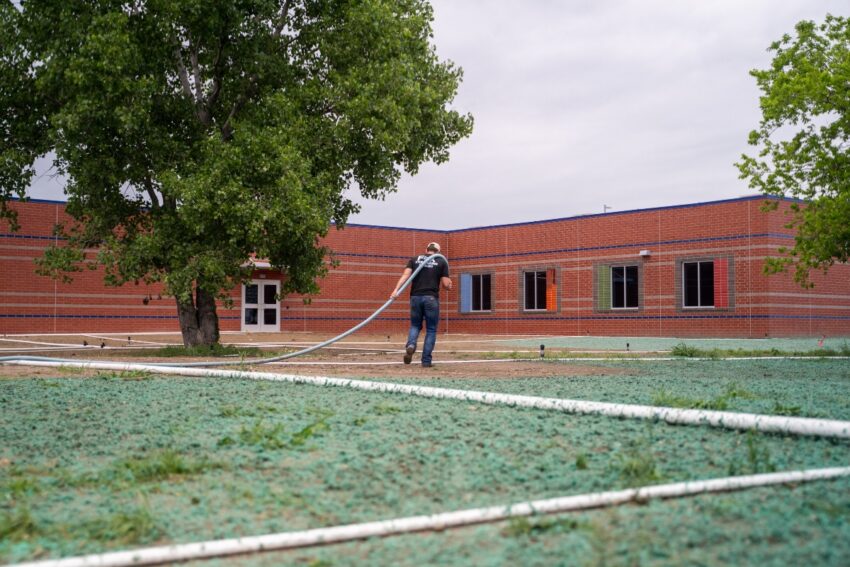
When people first see a freshly hydroseeded property, the green slurry covering the soil can look unusual. That layer is not simply colored water or a quick way to spread grass seed across a lawn. Hydromulch is a carefully prepared mixture designed to help distribute seed, retain moisture, and provide temporary protection while new vegetation becomes established. The exact ingredients can vary depending on the project, soil conditions, grass variety, slope, and weather. Understanding what goes into the mixture makes it easier to see why the application process matters for successful turf establishment.
These conditions can make exposed seed vulnerable during the earliest stages of growth. Hydromulch North Texas projects require special consideration because local lawns can experience intense heat, sudden rainfall, clay-heavy soils, and periods of limited moisture. A properly formulated slurry can create a more favorable environment around the seed while helping keep materials in place. However, hydromulch is not a replacement for good soil preparation or appropriate irrigation. The best results come when the slurry is part of a complete lawn establishment plan that continues after application.
What Is Hydromulch?
Hydromulch is a water-based mixture used to distribute seed and protective materials across prepared soil. Depending on the application, the slurry may contain grass seed, mulch fibers, water, fertilizer, soil amendments, and a tackifying agent. These ingredients are blended into a consistency that can be sprayed evenly over the target area using specialized equipment. Once applied, the mixture forms a temporary protective layer over the soil surface. As the grass germinates and develops, the mulch gradually becomes less important as the growing vegetation takes over.
The color commonly associated with hydroseeding comes from the mulch mixture and its application materials rather than indicating a particular type of grass. The green appearance helps operators identify treated areas and can make it easier to see where coverage has already been applied. More importantly, the mulch provides functional benefits during the establishment period. It can help hold moisture near the seed and reduce some exposure to wind and surface disturbance. The formulation should always be adjusted according to the specific requirements of the site rather than using one identical recipe for every lawn.
What Goes Into the Green Slurry?
Grass seed is one of the most important components of the mixture because the selected variety determines much of the lawn’s eventual performance. Seed should be chosen according to climate, sunlight, soil type, expected traffic, irrigation availability, and maintenance expectations. North Texas properties may require grasses with strong heat tolerance and suitable performance under local growing conditions. Different areas of a property may also have different requirements because shade, drainage, and traffic can vary considerably. Using appropriate seed is therefore essential even when the hydroseeding equipment and application technique are excellent.
Mulch forms another major component of the slurry and provides temporary surface coverage around the seed. Depending on the product, mulch may be made from wood fiber, cellulose, paper-based materials, or blends designed for specific applications. Its primary purpose is to help maintain moisture and provide a protective layer while the seed begins to germinate. Mulch can also contribute to surface stability, which may be useful on areas where rainfall or wind could disturb exposed soil. The correct material and application rate depend on the site’s conditions and the goals of the project.
Water is needed to create the sprayable slurry and distribute the materials across the prepared soil. It also immediately moistens the seedbed, giving the seed access to the moisture required for germination. However, the water contained in the application is not enough to carry the lawn through its entire establishment period. Continued irrigation is usually necessary, especially when North Texas temperatures are high or rainfall is inconsistent. Property owners should therefore view the initial moisture as the beginning of the watering process rather than a substitute for ongoing care.
Why Tackifiers and Fertilizers Matter
Tackifiers may be included when additional surface adhesion is needed, particularly on slopes or areas exposed to potential erosion. These materials help the slurry adhere to the soil and can reduce the movement of seed and mulch during certain rainfall events. Their usefulness depends on the slope, soil condition, expected weather, and erosion risk of the property. Tackifiers should not be viewed as a guarantee against washout during severe storms. Proper grading, drainage, and additional erosion-control measures may still be necessary for challenging sites.
Fertilizer can also be incorporated when soil conditions and the selected grass indicate that additional nutrients are appropriate. The correct nutrient balance depends on the soil and the requirements of the grass being established. Applying excessive fertilizer is not a reliable shortcut to faster or healthier growth and can create unnecessary environmental and turf-management concerns. Soil testing can provide useful information when nutrient levels are uncertain. A knowledgeable provider should be able to explain why a fertilizer product is being recommended rather than simply adding it as a standard part of every application.
Why Hydromulch Works Well in North Texas
North Texas presents several conditions that can make conventional seed establishment difficult. High summer temperatures can rapidly remove moisture from exposed soil, while heavy storms can create runoff across newly prepared surfaces. Wind can also disturb lightweight seed before roots have developed enough to anchor the soil. Hydromulch creates a protective layer that can help reduce some of these early vulnerabilities. It does not eliminate weather-related risks, but it can give seed a more stable environment during the critical germination stage.
The mulch layer can be especially useful when establishing vegetation over large areas of exposed ground. Instead of distributing seed separately and leaving it largely uncovered, hydroseeding combines seed with materials that remain on the surface together. This can improve the consistency of application when performed by experienced operators. It may also be useful on irregular terrain where manually spreading seed would be difficult. The actual effectiveness still depends on preparation, application rates, grass selection, weather, and aftercare.
Soil preparation remains essential because hydromulch cannot correct every underlying site problem. Compacted construction soil can restrict root development, while poor drainage can leave sections saturated for extended periods. Before application, contractors should evaluate grading, soil structure, drainage, debris, and other conditions that could interfere with establishment. Correcting these problems provides roots with a better environment in which to develop. The slurry then becomes one component of a broader strategy rather than being expected to solve every lawn problem by itself.
How Hydromulch Is Applied
The application process begins with preparing the soil and determining the appropriate seed and slurry formulation. The ingredients are then mixed with water inside specialized hydroseeding equipment to create a consistent suspension. Operators spray the mixture over the prepared surface using a controlled pattern designed to achieve suitable coverage. Areas with different slopes, soil conditions, or seed requirements may need adjustments in application technique. Professional equipment and experience can help distribute the materials more consistently across large or irregular properties.
After application, the treated surface should generally be protected from unnecessary disturbance. Foot traffic, vehicles, pets, and construction equipment can move the mulch or compact the soil before roots become established. Irrigation then becomes one of the most important parts of the process because the seed needs continuing moisture after the initial application. Watering should be adjusted according to weather, soil type, grass variety, and the stage of development. Monitoring the lawn regularly is more effective than assuming that every property requires exactly the same watering routine.
Choosing Hydromulch for Residential and Commercial Projects
Homeowners searching for residential hydroseeding near me may encounter different application methods and slurry formulations from local providers. Hydromulch can be useful for newly constructed homes, lawn renovations, larger yards, sloped sections, and properties where consistent seed distribution is important. Before hiring a contractor, homeowners should ask about soil preparation, seed selection, mulch type, watering requirements, and expected establishment time. The provider should also explain what is included in the quoted price. Understanding these details helps homeowners compare services based on quality and suitability rather than simply choosing the lowest estimate.
Commercial projects can benefit from hydromulch when large areas need vegetation established efficiently. Developments, business properties, recreational spaces, roadside areas, and other large sites may contain extensive exposed soil that would be difficult to seed manually. Commercial applications often require additional planning because other construction activities may continue around the treated areas. Access, equipment movement, irrigation, erosion control, and traffic protection should be coordinated before application. A well-organized project can reduce disruption while giving newly planted vegetation the protection it needs.
The scale of the project should also influence the choice of provider. A contractor experienced with small residential lawns may not necessarily have the equipment, staffing, or logistical experience needed for a large commercial site. Likewise, a large contractor should still be able to provide a site-specific plan for individual residential properties. Ask for examples of comparable work and request clear information about the proposed seed mixture and materials. A professional approach should include realistic expectations because germination and turf development are influenced by weather and biological conditions that no contractor can completely control.
Caring for Hydromulched Areas After Application
The green appearance of a freshly treated lawn can make the project look finished, but the establishment process is only beginning. Seed needs time to germinate, seedlings need time to develop roots, and the turf must gradually become strong enough to tolerate mowing and regular use. Consistent moisture is particularly important during the earliest stage. However, excessive watering can create runoff, puddling, and erosion, especially in clay-heavy soils. The objective is to maintain appropriate moisture while allowing the developing root system to grow into the surrounding soil.
Newly hydroseeded areas should also be inspected after significant weather events. Heavy rain can create channels, expose seed, or move mulch in vulnerable locations. Dry and windy conditions can produce a different set of challenges by increasing evaporation and reducing surface moisture. Property owners should watch for uneven growth, standing water, erosion, or persistently bare sections. Identifying these issues early makes it easier to determine whether irrigation changes, repairs, or spot reseeding are necessary.
Once the grass is established enough to mow, maintenance should gradually transition toward the requirements of the selected turf variety. Mowing height, irrigation frequency, fertilization, and seasonal care should all be based on the grass and local conditions. Healthy roots become increasingly important as the lawn faces North Texas heat and periods of environmental stress. A good establishment program therefore continues well beyond the day the slurry is sprayed. Long-term maintenance protects the investment made in preparation, seed, mulch, labor, and application.
Final Thoughts
Hydromulch North Texas applications are more than a green coating placed over bare soil. The slurry combines seed, mulch, water, and potentially other materials to create a supportive environment during the early stages of lawn establishment. Mulch can help retain moisture and protect seed, while tackifiers can provide additional surface adhesion where appropriate. Seed selection determines which grass will ultimately grow, and soil preparation determines whether developing roots have a suitable place to establish. Each component has a purpose, but successful results depend on how those components work together.
For homeowners considering residential hydroseeding near me services, the best approach is to choose a provider that evaluates the property before recommending a particular mixture. A professional should consider soil, drainage, sunlight, grass selection, seasonal conditions, irrigation, and expected lawn use. Hydromulch can provide meaningful advantages, but it should never be presented as a substitute for proper preparation or ongoing care. With the right materials, careful application, and consistent maintenance, the green slurry can become the first stage in developing healthy, attractive, and resilient North Texas turf.