
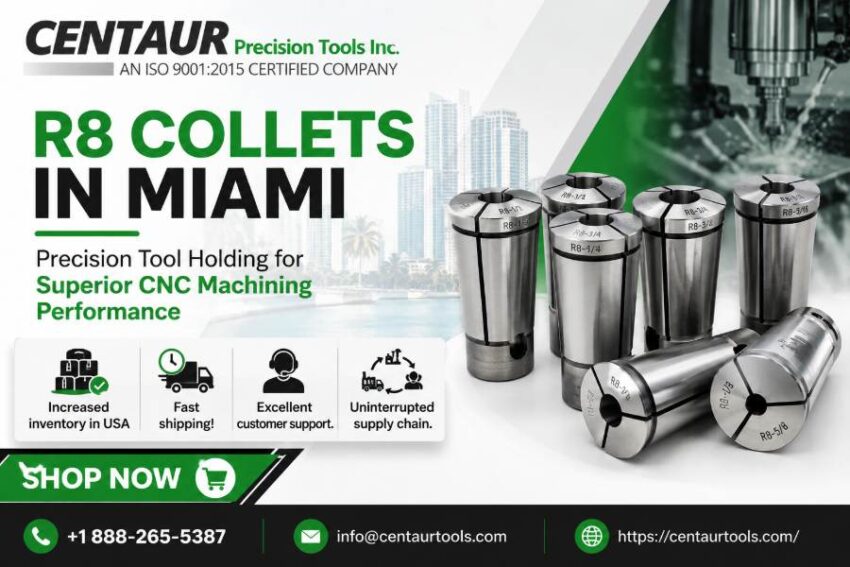
Precision machining depends on the right combination of machine tools, cutting tools, and workholding components. Among these components, collets play an important role in securing cutting tools accurately and consistently. For milling machines and CNC applications, R8 Collets in Miami are widely used because of their practical design, versatility, and compatibility with many milling setups.
Whether you are replacing worn tooling or setting up a new machining operation, understanding the features and applications of R8 collets can help you make a more informed selection.
What Are R8 Collets?
R8 collets are precision tool-holding components commonly used with milling machines and compatible spindles. They feature a tapered shank designed to fit directly into an R8 spindle, while the internal bore grips the cutting tool.
An R8 collet uses a drawbar to secure the collet in the machine spindle. When properly installed, the collet provides a firm connection between the spindle and cutting tool, helping support stable machining operations.
R8 collets are available in different bore sizes, allowing machinists to accommodate various cutting-tool diameters. Selecting the appropriate size is important for achieving proper tool engagement and minimizing unnecessary movement.
Why R8 Collets Matter in Milling and CNC Applications
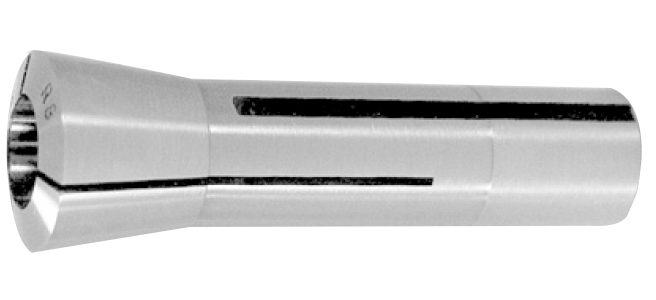
Tool holding directly affects machining stability and accuracy. A properly selected R8 collet can help maintain a secure connection between the cutting tool and spindle during milling operations.
Several characteristics make R8 collets useful for machining environments:
- Tool compatibility: Different bore sizes accommodate a range of cutting tools.
- Secure tool holding: Properly matched collets provide firm gripping around the tool shank.
- Repeatable setup: Consistent installation can help maintain predictable machining conditions.
- Versatility: R8 systems are used across various milling applications.
- Straightforward replacement: Individual collets can be replaced when necessary rather than replacing an entire spindle assembly.
For businesses looking for R8 Collets in Miami, evaluating these characteristics can help identify the right tooling for specific machine requirements.
Choosing the Right R8 Collet
Not every R8 collet is suitable for every application. Before purchasing, consider several important factors.
1. Bore Size
The bore diameter should correspond closely to the cutting-tool shank. Using the correct size helps the collet grip the tool properly and supports consistent machining performance.
2. Material and Construction
Collets should be manufactured from suitable materials and finished to appropriate precision standards. Quality construction can contribute to durability and dependable performance in demanding shop environments.
3. Concentricity
Concentricity is particularly important for precision machining. Excessive runout can affect surface finish, tool life, and dimensional accuracy. A well-manufactured collet should provide consistent tool positioning when correctly installed.
4. Machine Compatibility
Always verify that the collet matches the spindle and drawbar specifications of the milling or CNC machine. An R8 designation alone does not eliminate the need to confirm the complete machine-tool setup.
5. Application Requirements
Consider the type of milling operation, cutting-tool diameter, machining material, spindle speed, and required accuracy. Heavy-duty roughing and precision finishing may place different demands on the tool-holding system.
R8 Collets and Tool Runout
Runout refers to the amount a rotating cutting tool deviates from its intended axis. Excessive runout can create uneven cutting conditions, reduce tool life, and contribute to inconsistent workpiece results.
R8 collets with appropriate precision and concentricity can help control tool positioning. However, the collet is only one part of the overall system. Clean spindle tapers, properly maintained tooling, correct drawbar tension, and clean tool shanks are also essential.
For this reason, machinists should inspect the entire tool-holding assembly rather than focusing on the collet alone.
Maintenance Tips for R8 Collets
Regular maintenance can extend the useful life of R8 tooling and support consistent performance.
Keep surfaces clean: Remove chips, dust, coolant residue, and other contaminants from the collet, spindle, and tool shank.
Inspect for damage: Look for cracks, dents, corrosion, or unusual wear before installation.
Use the correct wrench and procedure: Over-tightening can damage components, while insufficient tightening may result in poor tool retention.
Store collets properly: Keep unused collets protected from contamination and physical damage.
Replace worn components: A collet that no longer grips consistently or shows significant wear should be replaced rather than relied upon for precision work.
Finding R8 Collets in Miami
When sourcing R8 Collets in Miami, machinists and purchasing teams should consider more than availability alone. Product specifications, manufacturing quality, dimensional consistency, inventory availability, and technical support can all influence the overall value of a tooling purchase.
A supplier with experience in precision tooling can also help customers identify suitable collet sizes and related tool-holding components based on their equipment and application.
Final Thoughts
R8 collets remain a practical tool-holding option for many milling and CNC applications. Their effectiveness depends on selecting the correct bore size, maintaining good concentricity, ensuring machine compatibility, and following proper installation and maintenance practices.
For machining operations seeking R8 Collets in Miami, understanding these factors makes it easier to select tooling that supports reliable, accurate, and consistent performance.