
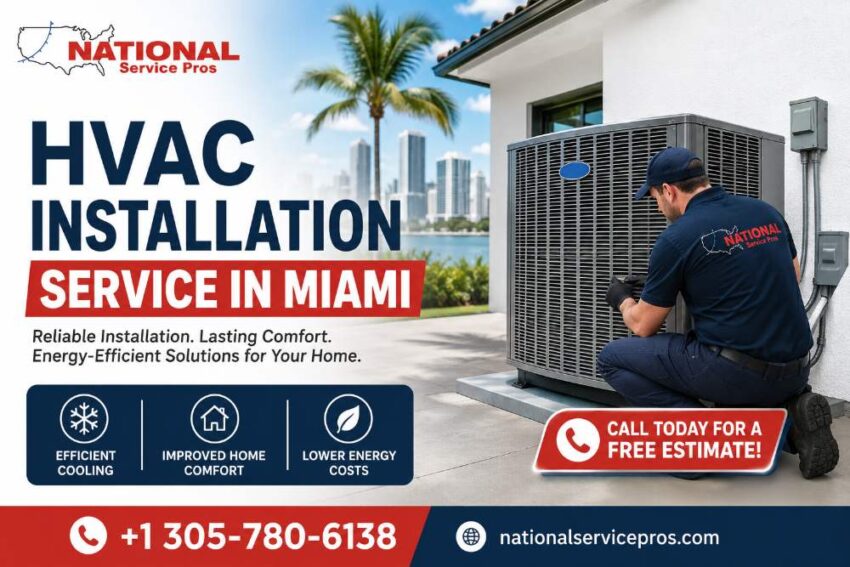
Miami’s warm climate makes air conditioning an important part of everyday comfort. Because cooling systems often run for long periods, an inefficient HVAC system can consume significant energy and increase monthly utility costs. Choosing the right equipment and installing it correctly can make a major difference.
A professional HVAC Installation Service in Miami focuses on more than replacing an old air conditioner. Proper system sizing, ductwork, airflow, thermostat settings, and installation quality all influence how efficiently an HVAC system operates.
Why HVAC Installation Affects Energy Efficiency
Even a high-efficiency HVAC unit can waste energy when installers select the wrong size or install it incorrectly. An oversized system may cool a home quickly but cycle on and off too frequently. An undersized system may run continuously while struggling to maintain the desired temperature.
Professional installation helps match the equipment to the building’s cooling requirements. Technicians can consider factors such as:
- Home or building size
- Insulation levels
- Window placement and exposure to sunlight
- Number of occupants
- Existing ductwork
- Local climate conditions
- Cooling load and airflow requirements
A correctly sized system can operate more consistently and avoid unnecessary energy consumption.
Choose an HVAC System With an Appropriate Efficiency Rating
When replacing an older HVAC system, homeowners should compare efficiency ratings rather than choosing equipment based only on purchase price. Modern systems can offer improved efficiency through advanced compressors, variable-speed technology, improved controls, and better airflow management.
The right equipment depends on the property and its cooling requirements. A qualified technician can explain the available options and help determine which system provides an appropriate balance between efficiency, capacity, comfort, and installation cost.
National Service Pros works with manufacturers such as Trane, Carrier, Bryant, Rheem, Ruud, and Goodman, giving customers access to a range of HVAC equipment options.
Proper Installation Improves System Performance
Installation quality plays an important role in long-term HVAC performance. Technicians need to correctly connect electrical components, refrigerant lines, drainage systems, thermostats, and ductwork.
They should also verify that the system maintains appropriate airflow after installation. Poor airflow can make an HVAC system work harder and may contribute to uneven temperatures throughout the property.
A professional HVAC Installation Service in Miami should include careful testing after installation. This helps identify potential problems before they affect comfort or energy consumption.
Ductwork Matters Too
The HVAC unit does not work alone. Ductwork carries conditioned air throughout the building, and leaks or poorly designed ducts can reduce efficiency.
When installing a new HVAC system, technicians should inspect existing ducts whenever possible. Damaged, disconnected, undersized, or poorly insulated ducts may prevent conditioned air from reaching rooms efficiently.
In some situations, improving the ductwork can complement a new HVAC installation and help the system deliver more consistent cooling.
Smart Thermostats Can Support Efficient Cooling
A properly installed thermostat can also help control energy use. Programmable and smart thermostats allow homeowners to adjust temperatures according to occupancy and daily schedules.
For example, raising the temperature slightly when nobody occupies the property can reduce unnecessary cooling. Smart controls may also provide information about system operation and energy use, depending on the model.
However, a thermostat cannot compensate for an incorrectly sized or poorly installed HVAC system. It works best as part of an efficient overall setup.
Installation Quality Can Affect System Longevity
Energy efficiency and equipment lifespan often go hand in hand. When an HVAC system operates under unnecessary strain, components may experience additional wear.
Correct installation helps the system maintain proper airflow, refrigerant levels, electrical connections, and drainage. Regular preventive maintenance after installation can further help identify developing issues and maintain performance.
National Service Pros provides HVAC installation, repairs, and preventative maintenance for residential and commercial properties. The company has operated since 2007 and handles projects ranging from unit replacements and ductwork to new construction installations.
Why Miami Homeowners Should Consider Professional Installation
Miami’s heat and humidity can place considerable demand on cooling equipment. An HVAC system that operates efficiently can provide consistent indoor comfort while avoiding some of the unnecessary energy consumption associated with poor installation or outdated equipment.
When evaluating an HVAC Installation Service in Miami, homeowners should look beyond the equipment itself. Ask about system sizing, efficiency ratings, ductwork, installation procedures, warranties, maintenance requirements, and the technician’s qualifications.
National Service Pros states that its technicians are state-licensed and fully insured and that the company provides both residential and commercial HVAC installation services. These factors can help property owners evaluate an installation provider based on qualifications and service scope rather than price alone.
Final Thoughts
Energy-efficient HVAC performance starts with choosing equipment that suits the property and installing it correctly. Proper sizing, airflow, ductwork, controls, and professional testing all contribute to efficient operation.
For Miami properties, where cooling demand can remain high throughout much of the year, investing in a carefully planned HVAC Installation Service in Miami can support better comfort and more efficient system operation. Regular maintenance can then help preserve those performance benefits over time.